How Long Until 3:15 PM? Calculate the Exact Time Remaining Today
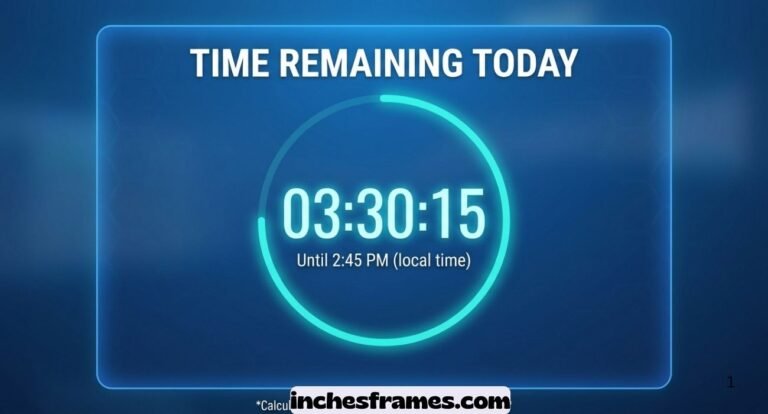
If you are asking how long until 3:15 PM, the exact answer depends on your current local time. For example, if it is 12:15 PM, there are exactly 3 hours left. If it is 2:45 PM, only 30 minutes remain. Because the clock keeps moving, the answer changes every minute and every second.
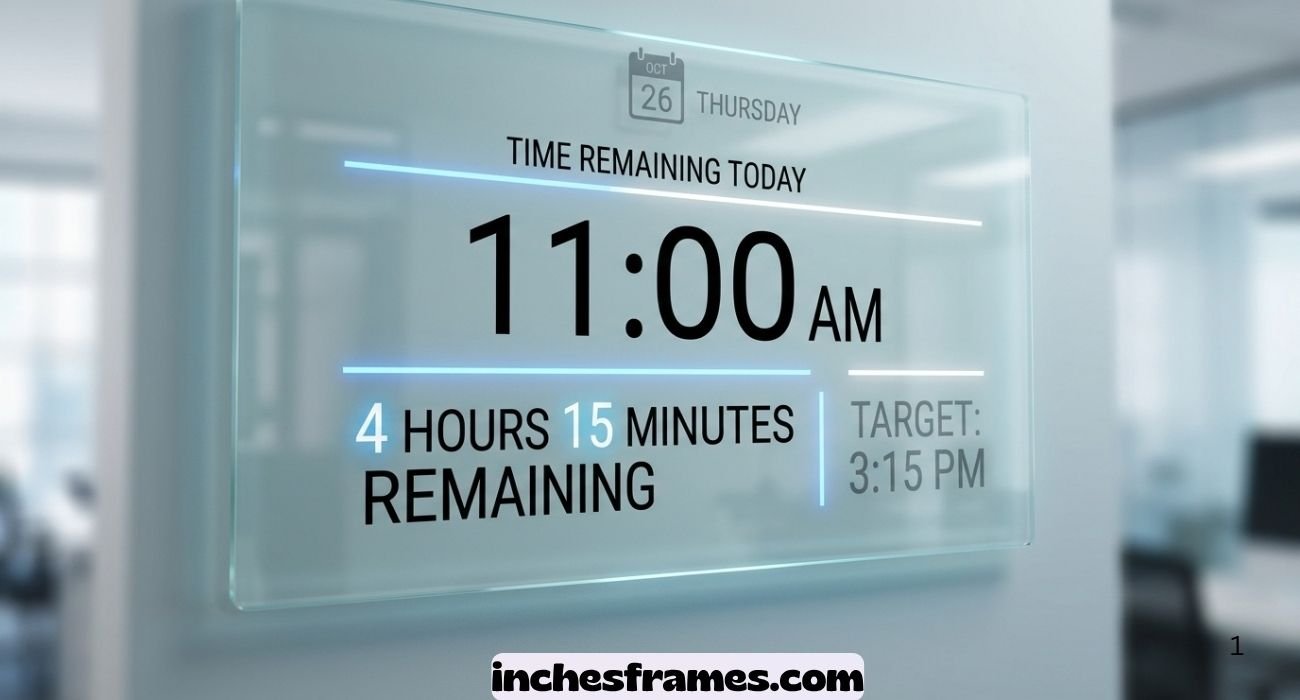
The simplest way to find the answer is to compare the current time with the target time of 3:15 PM. A live countdown timer can do this automatically and show the remaining hours, minutes, and seconds without requiring manual subtraction.
This guide explains how to calculate time remaining until 3:15 PM, how the calculation works, what happens when 3:15 PM has already passed, how 3:15 PM converts to the 24-hour clock, and why time zones matter when people are scheduling events across different parts of the United States.
How Long Until 3:15 PM?
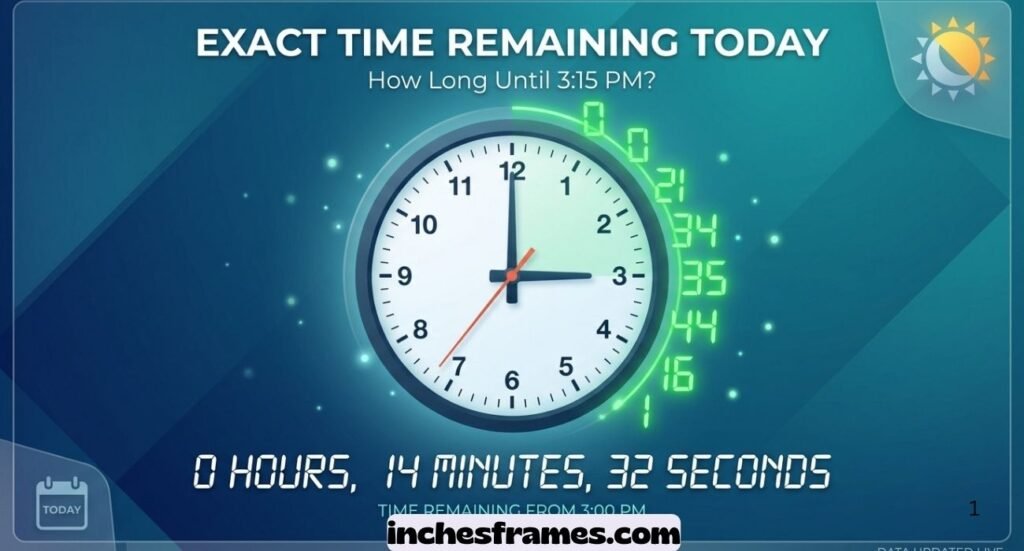
How long until 3:15 PM? There is no single answer that stays correct all day. The amount of time remaining depends on the current local time when you check the clock.
For example:
| Current Time | Time Until 3:15 PM |
|---|---|
| 9:15 AM | 6 hours |
| 10:15 AM | 5 hours |
| 11:15 AM | 4 hours |
| 12:15 PM | 3 hours |
| 1:15 PM | 2 hours |
| 2:15 PM | 1 hour |
| 2:45 PM | 30 minutes |
| 3:00 PM | 15 minutes |
| 3:14 PM | 1 minute |
| 3:15 PM | 0 minutes |
These examples assume that the target is 3:15 PM today and that both times are in the same time zone.
If the current time is 1:40 PM, for instance, you can calculate the difference by counting forward from 1:40 PM to 3:15 PM. That gives 1 hour and 35 minutes.
The same principle works whether you want the answer in hours and minutes or as a total number of minutes. At 1:40 PM, 95 minutes remain until 3:15 PM.
If your current time is already later than 3:15 PM, today’s target has passed. In that situation, you need to decide whether you mean the previous 3:15 PM or the next occurrence of 3:15 PM, which will be tomorrow.
How Long Until 3:15 PM Today?
To calculate how long until 3:15 PM today, first check your current local clock. If the time is before 3:15 PM, subtract the current time from 3:15 PM.
Suppose your clock says 10:50 AM. The calculation is:
3:15 PM − 10:50 AM = 4 hours 25 minutes
If your clock says 2:50 PM:
3:15 PM − 2:50 PM = 25 minutes
The closer the clock gets to 3:15 PM, the smaller the remaining interval becomes.
Once the clock reaches 3:15 PM, the remaining time is zero. After that point, there is no time left until today’s 3:15 PM because the target has already occurred.
For someone searching after 3:15 PM, the phrase “how long until 3:15 PM” can have two possible meanings. They may be looking back at today’s time, or they may want to know how long until 3:15 PM tomorrow. A useful countdown should make the target date clear instead of silently switching between the two.
This distinction is especially important when a countdown timer is embedded on a webpage. A timer should clearly identify whether it is counting down to today’s 3:15 PM or the next day’s 3:15 PM.
Why People Search “How Long Until 3:15 PM”
The search “how long until 3:15 PM” is usually a practical request for an immediate time difference rather than a question about what 3:15 PM means.
Someone might be waiting for a meeting, checking how much time remains before leaving work, preparing for an appointment, watching the clock before a class, or planning when to start another activity.
A specific time can also serve as a daily checkpoint. For example, a person might have a 3:15 PM meeting and want to know whether there is enough time to finish a task first.
The wording of the search can vary naturally. People may type “how many hours until 3:15 PM,” “how many minutes until 3:15 PM,” “time until 3:15 PM,” or simply “3:15 PM countdown.” These searches all point toward the same basic need: finding the interval between now and a particular afternoon time.
The important part is that the answer must be based on the reader’s actual clock rather than a fixed number published in an article.
How Long Until 3:15 PM Using a Countdown Timer
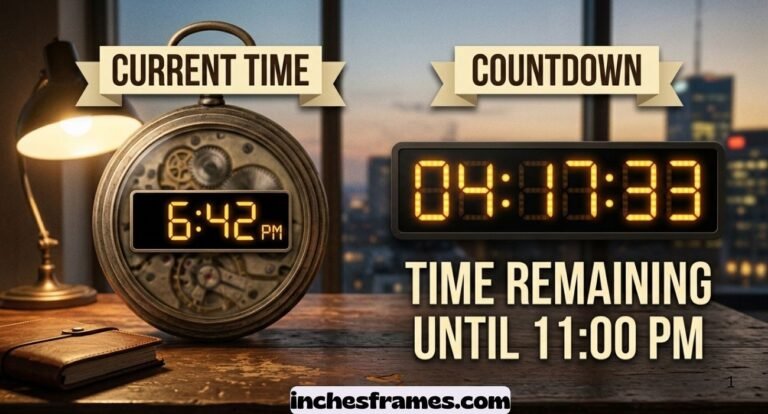
A countdown timer is the easiest option when you need a continuously updated answer. Instead of calculating the difference once, the timer compares the current time with 3:15 PM and updates the result as time passes.
For example, if a countdown initially shows 2 hours and 10 minutes, that figure will decrease as the clock moves forward. A precise timer can also display seconds, making it more useful when an event is approaching.
A well-designed 3:15 PM countdown should make three things obvious:
- The target time is 3:15 PM.
- The countdown is based on the user’s relevant local time or a clearly specified time zone.
- The display changes automatically as the target approaches.
This is useful for situations where repeatedly checking the clock is inconvenient. If you are preparing for a 3:15 PM appointment, for example, a live timer gives you an ongoing indication of how much time remains.
A countdown also avoids one of the main problems with manual calculation: the answer becomes outdated immediately. If you calculate the difference at 1:00 PM and look at the result at 1:20 PM, you already need to calculate it again.
Understanding the Time Calculation
At its simplest, the calculation is:
Time remaining = target time − current time
For a same-day calculation, the target is 3:15 PM and the current time is whatever your clock shows.
There are two basic units to understand:
1 hour = 60 minutes
1 minute = 60 seconds
So, if the current time is 2:15 PM, there are 60 minutes until 3:15 PM.
If the current time is 2:45 PM, there are 30 minutes.
If the current time is 2:45:30 PM, there are 29 minutes and 30 seconds.
Step 1: Note the current time
Start with the exact current time. Suppose your clock reads 11:42 AM.
It can help to include seconds if you need a highly precise countdown calculation, but hours and minutes are normally enough for everyday scheduling.
You should also confirm whether the clock is using AM or PM. On a 12-hour clock, 11:42 AM and 11:42 PM are twelve hours apart and produce completely different results.
Step 2: Write the target time
The target is:
3:15 PM
In the 24-hour clock, this is written as:
15:15
Using 24-hour notation can make subtraction easier because there is no AM/PM ambiguity.
For example:
11:42 AM → 11:42
3:15 PM → 15:15
Step 3: Subtract the two times
Now calculate:
15:15 − 11:42 = 3 hours 33 minutes
Therefore, if the current time is 11:42 AM, the time remaining until 3:15 PM is 3 hours and 33 minutes.
You can also express that interval as total minutes:
3 hours × 60 = 180 minutes
180 + 33 = 213 minutes
So the same interval can be described as 3 hours 33 minutes or 213 minutes.
When the minute value of the target is smaller than the minute value of the current time, you need to borrow one hour. For example, from 1:50 PM to 3:15 PM:
- From 1:50 PM to 2:00 PM = 10 minutes.
- From 2:00 PM to 3:00 PM = 1 hour.
- From 3:00 PM to 3:15 PM = 15 minutes.
Total: 1 hour 25 minutes.
This approach is often easier than trying to subtract the numbers directly.
See Also ; 10 Grams – Things with Pic That Weigh 10g
3:15 PM in Different Time Formats
The same moment can be represented in different time formats.
In the familiar 12-hour format:
3:15 PM
In 24-hour notation:
15:15
The 12-hour system divides the day into two cycles of 12 hours and uses AM and PM to distinguish them. The 24-hour system numbers hours from 00 through 23.
Here are several equivalent representations:
| Format | Representation |
|---|---|
| 12-hour | 3:15 PM |
| 24-hour | 15:15 |
| Hours and minutes | 15 hours, 15 minutes after midnight |
| Minutes after midnight | 915 minutes |
The last representation can be useful for programming, spreadsheets, or mathematical time calculations. Since there are 60 minutes in an hour, 15 hours equals 900 minutes, and another 15 minutes brings the total to 915 minutes after midnight.
One common mistake is confusing 3:15 AM with 3:15 PM. The former occurs during the early morning, while the latter occurs in the afternoon. Always include AM or PM when using a 12-hour clock.
Morning, Afternoon, or Evening?
3:15 PM is in the afternoon.
A common everyday division of the day is morning before noon, afternoon after noon, and evening later in the day. The exact boundary between afternoon and evening is not a universal clock rule, however, because ordinary language varies by context.
For the specific time in this article, there is little ambiguity:
3:15 PM = afternoon
For comparison, 9:00 AM is generally described as morning, 12:00 PM is noon, 3:15 PM is afternoon, and 6:00 PM is commonly described as evening.
This can matter when people use broad terms such as “this afternoon” instead of giving a precise appointment time. A specific time such as 3:15 PM removes much of that ambiguity.
Using 3:15 PM for Better Scheduling
A fixed time such as 3:15 PM can be useful as an anchor in a daily schedule. Instead of simply watching the clock, you can work backward from the event and determine when preparation should begin.
For example, imagine that a meeting starts at 3:15 PM and you need 20 minutes to prepare. Your preparation period should begin by 2:55 PM. If you also need 15 minutes to travel to the meeting location, you would need to allow additional time before that.
The key idea is to distinguish the event time from the time needed to get ready for it.
A time calculator can help when several activities have to fit between two fixed times. If you know that you have 2 hours and 40 minutes before a 3:15 PM appointment, you can divide that window among different tasks instead of repeatedly checking the clock.
Adding a reasonable buffer can also prevent a schedule from becoming too tight. A plan that uses every available minute may look efficient on paper but leave little room for delays, transitions, or tasks that take longer than expected.
Time Zones and Why Your Countdown May Look Different
A countdown to 3:15 PM only makes sense when the relevant time zone is clear.
Suppose one person is in New York and another is in Los Angeles. If an event is scheduled specifically for 3:15 PM local time, the two people will not necessarily have the same amount of time remaining when they check their clocks.
This becomes particularly important for remote meetings, online classes, customer appointments, flights, and other events involving people in different locations.
The United States spans multiple time zones, including Eastern, Central, Mountain, Pacific, Alaska, and Hawaii-Aleutian time zones. The clocks in these regions do not all show the same local time.
There is also the issue of daylight saving time. Some U.S. locations adjust their clocks seasonally, while others do not. As a result, the relationship between locations can change depending on the date.
When scheduling across regions, write the time together with its time zone when possible. For example:
3:15 PM Eastern Time
is much clearer for a national or remote audience than simply:
3:15 PM
For a personal countdown to an event happening at 3:15 PM in your own location, however, your local clock is normally the relevant reference.
Why a Live Countdown Is Better Than Manual Calculation
Manual subtraction is useful for understanding how time difference works, but a live countdown has a practical advantage: it stays current.
Imagine calculating the time remaining at 1:25 PM. If the result is 1 hour and 50 minutes, that answer is correct at the moment of calculation. Five minutes later, it is no longer the current answer.
A live timer continuously updates the interval.
This matters most when you are close to the target. At 3:00 PM, for example, there are only 15 minutes until 3:15 PM. At 3:10 PM, there are only 5 minutes. A timer can show that changing interval without requiring a new calculation each time.
For everyday use, the difference between a static calculation and a live countdown is therefore mainly about convenience and freshness. Both use the same underlying time relationship; the live tool simply performs the calculation repeatedly.
Helpful Online Tools for Counting Down to 3:15 PM
Different tools can help with different kinds of time tracking.
A simple countdown page is useful when you only care about the interval until 3:15 PM. A world clock is more appropriate when you need to compare local times in different locations. A time-zone converter can help when an event has been specified in another region’s time.
A calendar is useful when 3:15 PM is attached to an appointment or recurring event. A productivity timer, meanwhile, is better suited to measuring a specific work period rather than counting toward a particular clock time.
For a straightforward “how long until 3:15 PM?” question, the most useful interface is usually one that immediately shows the target and remaining duration without requiring several settings.
Accuracy also depends on the underlying clock. If a device has an incorrect system time or the wrong time zone selected, its countdown may also be wrong. For that reason, checking the device’s date, time, and time zone settings can be worthwhile when a countdown appears inconsistent.
See Also : 500 Grams- Things with Pic That Weigh 500g
Common Situations Where 3:15 PM Matters
There are many ordinary reasons someone may need to know the time until 3:15 PM. The time might mark the start of a meeting, the end of a scheduled activity, a school-related event, an appointment, a shift change, or a personal deadline.
For example, a worker may have a meeting at 3:15 PM and want to know how much uninterrupted work time remains. A student may be waiting for a class or activity that begins at that time. Someone traveling may be checking the remaining time before a scheduled departure or pickup.
The calculation itself does not change across these situations. What changes is how the remaining time is used.
If there are 90 minutes until 3:15 PM, for example, that is always 1 hour and 30 minutes. Whether that window is used for work, travel, preparation, or waiting depends on the person’s schedule.
Using 3:15 PM to Improve Productivity
A specific afternoon time can also work as a productivity checkpoint.
Suppose you have several tasks to complete before 3:15 PM. Rather than treating the entire morning and early afternoon as one large block, you can set smaller checkpoints. A task might have a target completion time of noon, another at 1:30 PM, and a final review before 3:15 PM.
This approach turns a distant deadline into smaller, easier-to-monitor intervals.
A countdown can also help with time blocking. If you have one hour until 3:15 PM, you might allocate 40 minutes to focused work and leave 20 minutes for review, preparation, or transition. The exact division should match the task rather than being dictated by the clock.
The goal is not to watch the countdown constantly. It is to make the available time visible enough to support realistic planning.
Manual Formula for Calculating Time Remaining
The basic formula is:
Time Remaining = Target Time − Current Time
For a target of 3:15 PM, convert both times into a consistent format before subtracting them.
For example:
Current time: 12:40 PM
Target time: 3:15 PM
Using 24-hour notation:
12:40 → 12:40
3:15 PM → 15:15
Then:
15:15 − 12:40 = 2 hours 35 minutes
As total minutes:
2 × 60 + 35 = 155 minutes
So there are 155 minutes until 3:15 PM when the current time is 12:40 PM.
The formula becomes slightly different conceptually when the target has already passed. If it is 4:00 PM and you ask how long until the next 3:15 PM, the target is tomorrow rather than today.
From 4:00 PM today to midnight is 8 hours. From midnight to 3:15 PM tomorrow is another 15 hours and 15 minutes.
That gives:
8 hours + 15 hours 15 minutes = 23 hours 15 minutes
So, if the current time is exactly 4:00 PM, the next occurrence of 3:15 PM is 23 hours and 15 minutes away.
This illustrates why the target date matters whenever the current time is already past the requested clock time.
What Happens When the Clock Reaches 3:15 PM?
When the clock reaches exactly 3:15 PM, the countdown to that day’s target reaches zero. If you are using a live timer, it should stop counting down or clearly indicate that the target time has arrived. This makes it easy to distinguish between time remaining and time that has already passed.
If you still need to count down to 3:15 PM after it has passed, the target date needs to move to the following day. For example, at 4:00 PM, the next 3:15 PM is tomorrow, which is 23 hours and 15 minutes away. Making the date clear prevents confusion when using a recurring daily countdown.
How to Convert the Time Until 3:15 PM Into Minutes
Converting the remaining time into minutes can make a countdown easier to understand, especially when the target is relatively close. Since one hour contains 60 minutes, multiply the number of complete hours by 60 and then add any remaining minutes.
For example, if there are 2 hours and 35 minutes until 3:15 PM, the calculation is 2 × 60 + 35, which equals 155 minutes. This same method can be reversed to convert total minutes back into hours and minutes.
How Accurate Is a 3:15 PM Countdown?
The accuracy of a countdown depends on the accuracy of the clock and the way the timer calculates the target. A properly configured timer can continuously compare the current time with 3:15 PM and update the remaining duration, including seconds when appropriate.
Small differences between two countdowns can occur because their clocks are not perfectly synchronized or because they use different time zones or target dates. For everyday scheduling, these differences are usually easy to identify by checking the displayed current time and target time.
Planning Backward From 3:15 PM
Planning backward from 3:15 PM is a simple way to determine when preparation or earlier tasks should begin. If an appointment starts at 3:15 PM and you need 30 minutes to prepare, your preparation period should begin at 2:45 PM.
You can extend the same method to several activities. For instance, you might reserve time for preparation, travel, and a final review before the event. Working backward creates a clearer schedule and shows how much available time remains before the 3:15 PM deadline.
How to Check the Time Until 3:15 PM Quickly
The quickest manual method is to look at the current clock and count forward to 3:15 PM. If it is 1:15 PM, the answer is exactly 2 hours; if it is 2:30 PM, 45 minutes remain. This works well when you only need a quick estimate.
For an exact and continuously changing result, a live countdown is more practical. It can show the remaining hours, minutes, and seconds without requiring you to repeat the calculation every time the clock moves forward.
Frequently Asked Questions About How Long Until 3:15 PM
How many hours until 3:15 PM?
The number of hours depends on the current time. If it is 12:15 PM, there are 3 hours until 3:15 PM. If it is 2:15 PM, there is 1 hour. For an exact current result, compare your local clock with 3:15 PM or use a live countdown.
How many minutes until 3:15 PM?
Convert the remaining hours into minutes and add the remaining minutes. For example, 1 hour and 25 minutes equals 85 minutes. Because the current time changes continuously, the number of minutes remaining also changes continuously.
What time is 3:15 PM in 24-hour time?
3:15 PM is 15:15 in the 24-hour clock. The 24-hour format avoids the AM/PM distinction and is commonly useful for scheduling and time calculations.
Is 3:15 PM afternoon or evening?
3:15 PM is generally considered afternoon. The transition from afternoon to evening is less precise in everyday language, but 3:15 PM is conventionally an afternoon time.
What if it is already after 3:15 PM?
If it is already after 3:15 PM, today’s 3:15 PM has passed. If you want the next occurrence, the target becomes 3:15 PM on the following day. A countdown should make that date change clear.
How many seconds are in an hour?
There are 3,600 seconds in one hour because an hour contains 60 minutes and each minute contains 60 seconds:
60 × 60 = 3,600.
This conversion is useful when a countdown displays the remaining interval in seconds.
Why does my 3:15 PM countdown show a different result from someone else’s?
The most common reason is that the two countdowns are using different local times or time zones. Other possibilities include different target dates, incorrect device clocks, or different daylight-saving settings.
Can I calculate the time until 3:15 PM without a timer?
Yes. Check the current time, write down 3:15 PM as the target, and subtract the current time from the target. For a quick estimate, you can count forward in hours and minutes. For an exact live result, an online countdown is more convenient.
What is the difference between 3:15 AM and 3:15 PM?
They are exactly 12 hours apart. 3:15 AM occurs in the early morning, while 3:15 PM occurs in the afternoon. Using the AM/PM designation prevents confusion when using a 12-hour clock.
Conclusion
The answer to how long until 3:15 PM depends entirely on the current time and the relevant time zone. If the clock is before 3:15 PM, subtract the current time from 3:15 PM to find the remaining hours and minutes. If 3:15 PM has already passed, today’s target is over and the next occurrence is tomorrow.
For example, 1:15 PM is exactly 2 hours before 3:15 PM, while 2:45 PM is 30 minutes before it. The same calculation can be expressed in hours, minutes, or seconds.
For occasional checks, manual subtraction works well. When you need an answer that stays current, a live countdown timer is the simpler option. The key is to make sure the target time, date, AM/PM designation, and time zone are all correct.