
What Are Standard Garage Door Dimensions?
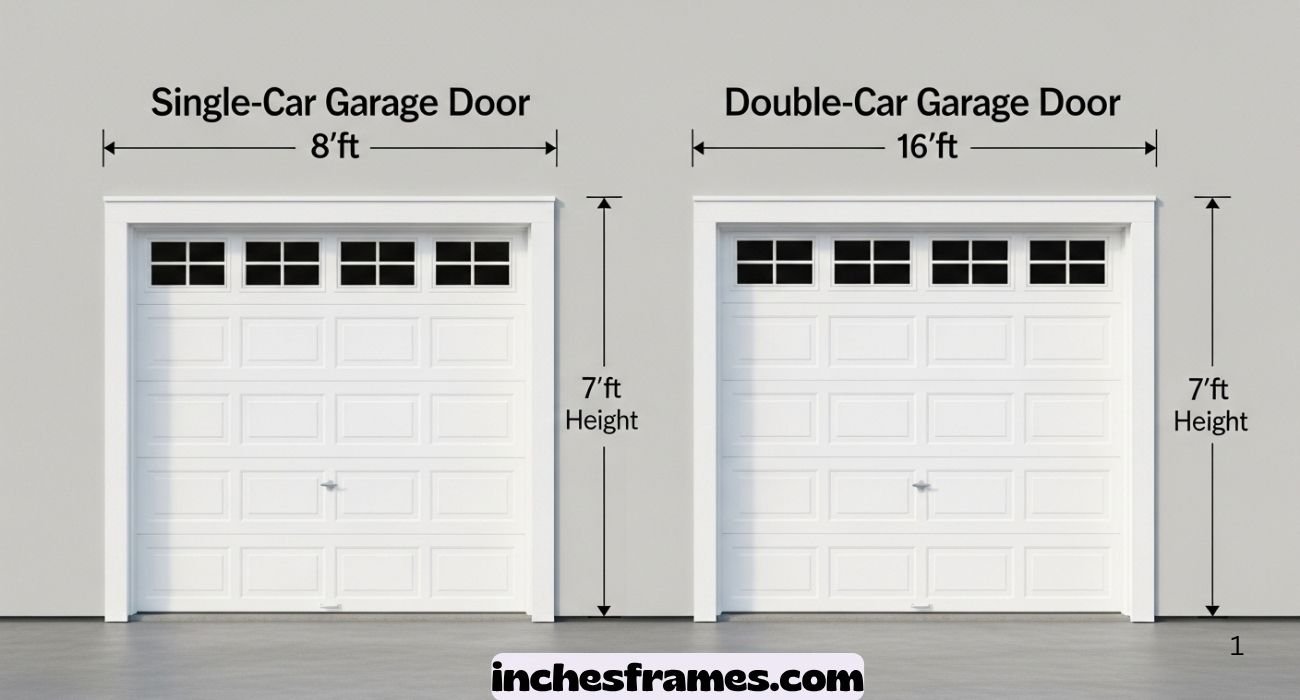
Standard Garage Door Dimensions are the usual width and height of garage doors used in homes. They tell you how big a garage door is. These dimensions help cars fit safely inside the garage.
Choosing the right size makes parking easier and keeps your garage neat. The correct door size also saves money. It avoids problems when installing the door.
Most single-car garages use 8×7 feet doors. Two-car garages usually use 16×7 feet doors. Standard sizes also work with most garage openers and accessories.
Standard Garage Door Dimensions
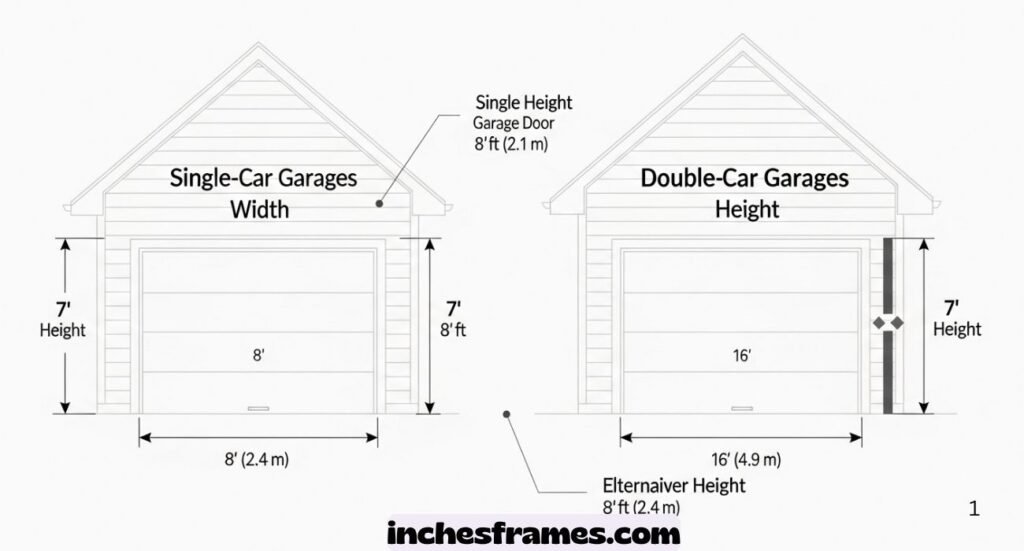
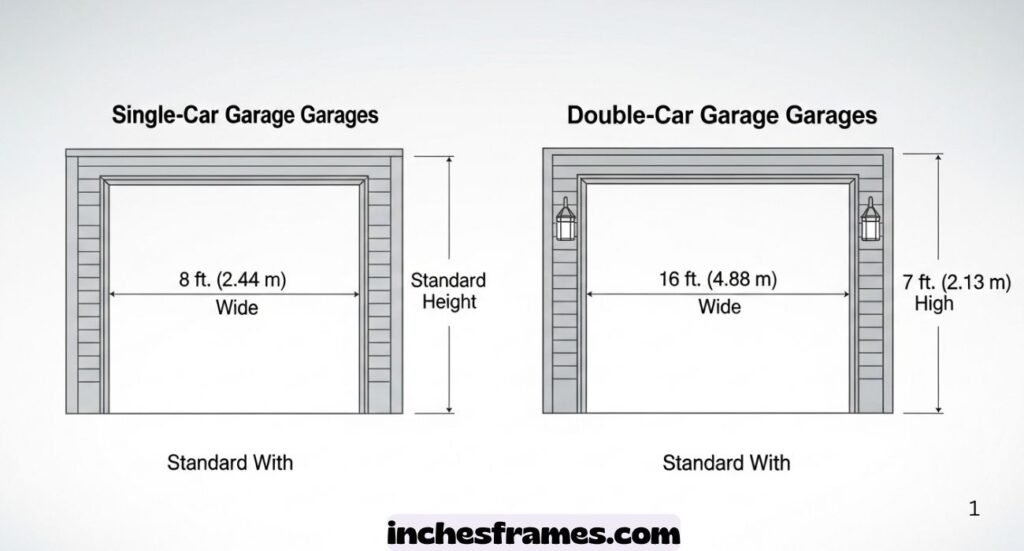
The most common standard garage door dimensions for residential homes are 8 feet wide by 7 feet tall for a single-car garage door size and 16 feet wide by 7 feet tall for a double-car garage door size. These dimensions are sometimes referred to as 8×7 garage door and 16×7 garage door, and they accommodate around 80% of American households. Standardization is essential because it reduces costs, ensures compatibility with most openers, and provides a reliable fit for a wide range of vehicles.
For homeowners who prefer metric measurements, an 8×7 door converts to approximately 2.44 meters wide by 2.13 meters tall, while a 16×7 door measures 4.88 meters wide by 2.13 meters tall. Including metric garage door measurements is helpful when comparing specifications with international manufacturers or ordering doors online.
| Garage Door Type | Width (feet) | Height (feet) | Width (meters) | Height (meters) |
| Single-Car | 8 | 7 | 2.44 | 2.13 |
| Double-Car | 16 | 7 | 4.88 | 2.13 |
| RV/Custom | 12–16 | 12–14 | 3.66–4.88 | 3.66–4.27 |
Choosing typical garage door sizes also simplifies future upgrades. If you ever want to add insulation, decorative panels, or a new automatic opener, standard sizes ensure the accessories will fit perfectly without costly modifications.
Single-Car Garage Door Dimensions
The single-car garage door size is most commonly 8 feet wide by 7 feet tall. This size comfortably accommodates compact cars, sedans, and smaller SUVs while leaving enough clearance on both sides. For homeowners with slightly larger vehicles, a 9×7 door adds an extra foot of width, making parking easier and reducing the risk of scratches from mirrors or side doors. The upper end for a single-car garage door is typically 10 feet wide, offering maximum maneuvering space at a higher cost.
Height options for single-car garages include the standard 7 feet and a taller 8 feet for vehicles with roof racks, vans, or taller SUVs. Choosing the right garage door height options ensures that your vehicles can enter and exit safely without scraping the roof or mirrors. For garages built after 2000, taller doors are more common, especially in homes with high ceilings.
In addition to standard dimensions, homeowners may consider custom garage doors if they have unusual garage shapes, need extra insulation, or want a unique design. Careful consideration of garage door width in feet and meters and clearance around the vehicle is critical when choosing a single-car garage door.
Two-Car Garage Door Dimensions
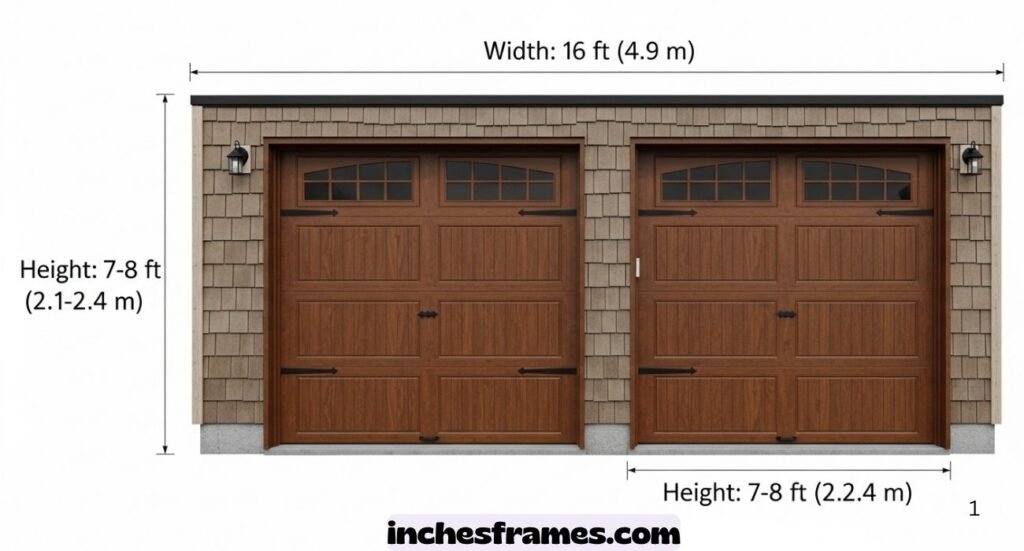
For homes with two vehicles, the double-car garage door size is typically 16 feet wide by 7 feet tall. A 16×7 door allows two cars to park side by side with minimal space between them while leaving room for opening doors comfortably. Alternative widths include 14 feet for smaller garages or 18 feet for larger vehicles and extra maneuvering space.
When planning a double-car garage door size, it is important to account for the interior width of the garage. A standard two-car garage usually measures 18 to 20 feet wide, providing extra space for walls, storage, or workbenches. This ensures proper fitment of the tracks and smooth operation of the door.
Using metric garage door measurements, a 16×7 door is approximately 4.88 meters wide by 2.13 meters tall. This is particularly useful when sourcing doors from international manufacturers or when precision is required for installation.
Two-car garage doors also require careful consideration of garage opener size requirements. Doors above 16 feet or insulated panels often need a 1¼ HP motor for smooth operation, while single doors usually operate efficiently with a ¾ HP motor.
Specialty Garage Door Sizes
Some vehicles and storage needs cannot be accommodated by standard doors. RV garage door dimensions are often 12 to 16 feet wide and 12 to 14 feet tall to fit motorhomes, campers, and taller recreational vehicles. Commercial garage door sizes vary widely, including 10×10 for service bays and 12×12 or larger for loading docks. Warehouses may require doors as wide as 20 feet or more.
Custom garage doors are often required for boat storage, classic cars, or other specialized vehicles. For example, a garage for a yacht or a large RV may need a door measuring 14 feet wide by 10 feet tall. Golf cart garages often have smaller doors, typically 6 to 8 feet wide by 6 feet tall, saving money while perfectly fitting small utility vehicles.
Choosing custom garage doors ensures both functionality and protection for valuable vehicles. Architects and homeowners frequently consider ceiling height, wall clearance, and door materials when planning specialty doors. Knowing garage door installation measurements is critical for successful custom installations.
How to Measure Your Garage Door Opening
Accurate measurement is the key to installing any garage door correctly. Start by measuring the width from the inside edge of the door frame on one side to the inside edge on the other side. Use a steel tape measure, as cloth tapes can stretch and lead to errors.
Next, measure the height from the floor to the bottom of the header at three points—left, center, and right—and use the smallest measurement. Garage floors often slope slightly, and taking multiple points ensures accuracy.
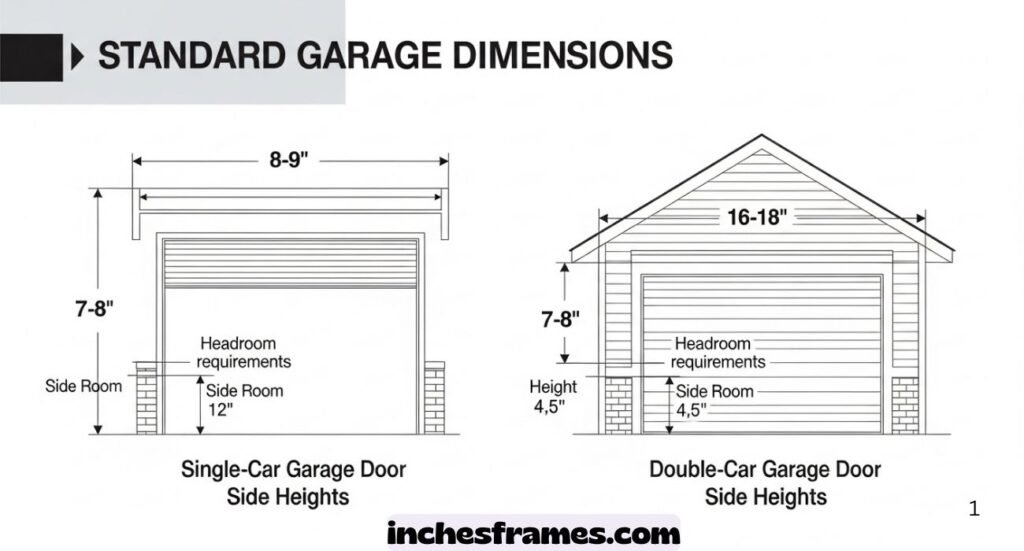
Headroom is another critical factor, referring to the distance between the top of the door opening and the ceiling. Most standard doors require 12 inches of headroom, while high-lift or special track systems may need 18 to 24 inches. Side room refers to the space on each side of the door for track installation, typically 3.75 to 4 inches. These garage door installation measurements ensure smooth operation and long-term durability.
Understanding garage door width in feet and meters and height options helps homeowners choose a door that fits precisely and functions reliably. Even a small error in measurement can result in operational problems, reduced lifespan, or increased costs.
Understanding Standard Garage Door Dimensions
Choosing the right standard garage door dimensions is essential for both safety and convenience. Most homes in the USA use typical sizes like 8×7 for single-car and 16×7 for double-car garages. Standardized dimensions help homeowners avoid costly mistakes, ensure proper fit for vehicles, and make installation easier. Knowing these measurements is key to any successful garage project.
Using standard sizes also reduces costs. Manufacturers produce these doors in large quantities, which lowers prices and shortens delivery times. They are compatible with most garage openers, tracks, and hardware. Standard dimensions also make it easier to plan interior garage space, leaving room for storage or workspace without interfering with door operation.
Single-Car Garage Door Size Options
A single-car garage door size typically measures 8 feet wide by 7 feet tall. This fits most sedans, compact cars, and small SUVs. Some homeowners prefer 9×7 doors for extra width, which makes parking easier and reduces the risk of scratches from mirrors or doors. Height can also increase for larger vehicles.
For larger SUVs or vans, a 10×7 door offers more maneuvering space. Choosing the correct garage door height options ensures vehicles with roof racks or taller profiles fit comfortably. Selecting the right width and height is essential for smooth operation, safety, and aesthetics. A single-car garage door should balance cost, clearance, and style.
Two-Car Garage Door Dimensions Explained
A standard double-car garage door size is 16 feet wide by 7 feet tall. This allows two vehicles to park side by side comfortably. Smaller alternatives, like 14×7, fit tighter spaces, while 18×7 provides extra room for trucks or SUVs. Understanding garage door width in feet and meters helps homeowners plan interior garage space accurately.
Proper width ensures smooth operation and prevents vehicle damage. Interior two-car garage dimensions usually range from 18 to 20 feet wide. This extra space accommodates wall framing, storage, and track installation. Choosing standard dimensions simplifies installation, ensures compatibility with most openers, and provides the best value for homeowners.
Specialty Garage Door Sizes for Unique Needs
Some garages require RV garage door dimensions, often 12 to 16 feet wide and 12 to 14 feet tall, to accommodate motorhomes or campers. Commercial garage door sizes are larger, like 10×10, 12×12, or even 20 feet wide, depending on the business or warehouse. Specialty doors protect larger vehicles while providing smooth access.
Custom solutions are also available for boats, golf carts, or classic cars. Custom garage doors allow precise width and height options while enhancing aesthetics. These doors ensure safety, durability, and efficiency. Homeowners often balance functionality with design, using specialty doors when standard sizes do not meet their vehicle or storage requirements.
Importance of Accurate Garage Door Measurements
Accurate garage door installation measurements prevent costly mistakes. Start by measuring width from inside edge to inside edge and height from floor to header. Take multiple points and use the smallest measurement. Headroom and side room are critical for smooth track and opener installation. Proper measurement ensures long-term performance.
Even a small error can lead to operational problems. Incorrect measurements may result in doors that stick, open unevenly, or damage vehicles. Measuring in both feet and meters helps if ordering doors internationally or using metric specifications. Homeowners should prioritize accuracy for efficiency and safety.
See Also : Magazine Dimensions: Magazine Size and Formats
Garage Door Height and Clearance Considerations
Most standard doors are 7 feet tall, but some homeowners choose 8-foot heights. Taller doors accommodate trucks, SUVs, vans, and vehicles with roof racks. Proper vertical clearance prevents scraping and ensures smooth operation. Knowing garage door height and width is vital for safety and convenience.
Headroom is another important factor. Standard installations require 12 inches above the opening for tracks, while high-lift or special track systems need 18–24 inches. Side room on both sides ensures track clearance. Proper height and clearance planning maximize usable garage space and door lifespan.
Choosing the Right Garage Door for Your Vehicles
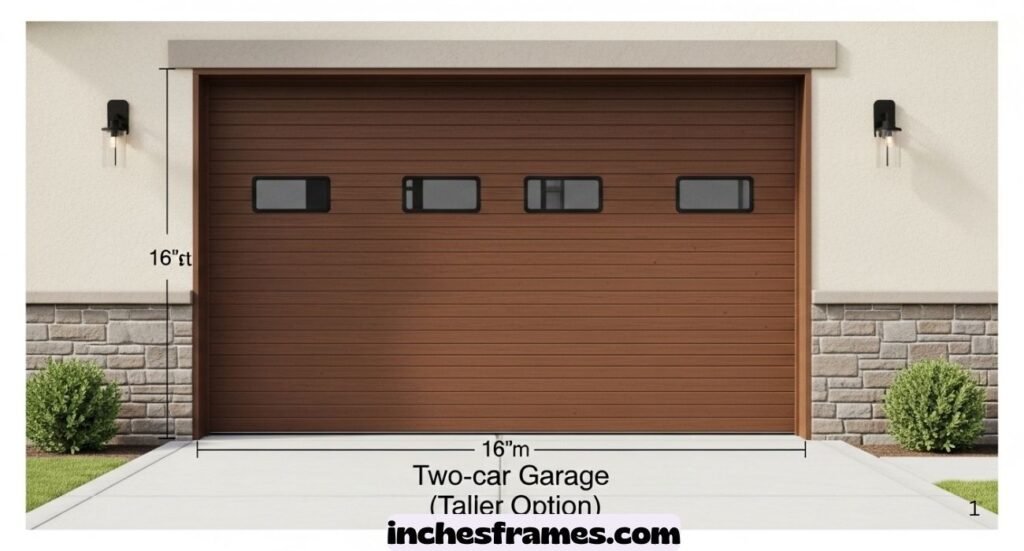
Selecting the correct garage door depends on vehicle size and garage layout. A single-car garage may use 8×7 or 9×7, while two-car garages require 16×7 or larger. Specialty vehicles like RVs or boats need taller doors. Garage door width in feet and meters guides proper fit.
Door selection also affects daily convenience. Wider doors allow easier parking and reduce door collisions. Standard or slightly larger doors often reduce stress when maneuvering. Proper matching of door dimensions with vehicle type ensures long-term satisfaction, safety, and functionality.
Read Also : Badminton Court Dimensions: Size & Layout
Benefits of Standardized Garage Door Sizes
Using typical garage door sizes has many advantages. Standard doors cost less, are widely available, and match most garage openers. Installation is faster and simpler, saving homeowners time and money. Standardization also ensures compatibility with track systems, insulation, and panel options.
Standard sizes also make future upgrades easier. Homeowners can install new openers, add decorative panels, or replace doors without major modifications. Choosing standard widths and heights balances cost, function, and aesthetics, making them ideal for the majority of residential garages.
FAQs
What are standard garage door sizes?
Standard residential garage doors are typically 8×7 feet for single-car and 16×7 feet for double-car garages.
Is 10×10 a standard garage door size?
No, 10×10 is not standard for homes; it is usually used for commercial or specialty garages.
Is a 7 foot garage door actually 7 feet?
Yes, a 7-foot garage door refers to the opening height, though slight variations may occur due to installation.
Can you get a 12 ft garage door?
Yes, 12-foot-wide or tall garage doors are available as specialty or custom options for RVs, boats, or large vehicles.
Conclusion
Choosing the right standard garage door dimensions is essential for safety, convenience, and vehicle protection. Whether you are installing a single-car garage door size, double-car garage door size, or a specialty or custom door, careful measurement and planning are critical. Standard sizes like 8×7 and 16×7 save money, reduce installation time, and ensure compatibility with most garage opener size requirements.
For homes with RVs, commercial vehicles, or unique storage needs, understanding RV garage door dimensions, commercial garage door sizes, and custom solutions allows homeowners to select the right door with confidence. Always measure your garage opening accurately, considering width, height, side room, and headroom, to ensure your new garage door fits perfectly and operates smoothly for years to come.
By understanding garage door height and width, metric conversions, and garage door installation measurements, homeowners can make informed decisions that combine function, style, and value.