Badminton Court Dimensions: Size & Layout
Badminton Court Dimensions are the exact length, width, and layout of a badminton court. These measurements include the net height, service lines, and playing area. Knowing them helps players play safely and correctly.
Playing on a properly measured court makes the game fun and fair. Imagine hitting a perfect smash and running freely without hitting walls. Correct badminton court dimensions make every match exciting.
The official badminton court dimensions follow BWF rules. Doubles courts are wider than singles courts. The net, lines, and space around the court all follow set measurements for safe play.
Standard Badminton Court Size – Official Measurements
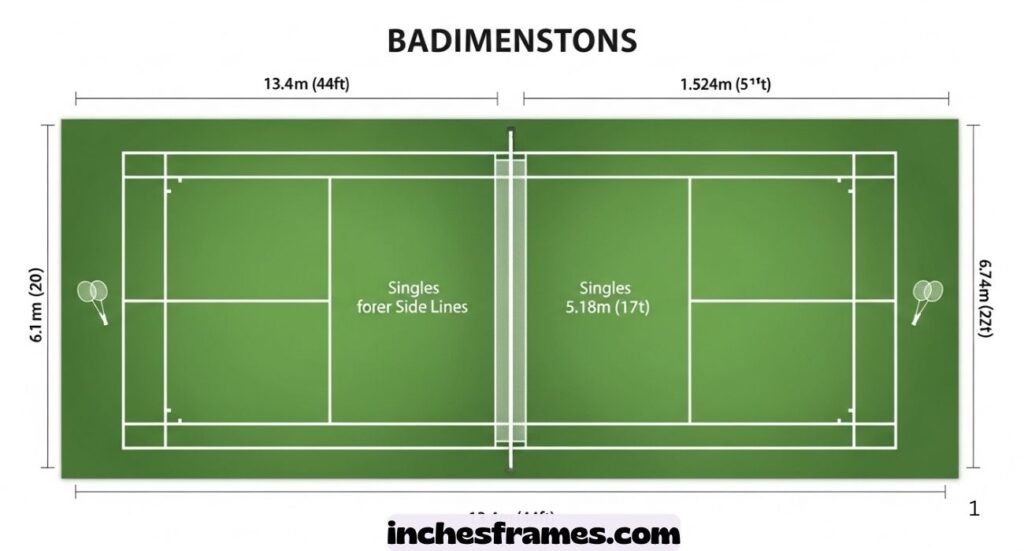
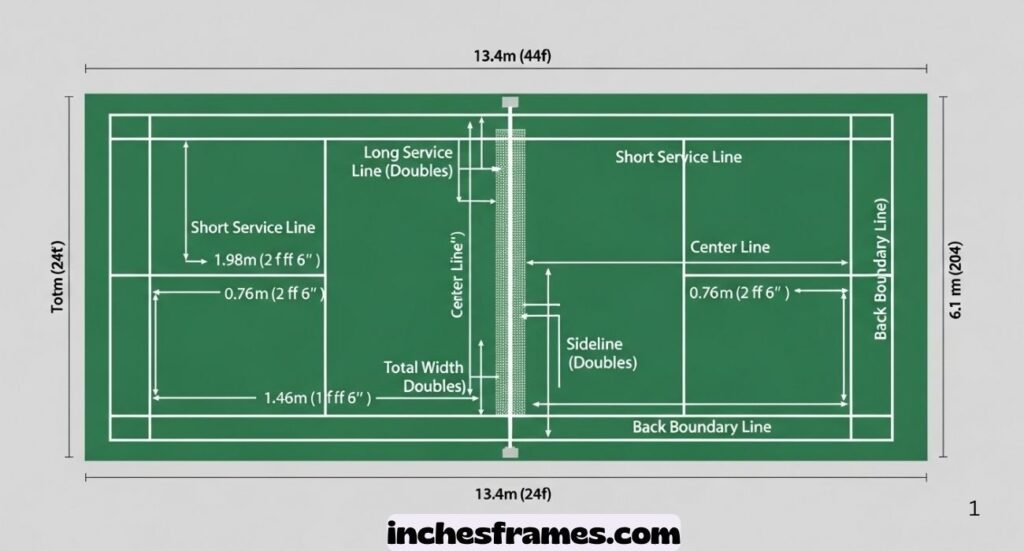
The standard badminton court size is defined by the Badminton World Federation (BWF regulations) and applies worldwide. For a doubles badminton court, the official measurements are 13.4 meters (44 feet) in length and 6.1 meters (20 feet) in width. For a singles badminton court, the length remains the same at 13.4 meters, but the width narrows to 5.18 meters (17 feet).
The importance of these measurements cannot be overstated. Accurate badminton court dimensions allow players to practice and compete on a regulation-size court. When these measurements are applied correctly, both recreational and professional matches can proceed without disputes. Even small variations in court length and width can affect gameplay, making shots feel shorter or longer than intended.
Overall Badminton Court Dimensions
The total playing area of a doubles badminton court is 81.74 square meters (880 square feet), while a singles badminton court covers 69.41 square meters (747 square feet). This includes the entire rectangle where the shuttlecock can land legally during a match. These measurements are used for both indoor badminton courts and outdoor badminton courts, ensuring consistent play worldwide.
For clarity, the main badminton court measurements include the baseline, sidelines, service lines, and center line. These lines divide the court into different zones for serving and rallying. Players and coaches often refer to the court dimensions in meters or feet depending on the facility, but the rules remain identical under BWF regulations.
| Court Type | Length (m/ft) | Width (m/ft) | Total Area (m²/ft²) |
| Doubles Badminton Court | 13.4 m / 44 ft | 6.1 m / 20 ft | 81.74 m² / 880 ft² |
| Singles Badminton Court | 13.4 m / 44 ft | 5.18 m / 17 ft | 69.41 m² / 747 ft² |
Badminton Court Dimensions
A quick reference table of the badminton court dimensions includes net height, service lines, and side alleys. The court length and width are critical, but so are the service line dimensions and the center line and service boxes, which ensure fair play during every serve.
The following table summarizes the key badminton court measurements:
| Measurement | Metric | Imperial |
| Court Length | 13.4 m | 44 ft |
| Doubles Width | 6.1 m | 20 ft |
| Singles Width | 5.18 m | 17 ft |
| Net Height (Center) | 1.524 m | 5 ft |
| Net Height (Posts) | 1.55 m | 5 ft 1 in |
| Short Service Line | 1.98 m | 6.5 ft |
| Back Service Line (Singles) | 0.76 m from baseline | 2.5 ft |
These badminton court dimensions are used across the USA in schools, sports clubs, and professional facilities. Understanding these measurements helps players visualize court zones and ensures accurate play during matches.
Quick Tips to Avoid Confusion:
When setting up a court, many beginners get confused between singles and doubles badminton court layouts. The doubles court uses the full 6.1 meters width, while singles court excludes the side alleys. The net height remains the same for both, but the service lines differ. It is also important to remember that the center line divides the left and right service boxes, and players must serve diagonally into the opposite box. Ensuring these details are correct prevents errors during gameplay and keeps the shuttlecock play area consistent.
Badminton Court Layout
A proper badminton court layout includes the baseline, sidelines, center line, short and long service lines, and alleys. The playing area for badminton is divided into left and right service courts, and each shot must land within the designated boundaries. The layout is identical for indoor badminton courts and outdoor badminton courts, though indoor courts often require a darker floor color to contrast with the shuttlecock.
Court Line Markings and Specifications
All badminton court boundary lines must be 40mm wide (1.57 inches). The lines are usually white or yellow for maximum visibility. Using high-quality court marking paint ensures the lines remain visible even after heavy foot traffic. Indoor courts use specialized paints that do not become slippery, while outdoor badminton courts require weather-resistant markings. Proper line markings are crucial for referees to judge shots accurately and for players to avoid stepping out of bounds.
Service Court Dimensions
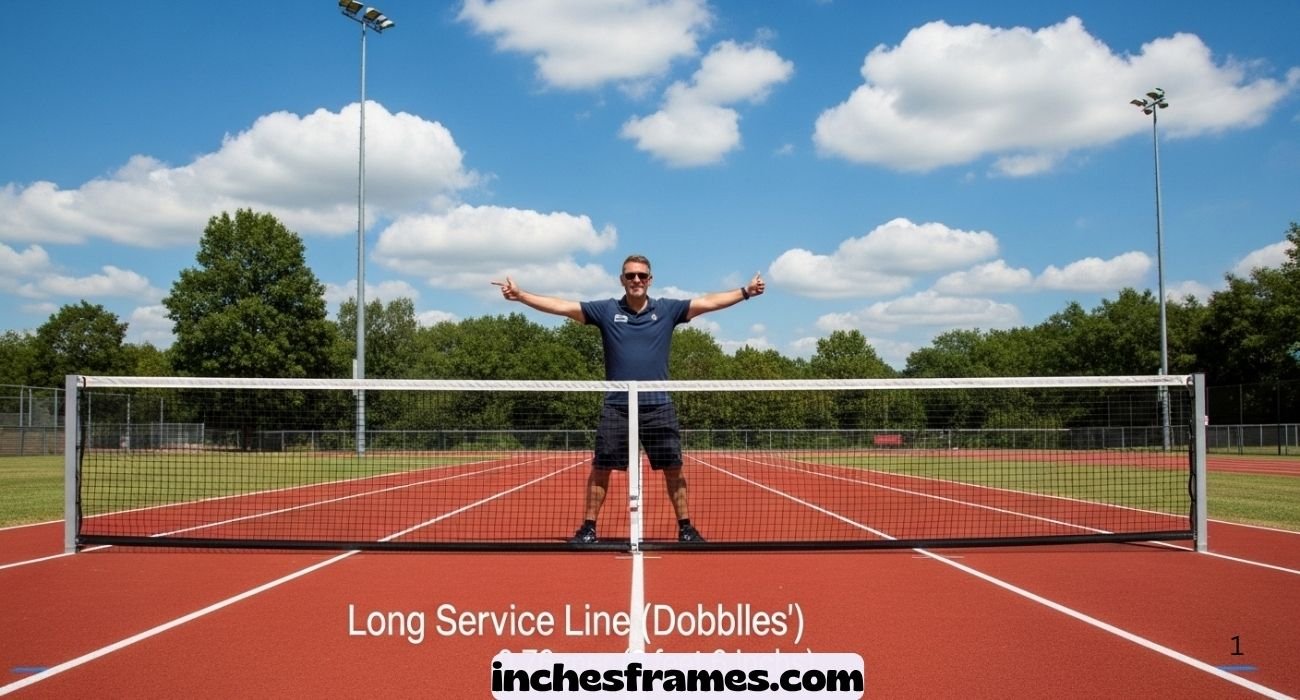
The short service line sits 1.98 meters (6.5 feet) from the badminton net height at the center. For doubles, the long service line aligns with the back boundary, but in singles, there is an additional back service limit 0.76 meters (2.5 feet) from the baseline. The center line and service boxes create four separate zones for serving, and the server must hit diagonally into the opposite service box. Proper understanding of these service line dimensions is essential for competitive play.
Singles vs. Doubles Court Layout
The singles badminton court measures 13.4m × 5.18m, while the doubles badminton court expands to 13.4m × 6.1m. This extra width gives doubles players a larger area for rallies, while the side alleys are only counted during doubles matches. Singles matches ignore the side alleys, making shots landing there out of bounds. The court clearance requirements differ slightly, as doubles play needs more lateral space for player movement and longer rallies.
Badminton Net Height and Placement
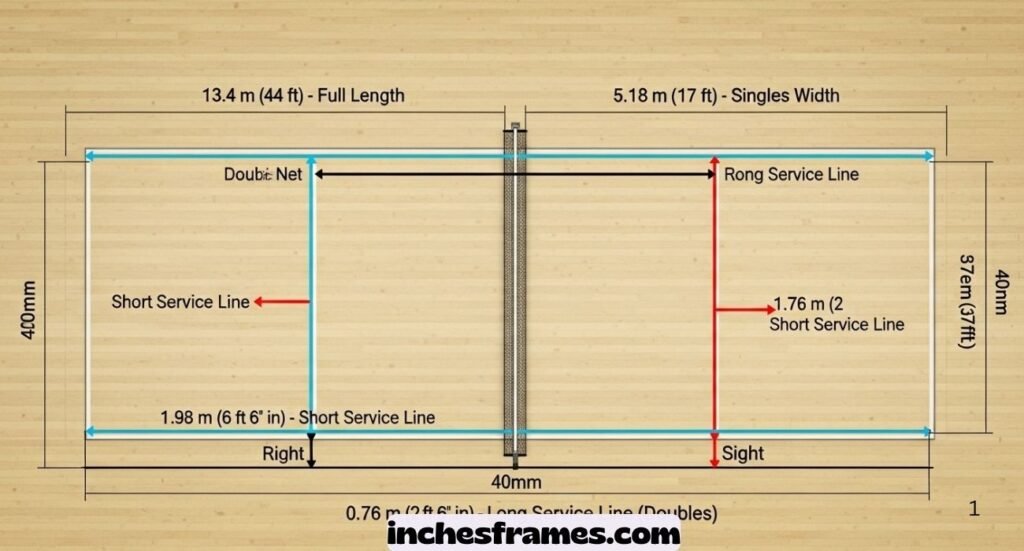
Official Net Specifications
The badminton net height is 1.524 meters (5 feet) at the center, rising slightly to 1.55 meters (5 feet 1 inch) at the posts. The net spans 6.1 meters, covering the full doubles badminton court width. It must have a minimum depth of 760mm, with small 20mm mesh squares to prevent the shuttlecock from passing through. Maintaining the correct net height ensures fair gameplay across all skill levels.
Net Post Positioning
Net posts are positioned on the doubles badminton court sidelines, not outside them, to keep the net taut without interfering with play. Posts should be stable to prevent wobbling, which could disrupt shots. Professional facilities use weighted bases or floor-mounted systems, while home courts may have portable posts with sufficient stability. Correct net post positioning is vital for both safety and regulation compliance.
Space Requirements for Your Badminton Court
Minimum Space Needed
The court itself measures 13.4m × 6.1m, but minimum space for badminton requires 14.63m × 7.32m (48ft × 24ft) to allow players room to move safely. This includes extra clearance behind the baseline and on the sides. Insufficient space can lead to injuries during fast rallies or smashes.
Recommended Space for Optimal Play
For comfortable competitive play, the recommended area is 17.41m × 10.10m (57.12ft × 33.14ft). Clearance zones behind baseline should be at least 1.5–2 meters, and side clearance should be 1–1.5 meters. Indoor courts should have a ceiling height for badminton of at least 9 meters, while professional venues prefer 12 meters. These measures ensure players have full mobility without interference.
Multiple Court Configurations
When installing multiple courts, maintain at least 2 meters between each court. Side-by-side arrangements work best in wide spaces, while end-to-end configurations suit long, narrow gyms. Proper badminton court layout and spacing prevent interference and allow multiple matches to run simultaneously.
See Also : Beverage Can Dimensions: Size, Height and Length
Badminton Court Dimensions Compared to Other Sports
Badminton vs. Tennis Court Size
A tennis doubles court measures 23.77m × 10.97m (78ft × 36ft), nearly 1.5 times larger than a doubles badminton court. Tennis nets are lower at 0.91 meters (36 inches), and the larger court accommodates the heavier tennis ball. Understanding the comparison with tennis court size helps multi-sport facilities plan conversions efficiently.
Badminton vs. Pickleball Court Dimensions
A doubles badminton court and a pickleball court share identical dimensions of 20 feet × 44 feet (6.1m × 13.4m). The difference is in badminton net height, which is 60 inches at the center, while pickleball nets are lower at 34 inches. Line markings and serving rules also differ significantly.
Badminton vs. Squash Court Size
Squash courts measure 9.75m × 6.4m (32ft × 21ft), smaller than badminton courts. Squash is an enclosed court sport where walls are part of play, unlike badminton, which requires an open shuttlecock play area and proper court clearance requirements.
Professional vs. Recreational Court Standards
BWF Tournament Court Requirements
Professional courts must follow strict BWF regulations, with no tolerance for dimensional errors. Tournament venues require 2 meters of side clearance and 2.5 meters behind each baseline. Court color and lighting are regulated, with surface reflectivity limits to prevent glare.
Recreational and Home Court Flexibility
Home or recreational courts can compromise slightly on minimum and optimal space for badminton, but safety should never be sacrificed. Ceiling height, rather than side clearance, is more critical in tight spaces. A professional vs recreational court comparison shows that professional setups are more strict on measurements, surface, and lighting.
Cost Considerations for Badminton Court Installation
Building a full-size doubles badminton court indoors typically costs between $10,000–30,000, depending on flooring, lighting, and labor. Outdoor courts cost significantly less, around $2,000–8,000. DIY setups for home use can be done with portable nets, line marking tape, and proper flooring, usually costing $500–2,000.
Annual maintenance includes resurfacing, line remarking, and net replacement. Understanding court installation cost helps players plan both professional and recreational setups efficiently.
Understanding the Standard Badminton Court Size
The standard badminton court size is crucial for fair play and safety. For doubles matches, the court measures 13.4 meters long and 6.1 meters wide, while singles courts narrow to 5.18 meters. These dimensions follow BWF regulations and ensure consistency across all professional and recreational courts in the USA. Accurate measurements allow players to anticipate shots and play effectively.
Knowing the court length and width helps coaches and players plan training drills and match strategies. Even small variations can affect gameplay, leading to inaccurate serves or missed shots. Setting up a court with the correct badminton court measurements ensures compliance with international rules and creates a safe, enjoyable playing environment for everyone, from beginners to advanced players.
Doubles vs. Singles Court Layout
A doubles badminton court offers extra width, making the playing area 6.1 meters wide compared to 5.18 meters for singles. This extra space accommodates two players on each side, allowing more dynamic movement and longer rallies. The side alleys are active only during doubles play, and understanding their use is essential for effective teamwork during matches.
For singles badminton court layouts, players need to focus on precision and positioning within the narrower space. The back tramline determines where serves land, and side alleys are considered out of bounds. Knowing the differences in layout helps players transition between singles and doubles matches, ensuring they follow proper service line dimensions and maintain strategic positioning throughout the game.
Importance of Net Height and Placement
The badminton net height is 1.524 meters at the center and slightly higher at the posts. Proper net tension and placement ensure fair gameplay and prevent the shuttlecock from passing through. Correct net height is essential in both indoor badminton courts and outdoor setups, as even minor deviations can affect smashes and drop shots, impacting the overall game quality.
Net post positioning is equally important for stability. Posts must be placed on the doubles sidelines and strong enough to keep the net taut. In professional courts, weighted bases or floor-mounted systems are used, while home courts may rely on portable solutions. Proper net setup enhances safety and ensures that all badminton court boundary lines are used correctly during play.
Service Lines and Center Boxes Explained
The service line dimensions determine where serves must land in both singles and doubles matches. The short service line is 1.98 meters from the net, while back service lines differ for singles and doubles. The court is divided by a center line and service boxes, ensuring players serve diagonally into the opponent’s correct area.
Accurate marking of the center line and service boxes is essential to avoid disputes. Players rely on these lines to execute legal serves and anticipate shot placement. Using quality court marking paint ensures that the lines remain visible and durable, creating a professional playing environment for both recreational and competitive matches across the USA.
See Also : Soup Can Dimensions: Size, Height and Length
Minimum and Optimal Court Space Requirements
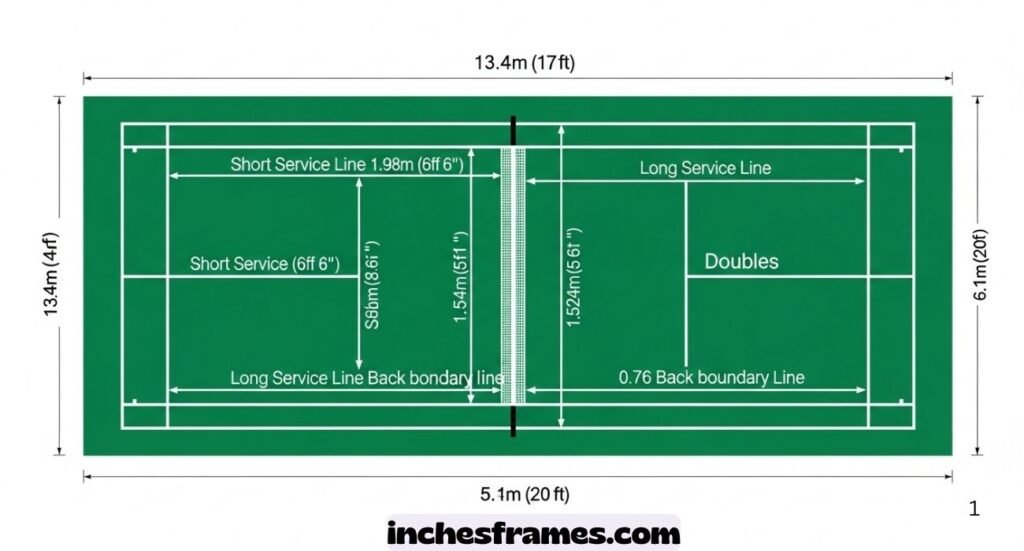
The minimum space for safe badminton play extends beyond the court, requiring 14.63m × 7.32m. Extra clearance allows players to move freely and prevents collisions with walls or obstacles. These court clearance requirements are vital for indoor and outdoor courts, ensuring that both casual and competitive matches are safe and enjoyable.
For optimal performance, a space of 17.41m × 10.10m is recommended. Side clearance should be 1–1.5 meters, and back clearance 1.5–2 meters. Adequate ceiling height for badminton also improves gameplay by allowing high clears. Following these recommendations provides the best environment for training, tournaments, and recreational play.
Comparing Badminton Courts with Other Sports
A doubles badminton court is significantly smaller than a tennis court, which measures 23.77m × 10.97m. Tennis courts have lower nets and larger playing areas, affecting player movement and shot strategy. Comparing badminton court dimensions with other sports helps multi-sport facilities plan layouts and manage space efficiently.
Badminton courts share dimensions with pickleball courts but differ in net height and service rules. Squash courts are smaller and enclosed, emphasizing wall play. Understanding these differences helps players adjust their strategy and ensures the correct playing area for badminton is maintained, preventing safety issues during cross-sport training or recreational use.
Court Surface and Marking Essentials
A proper court surface requirement is essential for safety and performance. Indoor courts often use wood or synthetic flooring to prevent slipping, while outdoor courts require non-slip, weather-resistant surfaces. Maintaining the right surface enhances movement, agility, and prevents injuries during fast-paced rallies.
Line visibility is equally important. Using high-quality court marking paint ensures that badminton court boundary lines remain visible over time. Well-maintained lines help players judge shot accuracy and serve legality, while worn or unclear markings can lead to disputes or unsafe play conditions.
Cost Considerations for Building a Court
Building a full-size doubles badminton court can vary widely in cost. Indoor setups usually range from $10,000–30,000, considering flooring, lighting, and professional installation. Outdoor courts cost less, often $2,000–8,000, depending on materials and equipment. DIY options can also be practical for home use at $500–2,000.
Maintenance is a long-term cost consideration. Annual upkeep includes resurfacing, line remarking, and net replacement. Understanding court installation cost helps both recreational players and facility managers budget appropriately while ensuring the court meets BWF regulations and provides a safe, professional-quality environment for all players.
FAQs
What are the dimensions of a badminton court?
The official badminton court dimensions are 13.4 meters (44 feet) long and 6.1 meters (20 feet) wide for doubles, and 5.18 meters (17 feet) wide for singles.
Is a badminton court 20 feet by 44 feet?
Yes, a doubles badminton court measures exactly 20 feet by 44 feet, while singles use the same length but 17 feet width.
What is 44 feet long and 17 feet wide in badminton?
44 feet long and 17 feet wide refers to the singles badminton court dimensions.
What is the size of a badminton court Class 12?
For Class 12 or school-level courts, standard BWF court dimensions of 44 feet × 20 feet (doubles) or 44 feet × 17 feet (singles) are typically followed.
Conclusion
Understanding Badminton Court Dimensions helps players play the game safely and fairly. The court length, width, net height, and service lines all work together to make the game organized. Knowing the correct badminton court dimensions lets players move freely and hit the shuttlecock correctly. Following these measurements also helps schools, clubs, and homes set up courts that match professional standards.
Good badminton court dimensions give enough space for fast movements and exciting rallies. They make the game fun for singles and doubles matches. Players can practice skills like smashes, clears, and drops without worrying about safety. Learning these measurements is important for every young player who wants to enjoy badminton properly and improve their game.