Soup Can Dimensions: Size, Height and Length
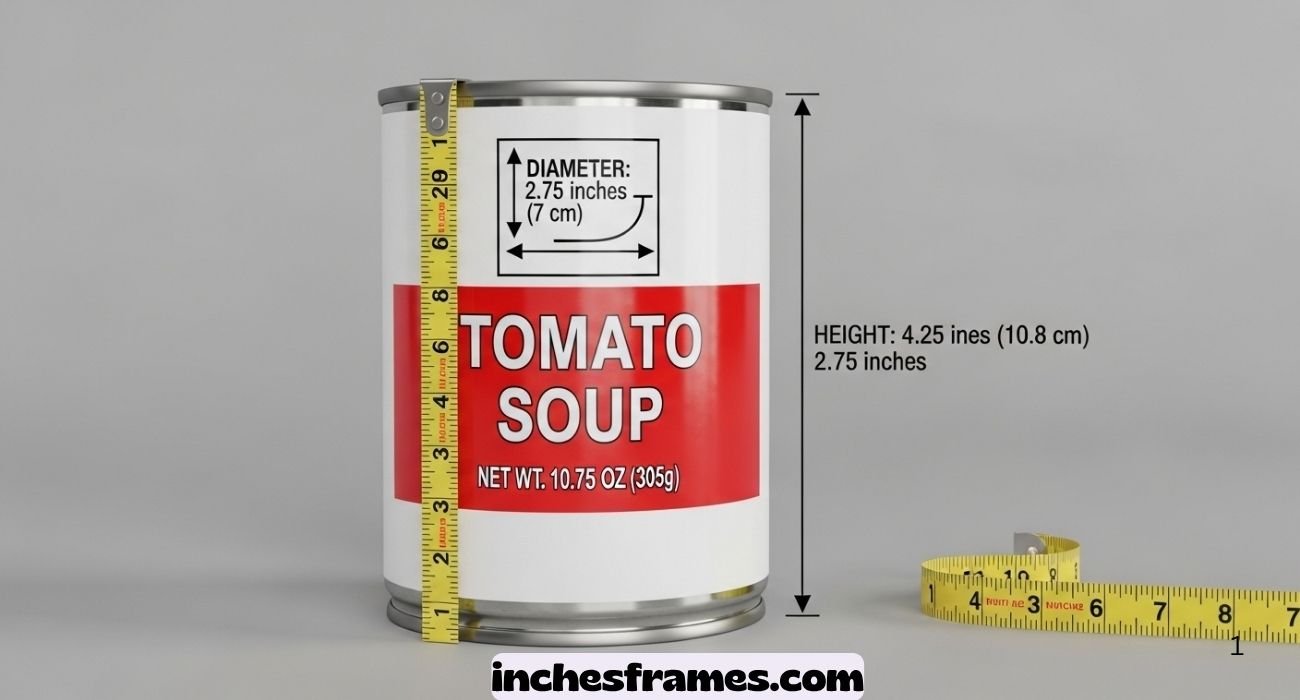
Soup Can Dimensions mean the size, height, and width of a soup can. It also shows how much soup the can holds. These measurements help with cooking, storing, and organizing cans at home.
Many people do not know the exact soup can dimensions. Knowing them makes cooking and meal planning easier. It also helps to keep the pantry neat and organized.
Standard soup cans have different sizes. Condensed cans are smaller, and ready-to-serve cans are bigger. Large #10 cans are for food service. These measurements help choose the right can for every need.
Complete Soup Can Size Chart
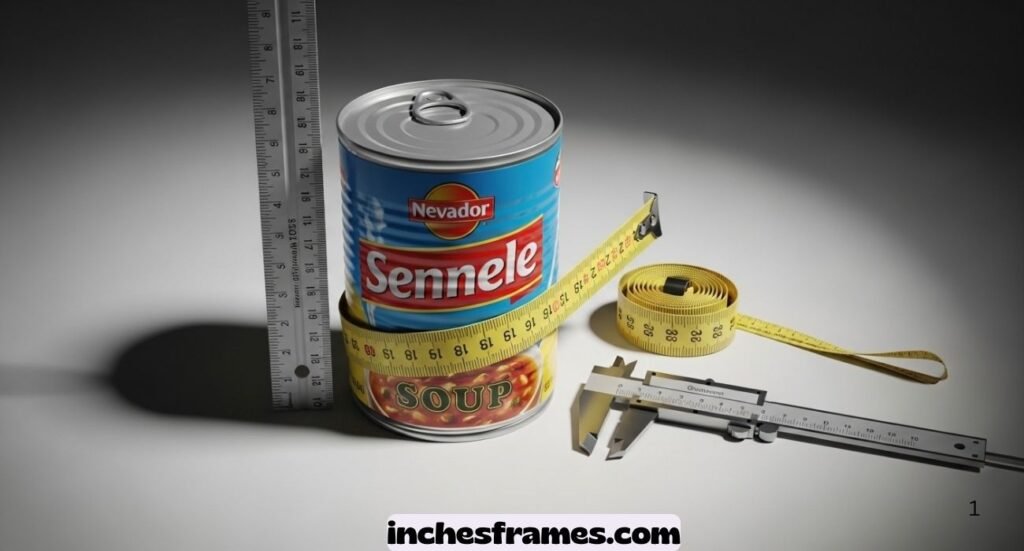
To get started, it’s useful to have a complete soup can size chart that shows the diameter, height, capacity, and typical use of the most common cans. This helps with pantry organization for soup cans and planning meals efficiently. The chart below shows both soup can measurements in inches and fluid ounces:
| Can Size | Can Name | Diameter (in) | Height (in) | Capacity (oz) | Common Use |
| 300×407 | Condensed | 3 | 4.5 | 10.5–10.75 | Standard condensed soup |
| 307×409 | #2 Can | 3.5 | 4.5 | 18–19 | Ready-to-serve soup |
| 401×411 | #2.5 Can | 4.01 | 4.11 | 28 | Family size portions |
| 512×562 | #5 Can | 5.125 | 5.625 | 51 | Bulk/institutional |
| 603×700 | #10 Can | 6.25 | 7 | 100 | Food service/commercial |
This chart is useful for comparing Condensed soup can size with Ready-to-serve soup can dimensions and larger cans used in restaurants or catering.
Standard Soup Can Dimensions and Sizes
The standard soup can size is an important reference for most kitchens in the United States. It helps in meal planning with soup cans because the size affects the number of servings per can. Condensed soup can size is smaller, designed for recipes where water or milk is added. Ready-to-eat soup cans are slightly larger because they are ready for consumption without additional ingredients. Understanding these measurements also helps with canned soup storage tips, making sure your pantry or kitchen cabinet fits the cans properly.
Condensed Soup Can Dimensions
A Condensed soup can size is typically 3 inches in diameter and 4.5 inches in height, holding 10.5 to 10.75 ounces of soup. Campbell’s condensed soup can has maintained these dimensions for decades, providing a reliable standard in American kitchens. These cans are designed for compact storage, which is helpful for pantry organization for soup cans. Since they are concentrated, one can prepared according to instructions yields approximately 2.5 cups, which is about 2.5 servings. Knowing the soup can capacity is useful when following recipes or planning meals.
Ready-to-Serve (Chunky) Soup Can Dimensions
Ready-to-serve soup can dimensions are slightly larger at 3.5 inches in diameter and 4.5 inches tall, with a capacity of 18 to 19 ounces. Brands like Campbell’s Chunky and Progresso ready-to-eat soup can use these measurements. Unlike condensed soup, they are meant to be eaten straight from the can or warmed, making them convenient for quick meals. Understanding soup can measurements in inches and the exact soup can height and diameter allows home cooks to estimate servings accurately and plan portion sizes for families.
Small Soup Can Sizes
Smaller, individual single serving soup can sizes measure approximately 2.6 inches in diameter and 4 inches tall, holding about 7.25 ounces. These compact sizes are perfect for lunches, portion control, or quick snacks. They also make pantry organization for soup cans easier because you can stack them or line them up neatly. Many brands offer popular flavors in these sizes to cater to consumers who want convenience without waste.
Popular Soup Can Dimensions by Brand
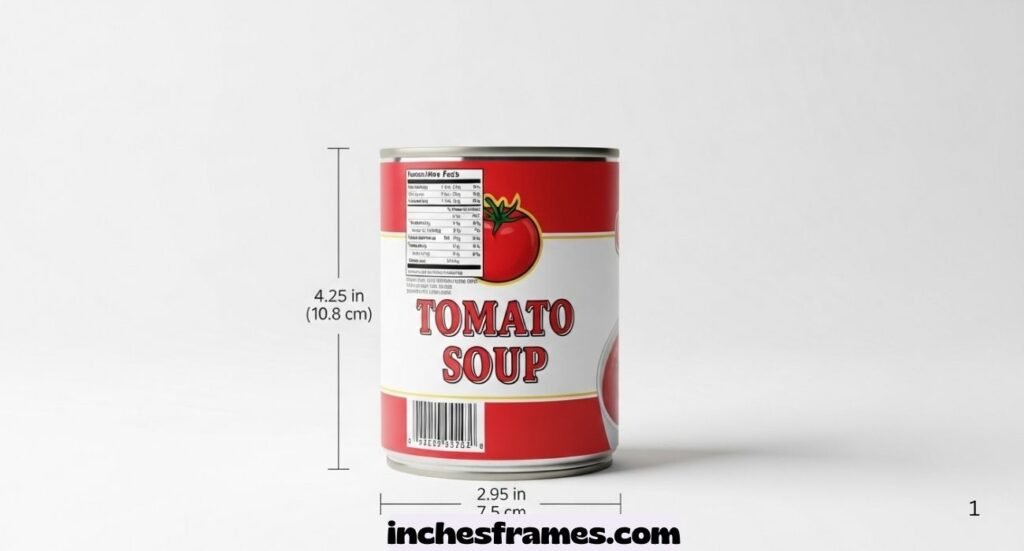
Many major brands follow standardized soup can measurements in inches to ensure shelf compatibility. Maintaining consistent sizes makes it easier for consumers to compare products and for stores to plan shelves efficiently. Understanding Campbell’s soup can dimensions and the Progresso soup can size helps shoppers know what to expect and allows for easier meal planning with soup cans.
Campbell’s Soup Can Dimensions
Campbell’s condensed soup can is 3 inches in diameter by 4.5 inches tall, with a capacity of 10.75 ounces. Their Chunky varieties are 3.5 inches in diameter and 4.5 inches in height, holding approximately 18 to 19 ounces. These measurements have remained consistent, making Campbell’s a reference standard for soup can height and diameter in the US.
Other Major Brand Dimensions
Other brands, such as Progresso, Pacific Foods, and Amy’s Organic soups, follow similar dimensions for ready-to-serve cans. Progresso soup can size aligns with 3.5 inches × 4.5 inches, holding 18–19 ounces. Store brands also adhere to these sizes, ensuring shelf compatibility and easy pantry organization for soup cans.
Large Format Soup Can Dimensions
Large cans, often used in food service, have much larger soup can capacity. The #2.5 can measures 4.01 inches in diameter by 4.11 inches tall and holds 28 ounces. The #5 can is 5.125 inches by 5.625 inches, holding 51 ounces. The largest, the #10 can, is 6.25 inches in diameter and 7 inches tall, with a capacity of 100 ounces or nearly 3 quarts. These sizes are essential for catering, restaurants, and institutions where bulk soup can size is necessary for feeding large groups efficiently.
Soup Can Dimensions in Metric (Centimeters)
For international recipes or pantry organization for soup cans, metric measurements are essential. To convert from inches to centimeters, multiply by 2.54.
Converting Soup Can Measurements
A 3-inch condensed can becomes approximately 7.6 cm in diameter and 11.4 cm in height. A 3.5-inch ready-to-serve can converts to 8.9 cm × 11.4 cm. The #10 can measures 15.9 cm in diameter by 17.8 cm in height. These soup can measurements in centimeters are useful for international food service operations and recipe conversions.
Standard Sizes in Centimeters
| Can Size | Diameter (cm) | Height (cm) | Capacity (ml) |
| Condensed | 7.6 | 11.4 | 295–318 |
| Ready-to-serve | 8.9 | 11.4 | 532–562 |
| #2.5 | 10.2 | 10.4 | 828 |
| #10 | 15.9 | 17.8 | 2,960 |
Soup Can Capacity and Serving Sizes
Understanding Fluid Ounces vs Servings
Fluid ounces in soup cans measure the volume of the product, while standard serving size of soup follows USDA guidelines of 8 fluid ounces per serving. A condensed can of 10.75 ounces equals approximately 1.3 cups before preparation, and after adding water, it yields about 2.5 servings. A ready-to-serve can of 18–19 ounces equals about 2.25 cups, or roughly two moderate servings.
Is One Can of Soup Equal to One Cup?
No, one can of soup usually contains more than 1 cup. Condensed cans provide slightly more than a cup, and ready-to-eat cans provide more than two cups. Understanding soup can capacity ensures correct portioning and meal planning with soup cans.
Standard Soup Serving Sizes
The USDA defines a standard serving size of soup as 8 fluid ounces. For larger portions, restaurants may serve 12 ounces, while family meals may require calculating servings based on can size. Properly measuring servings helps with nutrition tracking and avoiding waste.
Length and Circumference of Soup Cans
How Long is a Soup Can?
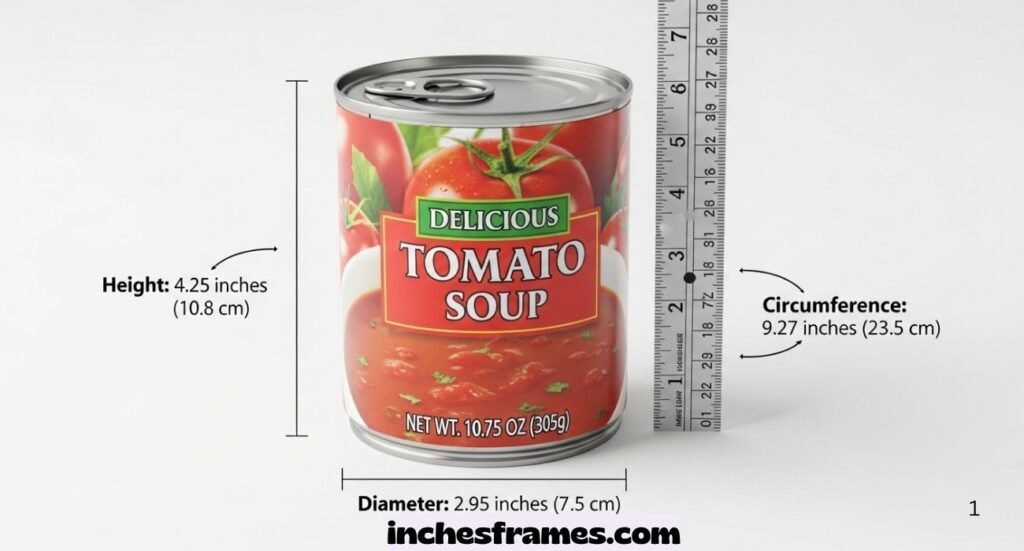
The length of a soup can is the height from bottom to top. Condensed soup can size is 4.5 inches tall, ready-to-serve cans are also 4.5 inches, and small individual cans are about 4 inches. Large #10 cans measure 7 inches. Knowing the soup can length and width helps with pantry organization for soup cans and ensures proper storage.
Calculating Soup Can Circumference
The circumference of a can is calculated using C = π × diameter. For example, a 3-inch condensed soup can size has a circumference of 9.42 inches, and a 3.5-inch ready-to-serve can has about 11 inches. The #10 can reaches approximately 19.6 inches. These calculations are useful for labeling, packaging, and determining how many cans fit side-by-side in storage.
See Also : ZYN Can Dimensions: Standard Sizes, Diameter
Soup Can Dimensions for Storage
Cabinet Space Planning
Standard kitchen cabinets are usually 12 inches deep with 10–12 inches between shelves. Condensed soup can size fits comfortably with room for stacking, while ready-to-serve cans allow three per row. Large #10 cans need taller vertical clearance. Stacking cans properly prevents toppling and optimizes pantry organization for soup cans.
Refrigerator Storage After Opening
After opening, canned soup storage tips suggest transferring leftovers to glass or plastic containers. A 10.75-ounce condensed can fits a 2-cup container, while ready-to-serve cans require 2.5 cups. Label containers with the opening date, and consume within 3–4 days to maintain safety and taste.
Understanding Standard Soup Can Dimensions
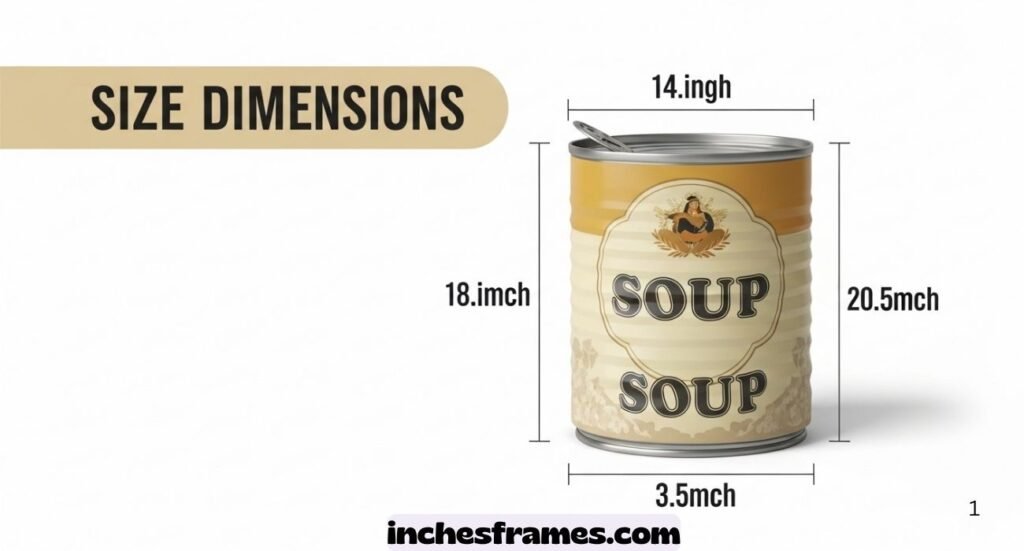
The standard soup can dimensions are a key reference for home cooks and meal planners. A typical condensed soup can measures 3 inches in diameter and 4.5 inches in height, holding 10.5–10.75 ounces. Knowing these measurements helps with pantry organization for soup cans and ensures recipes are accurately portioned for families or single servings.
In contrast, ready-to-serve soup can dimensions are slightly larger at 3.5 inches by 4.5 inches. These cans usually hold 18–19 ounces. Knowing the soup can height and diameter is useful when stacking cans, calculating servings, or planning meals. Accurate measurement avoids waste and helps store cans efficiently in cabinets or pantries.
Condensed Soup Can Size and Usage
A Condensed soup can size is ideal for recipes that require water or milk. The small, compact design of 3 inches diameter and 4.5 inches height makes it convenient for storage. Brands like Campbell’s condensed soup can maintain this size, making it a household standard across the USA.
These cans contain 10.5–10.75 ounces, providing roughly 2.5 servings after preparation. Knowing soup can capacity ensures proper meal planning and portion control. This helps in calculating ingredients for recipes accurately while keeping storage organized and efficient.
Ready-to-Serve Soup Can Dimensions
Ready-to-serve soup can dimensions are slightly larger to accommodate meals that are ready to eat without preparation. Typically, these cans measure 3.5 inches in diameter and 4.5 inches in height, holding 18–19 ounces. This makes them convenient for quick lunches or dinners.
Understanding soup can measurements in inches helps home cooks plan portions accurately. These cans are often used for family meals or single servings, allowing easy storage in cabinets or refrigerators while ensuring the proper serving size for each person.
Small and Single Serving Soup Can Sizes
A single serving soup can is compact, usually 2.6 inches in diameter and 4 inches tall, holding approximately 7.25 ounces. These cans are perfect for lunch boxes, on-the-go meals, or portion-controlled diets. They also simplify pantry organization for soup cans by fitting neatly in small spaces.
These small cans are convenient for families with children or individuals who prefer smaller portions. Knowing soup can height and diameter ensures they fit in shelves or refrigerators without taking up too much space, while still providing a full, satisfying meal.
Popular Soup Can Dimensions by Brand
Many brands follow standardized soup can dimensions to ensure consistency on store shelves. Campbell’s soup can dimensions are widely recognized, with condensed varieties measuring 3 inches × 4.5 inches and Chunky varieties at 3.5 × 4.5 inches.
Progresso soup can size matches ready-to-serve measurements for consistency. Understanding these dimensions helps shoppers make informed choices and plan meals accurately. It also simplifies pantry organization for soup cans, as uniform sizes fit neatly on shelves without wasted space.
Large Format and Bulk Soup Can Dimensions
Large cans, such as #2.5, #5, and #10, are designed for bulk soup can size needs. The #10 can measures 6.25 inches in diameter and 7 inches tall, holding 100 ounces. These cans are essential in restaurants, catering, or group meal preparation.
Knowing soup can measurements in inches and the soup can capacity allows food service professionals to plan portions accurately. Large formats reduce packaging waste and save space in commercial kitchens while helping calculate the exact servings per meal.
Metric Conversions for Soup Can Dimensions
Converting soup can measurements in inches to centimeters is easy using the factor 1 inch = 2.54 cm. A condensed can of 3 inches × 4.5 inches converts to 7.6 cm × 11.4 cm, while a ready-to-serve can becomes 8.9 × 11.4 cm.
Understanding soup can measurements in centimeters helps international chefs or recipe sharing. Metric conversions ensure that soup can capacity aligns with cooking measurements, whether following milliliters or liters for precise portioning and meal planning.
See Also : 5 Inches: Most Common Things That Are 5 Inches Long
Soup Can Storage and Organization
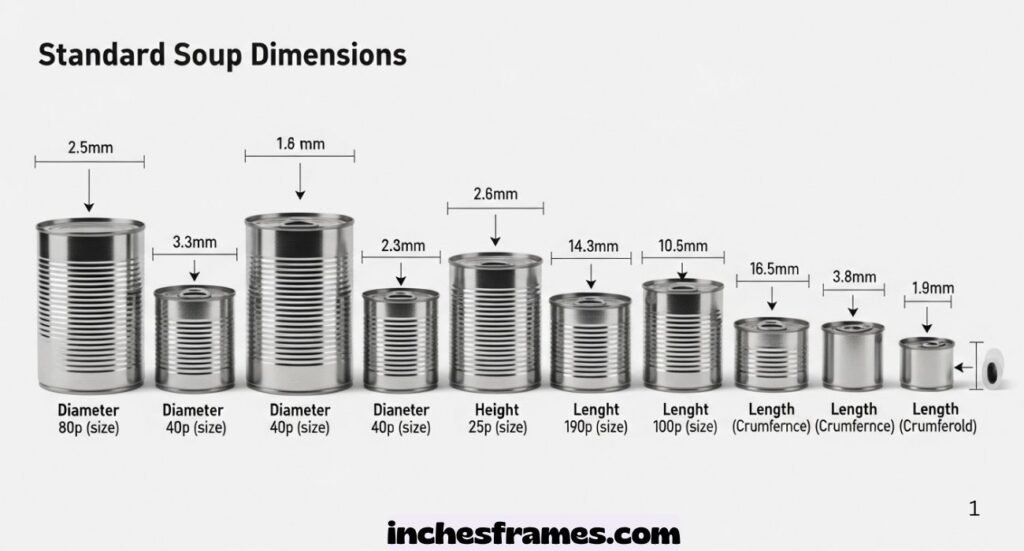
Proper pantry organization for soup cans requires knowing both soup can length and width. Condensed and ready-to-serve cans fit easily on standard shelves, while #10 cans need taller storage. Accurate soup can dimensions prevent wasted space and improve accessibility.
In refrigerators, canned soup storage tips recommend transferring leftovers to containers slightly larger than the original can. This maintains flavor, avoids metallic taste, and keeps soup safe for 3–4 days. Proper storage ensures efficient use of space and reduces food waste.
FAQs
What are the dimensions of a soup can?
A standard condensed soup can is 3 inches (7.6 cm) in diameter and 4.5 inches (11.4 cm) tall, while ready-to-serve cans are 3.5 inches (8.9 cm) × 4.5 inches (11.4 cm).
What are the dimensions of a standard can?
Most standard cans measure 3–3.5 inches in diameter and 4.5 inches in height, depending on whether they are condensed or ready-to-serve.
What are the dimensions of a can of food?
Typical food cans range from 3 inches × 4.5 inches for small sizes to 6.25 inches × 7 inches for #10 bulk cans.
How tall is a can of soup in CM?
A condensed or ready-to-serve soup can is approximately 11.4 cm tall, while a #10 food service can is about 17.8 cm tall.
Conclusion
Soup Can Dimensions helps everyone plan meals and organize the kitchen better. Knowing the height, diameter, and capacity of each can makes it easier to store them in cupboards or refrigerators. Small condensed cans fit neatly on shelves, while ready-to-serve and large #10 cans need more space. These measurements also help when cooking recipes, so you can measure ingredients correctly and serve the right portion size.
Learning about Soup Can Dimensions also helps with meal planning and reducing waste. You can stack cans safely, choose the right size for a single meal, or use larger cans for family servings. Accurate knowledge of can sizes makes cooking, storing, and serving food easier and more efficient.