Magazine Dimensions: Magazine Size and Formats – A Complete Guide for the USA
Magazine dimensions mean the size and shape of a magazine. They tell us how wide and tall a magazine is. Choosing the right magazine dimensions helps make the magazine easy to read and look good.
The size of a magazine can change how people enjoy it. Small magazines are easy to carry. Big magazines show pictures and stories in a better way. Magazine dimensions affect design and reading experience.
Magazines come in standard and special sizes. Letter, digest, tabloid, and pocket sizes are common. Magazine dimensions also matter for print and digital versions. They guide designers and publishers to make magazines professional and attractive.
Standard Magazine Dimensions
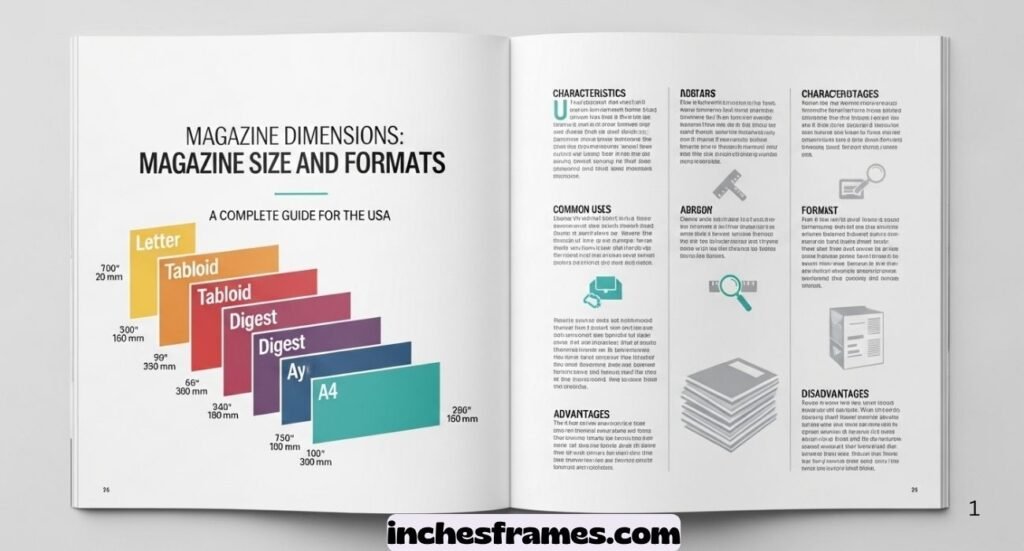
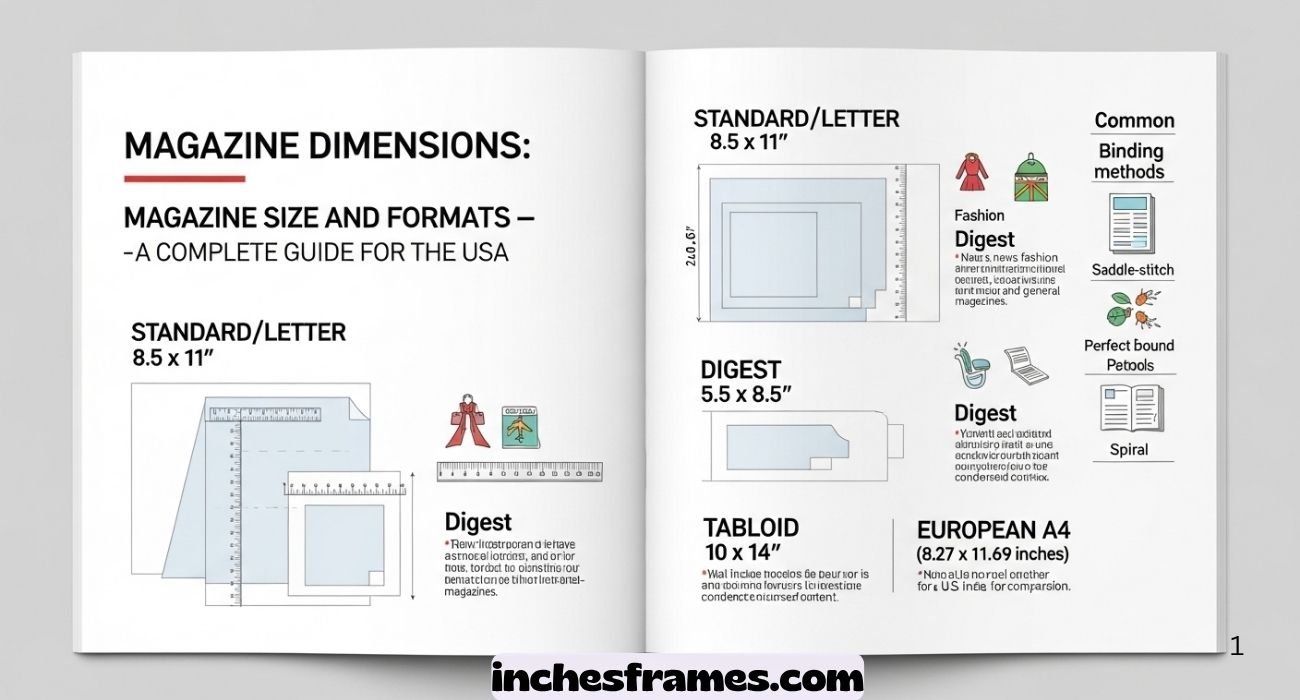
Standard magazine size in the USA is an essential concept for anyone involved in publishing. US magazines typically follow common formats that make printing, distribution, and layout design efficient. Most consumer magazines use letter size magazine, digest size magazine, or tabloid magazine formats. Letter size magazines measure 8.5 × 11 inches, digest magazines are 5.5 × 8.5 inches, and tabloid magazines are 11 × 17 inches. Each of these US magazine formats serves a specific purpose, balancing portability, design flexibility, and visual impact.
Here is a detailed table showing popular standard magazine dimensions used in the USA:
| Magazine Format | Dimensions (inches) | Dimensions (mm) | Common Use | Examples |
| Letter Size | 8.5 × 11 | 216 × 279 | Consumer magazines | Time, People, Vogue |
| Digest Size | 5.5 × 8.5 | 140 × 216 | Compact publications | Reader’s Digest |
| Tabloid | 11 × 17 | 279 × 432 | Large-format magazines | Entertainment Weekly |
| Pocket Size | 4 × 6 | 102 × 152 | Mini magazines | Travel guides |
| Square Format | 8 × 8 / 8.5 × 8.5 | 203 × 203 / 216 × 216 | Art & photography magazines | Design magazines |
| Oversized | 9 × 12+ | 229 × 305+ | Premium fashion magazines | High-end publications |
Magazine layout dimensions are influenced by these standard formats, which affect the placement of images, articles, and advertisements. Choosing the correct magazine page format ensures a better magazine reader experience and maximizes the impact of your content.
Letter Size Magazine (8.5 × 11 inches)
The letter size magazine is the most popular US magazine format. Measuring 8.5 inches wide and 11 inches tall, this size aligns with standard US letter size paper, making it compatible with most printing equipment. Publishers prefer this format because it allows extensive content space for articles, photographs, and advertisements, while still being comfortable for readers to hold and read.
Many high-profile magazines, such as Time, National Geographic, and Cosmopolitan, use letter size magazine dimensions. The magazine design specifications for this size provide ample room for creative layouts. Columns, images, and advertisements can be placed with flexibility, while magazine typography layout remains readable and visually appealing. Magazine cover dimensions for letter size are usually identical to the interior pages, allowing a seamless visual experience for readers.
Digest Size Magazine (5.5 × 8.5 inches)
The digest size magazine measures 5.5 × 8.5 inches, making it compact and highly portable. This pocket-sized publication is perfect for readers who prefer to carry magazines in purses, backpacks, or travel bags. Magazine portability is one of its biggest advantages, and the smaller format reduces magazine production cost without compromising the professional appearance of the publication.
Digest magazines are often used for weekly or monthly publications like Reader’s Digest, where content density and convenience are equally important. Despite the smaller size, magazine layout dimensions are carefully planned to maintain readability. Editors focus on concise articles, high-impact images, and simplified magazine typography layout to make the most of the available space.
Tabloid Size Magazine (11 × 17 inches)
Tabloid magazine formats are large and visually striking. Measuring 11 × 17 inches, these large-format magazine designs are ideal for publications that emphasize imagery, such as entertainment magazines, art publications, and newspaper supplements. The larger magazine printing dimensions allow designers to showcase bold graphics, dramatic photography, and immersive spreads that smaller formats cannot accommodate.
Tabloid magazines are often used for limited circulation or niche audiences, where impact is more important than portability. While the magazine reader experience can feel cumbersome for casual reading, the size is perfect for exhibitions, art showcases, and premium content. Designers must consider magazine bleeds and margins carefully to maintain professional quality in these oversized spreads.
Magazine Binding Types and Their Impact on Dimensions
Magazine binding types directly affect the final dimensions, durability, and usability of a magazine. Choosing the correct binding method is as important as selecting the format itself. Three popular binding methods are saddle stitch magazine, perfect bound magazine, and wire-o binding magazine, each suited to different sizes and page counts.
Saddle Stitch Binding
Saddle stitch magazine binding uses metal staples through the folded spine of the magazine. It is ideal for magazines ranging from 8 to 92 pages. This method is highly economical and works well with letter size magazine and digest size magazine formats. The pages lay relatively flat, making reading comfortable. Most commercial printers in the USA offer saddle stitch magazine as a primary option due to its simplicity and low magazine production cost.
Perfect Binding
Perfect bound magazine uses a glued spine similar to paperback books. This method supports publications from 28 to 240 pages and is preferred for premium or collectible editions. Magazine binding types like perfect binding offer a polished appearance and durability, though the magazine production cost is typically 50-60% higher than saddle stitching. This method works best for letter size magazine formats with thicker paper stock. Libraries and high-end collections often prefer perfect bound magazines for long-term preservation.
Wire-O Binding
Wire-o binding magazine uses a double-loop wire that allows the magazine to open fully flat. This format is ideal for reference magazines, cookbooks, and planners. Wire-o binding magazine provides 360-degree rotation, which is convenient for instructional or interactive publications. While production costs are 70-80% higher than other bindings, the functionality justifies the expense for digital vs print magazine format planning and usability. Magazine page format must accommodate the lack of a traditional spine.
Specialized Magazine Sizes and Formats
Not all publications use standard sizes. Specialized magazine formats target niche markets, allowing publications to stand out and meet unique magazine design specifications. Custom sizes range from pocket-sized mini magazines to oversized high-end fashion magazines. These formats enhance branding, magazine reader experience, and content impact.
Pocket Size Magazines (3.5 × 5 inches to 4 × 6 inches)
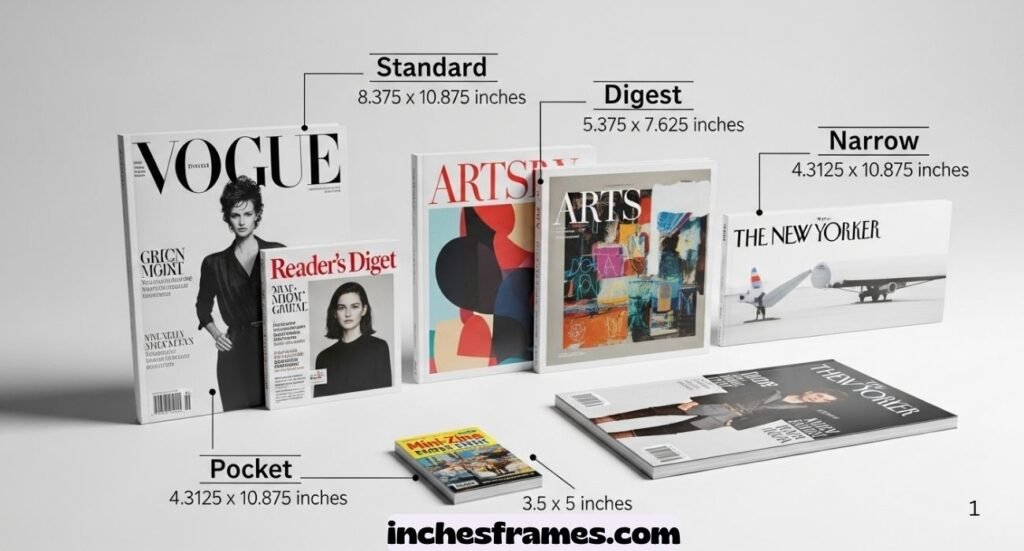
Pocket magazine size publications are ultra-portable, fitting easily in purses, jacket pockets, or glove compartments. Travel guides, mini-zines, and specialized publications often use these dimensions. Their small magazine printing dimensions reduce paper costs by up to 30% while still delivering professional layouts. Magazine layout dimensions are adjusted to maintain legibility in limited space, with concise text and focused images.
Square Format Magazines (8 × 8 inches or 8.5 × 8.5 inches)
Square magazine format is visually unique, ideal for art, photography, and design magazines. The balanced dimensions enhance art & photography magazine layout, creating harmony between images and text. Designers use magazine typography layout and spacing creatively to make each spread stand out. These magazines often have slightly higher magazine production cost than standard formats due to the custom size.
Oversized Magazines (9 × 12 inches and larger)
Oversized magazine dimensions start at 9 × 12 inches and can extend to 12 × 15 inches. These high-end fashion magazine formats are used for luxury publications, architectural magazines, and premium art catalogs. The large size allows bold visuals, detailed photography, and luxurious layouts. However, the magazine production cost increases by 50-70%, and designers must carefully manage magazine bleeds and margins to maintain quality.
See Also : Badminton Court Dimensions: Size & Layout
Digital vs. Print Magazine Dimensions
Digital vs print magazine format requires understanding the differences in physical versus screen-based dimensions. Print magazines rely on inches and require 300 DPI resolution for sharp text and crisp images. Proper magazine DPI and resolution, along with magazine cover size in inches, ensures professional print quality. Bleeds and safe zones prevent trimming errors.
Digital magazines, on the other hand, use pixel-based measurements. Desktop readers view content best at 1024 × 1366 pixels, tablets require 1536 × 2048 pixels, and smartphones are optimized at 1080 × 1920 pixels. Tablet and mobile magazine size must be responsive to maintain readability, and interactive features like videos, hyperlinks, and animations enhance engagement. Balancing digital magazine size and print specifications is critical for multi-platform publishing.
Print Magazine Specifications
Print magazines require careful attention to magazine printing dimensions, magazine layout dimensions, and magazine typography layout. Text weight paper between 60–100 lb is ideal for interiors, while cover stock of 80–130 lb ensures durability. Standard letter size magazine layouts include 0.125-inch bleeds and 0.25-inch safe zones to prevent content from being cut. Using CMYK color mode converts digital colors to print accurately. Proper magazine cover dimensions make the magazine visually appealing on shelves.
Digital Magazine Dimensions
Digital magazines prioritize pixel resolution and screen size adaptability. Desktop formats use 72–150 PPI, tablets 150 PPI, and mobile 72–150 PPI. RGB color mode is standard for accurate screen display. Digital magazine size and digital vs print magazine format must be coordinated for seamless user experience. PDF exports and responsive designs ensure content adapts across all devices, maintaining readability and engagement.
The Importance of Magazine Dimensions in Publishing
Magazine dimensions are a crucial factor in determining how a publication is perceived by readers. Choosing the correct magazine size affects readability, portability, and production costs. Publishers in the USA rely on standard sizes to ensure compatibility with printing equipment while maintaining professional layouts that appeal to a wide audience.
Beyond printing, magazine dimensions influence design flexibility and advertising placement. Larger magazines provide ample space for images and graphics, while smaller formats enhance portability and convenience. Understanding the impact of US magazine formats allows designers to balance aesthetics, reader experience, and efficiency effectively.
Standard US Magazine Sizes and Their Applications
Standard US magazine formats include letter size, digest size, and tabloid dimensions. Letter size magazines (8.5 × 11 inches) dominate consumer publications, providing enough space for detailed articles, photography, and advertising. Digest size magazines (5.5 × 8.5 inches) are portable and cost-effective, ideal for compact content or weekly publications.
Tabloid magazines (11 × 17 inches) are large-format publications designed to create visual impact. This format is commonly used in entertainment, art, and newspaper supplements. Choosing the right magazine page format ensures content is engaging and reader-friendly, regardless of the size or publication type.
Designing Letter Size Magazines for Maximum Impact
Letter size magazines are favored for their flexibility in magazine layout dimensions. Designers can create multi-column layouts, integrate large images, and include advertisements without crowding the page. This format ensures that readers enjoy a comfortable reading experience while magazines maintain a professional appearance.
Standard letter-sized magazines are compatible with common printers, reducing magazine production cost and simplifying distribution. Popular examples like Time, National Geographic, and Cosmopolitan rely on this format to provide consistent layouts that readers recognize and trust across issues, enhancing both branding and usability.
Digest Magazines: Portability Meets Professional Design
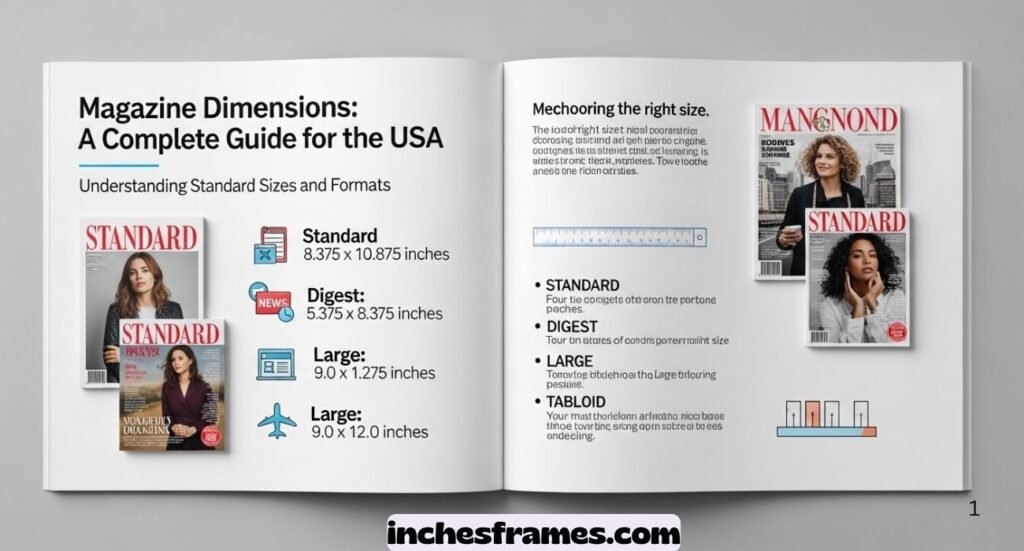
Digest magazines offer pocket-sized publication benefits without sacrificing professional presentation. Measuring 5.5 × 8.5 inches, they are easy to carry, making them ideal for commuters and travelers. Compact size reduces printing costs while still accommodating text and images in an organized layout.
Editors of digest magazines focus on concise articles, optimized magazine typography layout, and clear imagery. Reader-friendly formatting ensures that content remains engaging despite limited space. This balance of portability and design makes digest magazines a popular choice for weekly or monthly publications in the USA.
Exploring Tabloid Magazine Dimensions
Tabloid magazines provide a large-format magazine design that emphasizes visuals and immersive layouts. Measuring 11 × 17 inches, this format is ideal for publications focusing on photography, artwork, or entertainment content. The generous page dimensions allow designers to create bold, high-impact spreads.
However, larger sizes require careful planning for magazine bleeds and margins to prevent errors during printing. Tabloid magazines may feel cumbersome to hold but provide a dramatic reader experience. They are often chosen for exhibitions, art showcases, and premium entertainment publications.
How Binding Types Affect Magazine Size
Magazine binding types directly influence final dimensions, page flexibility, and durability. Saddle stitch magazines are ideal for shorter publications, offering flat opening and low production costs. Perfect bound magazines provide a professional appearance and sturdy spine, suitable for premium editions with many pages.
Wire-o binding magazines allow complete 360-degree rotation, perfect for reference or interactive content. The choice of magazine binding types also affects layout planning, cover design, and print specifications. Understanding binding options helps publishers optimize both magazine production cost and usability.
Specialized Magazine Sizes for Niche Markets
Specialized magazines include pocket magazine size, square magazine format, and oversized publications, catering to unique content needs. Pocket magazines are small, portable, and cost-effective, perfect for travel guides and mini-zines. Square formats highlight creative content for art or photography magazines.
Oversized magazines appeal to high-end readers, providing luxurious layouts and bold imagery. These formats often have higher magazine production cost, but they enhance reader engagement and brand perception. Choosing a specialized magazine page format helps publications stand out in competitive markets.
See Also : Beverage Can Dimensions: Size, Height and Length
Digital vs Print Magazine Dimensions
Digital magazines require pixel-based dimensions to adapt to screens, while print magazines use inches and magazine DPI and resolution for clarity. Desktop, tablet, and mobile formats vary in size, requiring responsive layouts to maintain readability and visual appeal across devices.
Understanding digital vs print magazine format ensures consistency in branding and user experience. High-quality digital magazines integrate interactive elements like hyperlinks and videos. Publishers who optimize both print and digital dimensions can reach wider audiences while maintaining professional standards for all magazine layout dimensions.
FAQs
What is the standard size of magazines?
The standard size of magazines in the USA is 8.5 × 11 inches (21.6 × 27.9 cm), commonly called letter size.
Is magazine standard A4?
A magazine is not exactly A4; A4 measures 21 × 29.7 cm, which is slightly taller than standard US magazines.
What size is an A4 and A5 magazine?
An A4 magazine is 21 × 29.7 cm, while an A5 magazine measures 14.8 × 21 cm, often used for compact publications.
What is the size of a Vogue magazine in cm?
The Vogue magazine measures approximately 20.3 × 27.6 cm (8 × 10.875 inches), slightly narrower and taller than standard letter size.
Conclusion
Magazine dimensions are very important for creating a magazine that looks good and is easy to read. Choosing the right magazine size helps publishers, designers, and readers enjoy the content comfortably. Standard sizes like letter, digest, and tabloid make printing and handling simple. Specialized formats like pocket, square, or oversized magazines give magazines a unique style and help them reach the right audience. Good magazine dimensions also make sure pictures and text fit perfectly on every page.
Using the correct magazine dimensions saves money and improves the reading experience. It helps magazines look professional and attract more readers. Digital and print magazines need proper sizes to display clearly on screens and on paper. Learning about magazine dimensions helps publishers create successful magazines that readers enjoy.