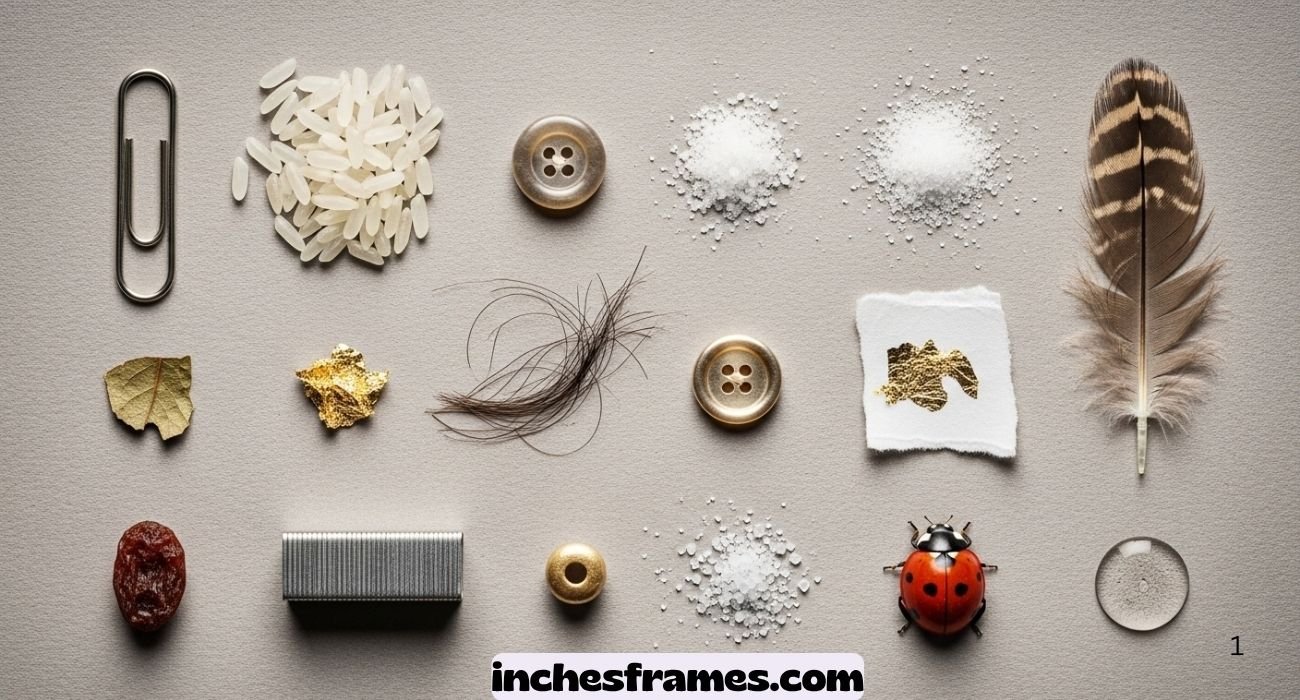
1 Gram – Things with Pic That Weigh 1g
1 Gram is a very small unit of weight. It is one-thousandth of a kilogram. People use it to measure tiny things like food, coins, and small objects.
You can hold 1 Gram in your hand and feel it. A standard paperclip or a single grape weighs about 1 Gram. Seeing these items helps you understand how light 1 Gram really is.
Many things in daily life weigh about 1 Gram. A US dollar bill, a thumbtack, or a piece of chewing gum are good examples. Learning about 1 Gram helps in cooking, school, and small projects.
How Heavy is 1 Gram?
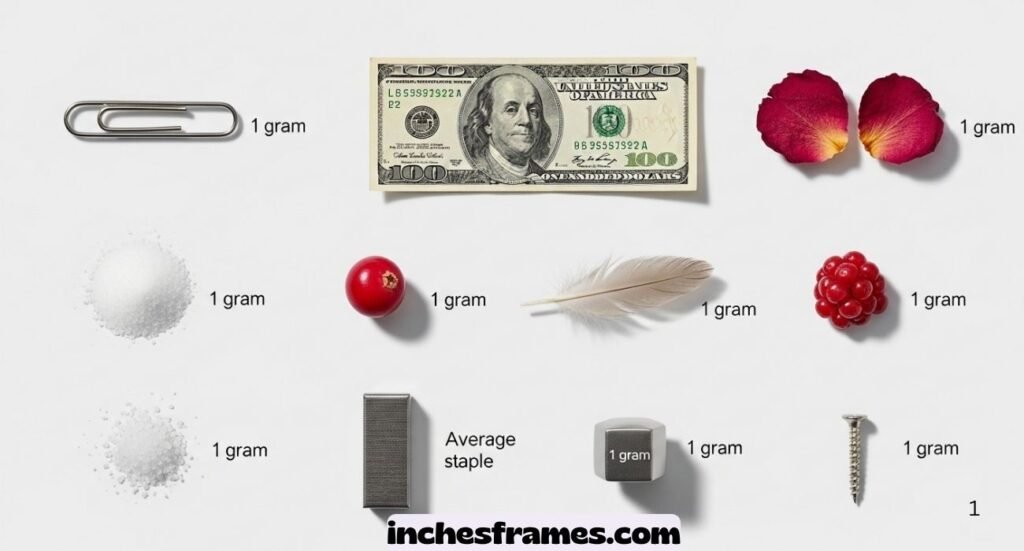
1 gram is one-thousandth of a kilogram in the metric system. That means it is incredibly small, but it is still a standard unit of weight that scientists, chefs, and jewelers rely on for precise measurements. In American terms, converting gram to ounces and gram to pounds helps us understand this tiny weight. One 1 gram item equals roughly 0.035 ounces and 0.002 pounds. To visualize it, imagine holding a single raisin, a pinch of salt, or a piece of chewing gum. Each of these everyday items gives a real-life feel of how heavy 1 gram is.
Even though you cannot usually feel a difference between 1 gram and 2 grams without careful attention, regular exposure to everyday items weighing 1 gram can train your sense of touch. Over time, estimating 1 gram becomes intuitive.
1 Gram is Equal to:
| Measurement Conversion | Value |
| 1 gram = 1,000 milligrams | Used in medicine dosing |
| 1 gram = 0.035 ounces | Useful in cooking |
| 1 gram = 0.002 pounds | Everyday reference |
| 1 gram of water = 1 milliliter | Scientific measurement |
| 1 gram = 5 carats | Jewelry measurement |
These simple conversions show that measuring 1 gram can apply to many areas of life. From weighing ingredients in the kitchen to determining 5 carats of gemstones, 1 gram is more practical than it seems.
Common Items That Weigh 1 Gram
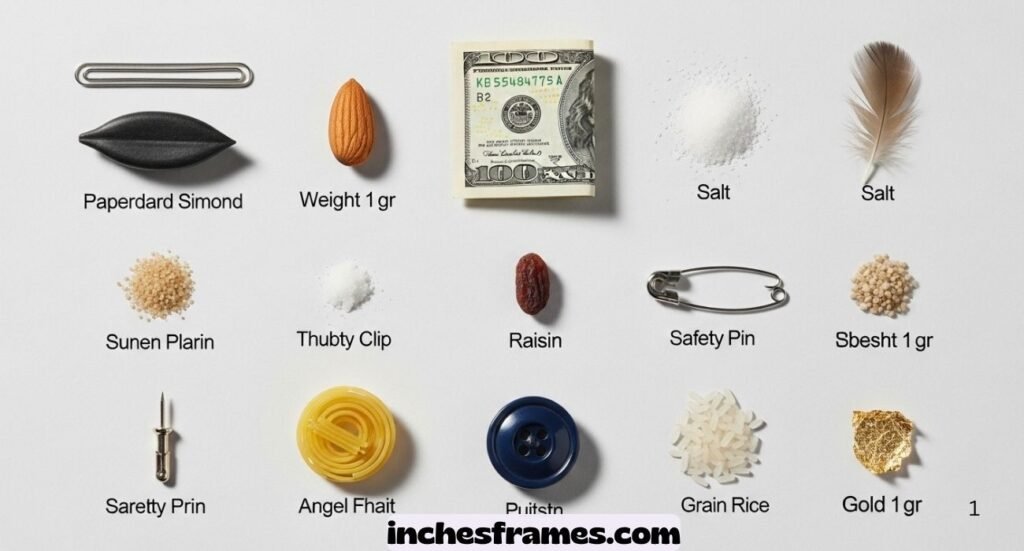
Familiar objects make understanding things that weigh 1 gram much easier. Everyday items like the US dollar bill weight, a standard paperclip, and a Japanese 1 yen coin help you visualize 1 gram in real life. Below we explore examples of 1 gram with pictures and descriptions.
A US Dollar Bill
Every US dollar bill weight is exactly 1 gram, regardless of denomination. Made from 75% cotton and 25% linen, it’s designed for durability and consistency. The uniform weight allows banks and machines to count bills accurately.
Holding a dollar bill gives an instant sense of 1 gram. The flat, lightweight paper demonstrates how even thin materials can provide a measurable weight reference. It’s one of the easiest examples of 1 gram most Americans carry daily.
This everyday item weighing 1 gram is practical for comparing other small objects. Whether for crafting, cooking, or education, the dollar bill serves as a constant, reliable reference for visualizing tiny weights accurately.
A Standard Paperclip
A standard paperclip is the classic reference for things that weigh 1 gram. The Gem-style paperclip is simple, practical, and nearly universal, measuring 1.5 inches in length and made of steel wire bent into a loop.
The lightweight design makes it ideal for office use, but it also doubles as a reference tool for estimating 1 gram. Students, chefs, and hobbyists often use paperclips to gauge small weights intuitively.
With billions produced annually, the paperclip maintains consistent weight of 1 gram. This everyday object offers an easy, portable way to understand small measurements, bridging education and real-life practicality.
A Single Raisin
A single raisin weighs about 1 gram, making it a natural reference for tiny weights. Dried grapes retain concentrated sugars and nutrients, giving a small but substantial edible object to compare with other examples of 1 gram.
Bakers prefer weighing raisins rather than using volume because consistency affects recipes. Measuring 1 gram precisely can influence the outcome of baked goods, desserts, and trail mix recipes.
Holding one single raisin illustrates things that weigh 1 gram in a simple, relatable way. Its size and density make it easier to understand small weights than abstract numbers on a scale.
A Thumbtack / Push Pin
A standard thumbtack / push pin weighs approximately 1 gram. The combination of a sharp metal pin and plastic head creates a lightweight tool for organizing papers or notes on a board.
Despite its small size, the weight of 1 gram gives it enough mass to hold multiple sheets on cork or foam boards. Its design balances strength with lightness.
Using a thumbtack / push pin is another practical reference for everyday items weighing 1 gram. Students and office workers can intuitively grasp small weights by handling these tiny pins.
A Piece of Chewing Gum
A piece of chewing gum typically weighs exactly 1 gram, whether a stick or small chiclet. Its consistent weight allows manufacturers to standardize packaging and ensure quality control.
Chewing gum has been part of human culture for centuries, from tree resin to modern flavors. Holding a stick demonstrates examples of 1 gram in an edible format that’s easy to grasp.
The light, portable everyday item weighing 1 gram provides a tangible reference for measurement. It’s convenient, familiar, and adds a sensory understanding to tiny weights beyond office or paper objects.
A Pen Cap from a Ball Pen
A typical pen cap weighs about 1 gram. Made from lightweight plastic, most feature ventilation holes to prevent choking hazards while covering the pen tip effectively.
Handling a pen cap offers a tactile way to estimate 1 gram. Its consistent weight and small size make it an excellent reference for students and hobbyists practicing precision.
The weight of 1 gram in a pen cap illustrates how everyday objects, even disposable ones, provide practical lessons in measurement. Small, familiar tools help bridge abstract numbers with real-life understanding.
A Pinch of Salt
A pinch of salt weighs roughly 1 gram when measured between thumb and forefinger. This culinary unit is universally recognized and standardized in professional kitchens.
The term “salary” originates from salarium, payments given to Roman soldiers for salt, connecting history to this tiny but meaningful example of 1 gram.
Chefs and home cooks alike use a pinch to practice measuring 1 gram intuitively. It provides a visual and tactile reference for seasoning and precise cooking measurements.
A Small Birthday Candle
A 2-inch small birthday candle weighs about 1 gram. Made from paraffin wax or beeswax, it burns briefly while decorating cakes, offering both function and symbolic meaning.
Holding a candle shows how light 1 gram truly is, yet it has a practical use. This everyday item weighing 1 gram connects visual perception with measurable weight.
Birthday candles are part of a global tradition, demonstrating how small, lightweight objects like candles serve as simple examples of 1 gram in daily celebrations.
A Single Grape
A single grape averages about 1 gram, though it can vary slightly by variety. Grapes are packed with natural sugars, antioxidants, and vitamins C and K.
Handling a fresh grape helps learners visualize things that weigh 1 gram naturally. Its small, round shape and density make it an approachable reference.
Grapes illustrate everyday items weighing 1 gram in a food context. They combine nutrition, ease of handling, and real-life familiarity, bridging education and practical measurement.
A Japanese 1 Yen Coin
A Japanese 1 yen coin is deliberately manufactured to weigh exactly 1 gram. Made of 100% aluminum, it’s so light that it can float on water.
The coin provides a precise global example of 1 gram in circulation, useful for comparison to other everyday items weighing 1 gram. Its design symbolizes growth and prosperity in Japan.
Using the 1 yen coin teaches measuring 1 gram accurately, showing how man-made objects can serve as consistent, tactile references for tiny weights.
A Sugar Packet
A small portion of a standard sugar packet weighs exactly 1 gram, making it a simple culinary reference. One-quarter of a 4-gram packet is enough to measure 1 gram.
Visualizing sugar portions helps track intake for health, aligning with American Heart Association recommendations. This shows practical applications of things that weigh 1 gram in nutrition.
A sugar packet provides an easy, familiar reference for children, cooks, and educators practicing measuring 1 gram without a scale, combining visual, tactile, and functional understanding.
A Plastic Bottle Cap
A plastic bottle cap weighs roughly 1 gram, made from polyethylene. Despite its tiny size, it secures beverages reliably and is produced in massive quantities globally.
Handling the cap demonstrates examples of 1 gram in industrially manufactured objects. Its consistent weight of 1 gram provides a visual reference for comparison with other small items.
Bottle caps show how everyday items weighing 1 gram exist everywhere, from homes to factories, highlighting the prevalence of tiny measurable weights in daily life.
A Single Almond
A single almond weighs approximately 1 gram, though size varies slightly. Almonds are nutrient-dense, providing healthy fats, fiber, and protein.
Holding one almond illustrates things that weigh 1 gram naturally. Its firm texture contrasts with softer items like a single raisin, giving a sense of material density.
Almonds are convenient examples of 1 gram for cooking and snacking, allowing learners to practice estimating 1 gram intuitively while considering variations in shape and weight.
A Small Paperclip Chain Link
When separated, each small paperclip chain link weighs about 1 gram. These loops are used for crafts, jewelry, and temporary office fixes.
The consistency of 1 gram helps learners compare weight across similar materials. It’s an example of everyday items weighing 1 gram beyond standard office supplies.
Using paperclip links emphasizes measuring 1 gram with portable, tangible tools, supporting hands-on learning in classrooms or workshops.
A Raisin Seed
A raisin seed weighs roughly 1 gram. These tiny seeds are often overlooked but provide natural weight examples within dried fruits.
Holding a seed shows how things that weigh 1 gram can be much smaller than the edible portion of a raisin, illustrating density differences.
Raisin seeds are interesting examples of 1 gram for teaching, food science, or curiosity-based learning, linking natural objects to measurement.
A Small LEGO Brick
A small LEGO brick can weigh about 1 gram, depending on size and plastic type. LEGO pieces are designed for precision and consistency.
Using a brick demonstrates everyday items weighing 1 gram in play and construction materials, making abstract measurements tangible for children.
LEGO bricks provide a hands-on, visual reference for estimating 1 gram, blending learning with interactive play, perfect for educational activities.
A Pin from a Sewing Kit
A standard sewing pin weighs approximately 1 gram. Its steel shaft and small head are light but durable.
Handling pins gives a practical sense of weight of 1 gram in crafting, sewing, and DIY projects. They are tiny yet reliable examples of 1 gram.
Pins help visualize things that weigh 1 gram while learning practical skills, connecting measurement with real-life hands-on applications.
A Tiny Bead
A small bead from jewelry-making weighs roughly 1 gram. Beads are made from glass, wood, or plastic, with minor variations in density.
Holding a bead demonstrates everyday items weighing 1 gram, perfect for arts, crafts, and hands-on teaching. Their tiny size shows weight isn’t always visible.
Beads serve as an easy reference for estimating 1 gram, helping learners understand precision in crafting and small object measurement.
A Button
A small shirt button weighs about 1 gram. Buttons vary in material—plastic, wood, metal—but small ones consistently approximate this weight.
Using a button illustrates things that weigh 1 gram in clothing, sewing, and fashion. Its familiar shape makes measurement relatable.
Buttons provide a tactile, visual example of 1 gram, showing how everyday objects naturally teach small weight estimation.
A Single Toothpick
A single wooden toothpick weighs roughly 1 gram. Despite being lightweight, it is long and sturdy enough for practical use.
The toothpick offers a simple example of 1 gram, making it easier to teach measuring 1 gram without scales.
Everyday exposure to a toothpick bridges abstract weight with tangible reality, helping learners visualize everyday items weighing 1 gram effectively.
A Tiny Paper Clip Hook
A tiny hook from a paperclip weighs about 1 gram, often used in crafts or small mechanical assemblies.
This small item provides a precise reference for things that weigh 1 gram, showing how minor objects can demonstrate weight consistently.
Using paperclip hooks encourages estimating 1 gram with small, tangible tools, combining practical and visual learning for children and adults alike.
See Also : iPhone Wallpaper Size Dimensions: Modern Wallpaper (2026)
How to Estimate 1 Gram Without a Scale
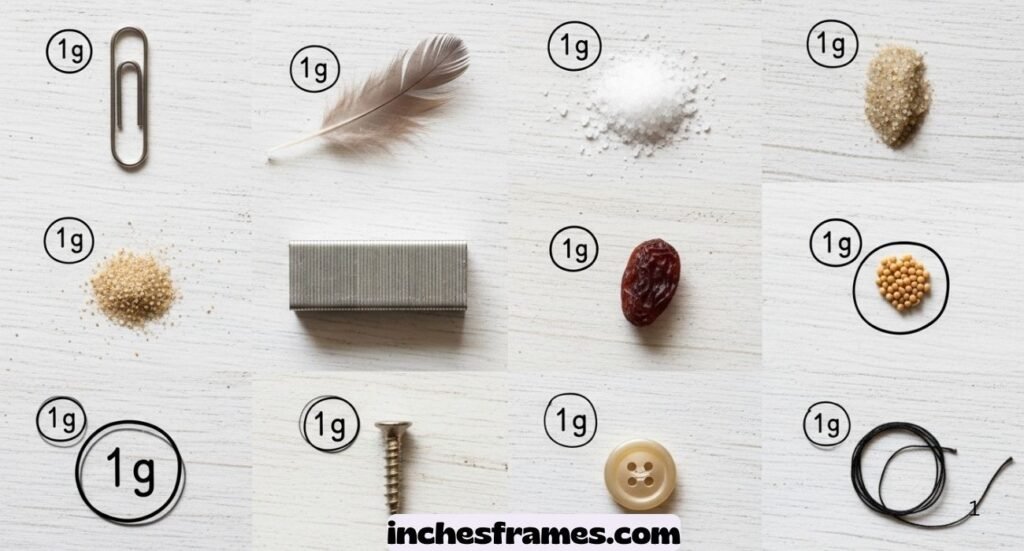
The Paperclip Method
One of the easiest ways to estimate 1 gram is to use a standard paperclip. Hold one in your palm and compare unknown items against it. Practicing this method helps train your sense of touch for small weights. Professional chefs and bakers use this intuitive skill to quickly measure 1 gram and other small amounts.
Currency Comparison
Another method is comparing unknown items to a US dollar bill weight, which is exactly 1 gram. This works especially well for flat, lightweight objects. You can hold the dollar in one hand and your item in the other to get an instant reference for estimating 1 gram.
The Water Volume Method
Finally, 1 gram of water = 1 milliliter, which is a scientifically accurate method for measuring small weights. Using a syringe, dropper, or precise measuring spoon, you can measure 1 gram exactly. This water volume method is particularly useful for cooking, chemistry experiments, and teaching the metric system.
Understanding the Tiny Weight of 1 Gram
One gram may seem almost invisible, yet it plays a crucial role in daily life. From everyday items weighing 1 gram to precise scientific measurements, this small unit demonstrates how even tiny amounts can have significance. Understanding the weight of 1 gram helps us measure ingredients, medications, and small objects accurately.
People often underestimate how light 1 gram is. Holding a standard paperclip or a single raisin can help visualize it. By comparing common objects, anyone can intuitively grasp how heavy is 1 gram. Learning this skill improves accuracy in cooking, crafting, and other practical tasks where precision matters.
Everyday Examples of 1 Gram
Identifying things that weigh 1 gram is easier than most imagine. Items like a US dollar bill weight, a thumbtack / push pin, or a piece of chewing gum offer real-life references. Seeing and holding these items helps you connect abstract measurements with tangible objects in your surroundings.
These everyday examples are not only practical but also fun. A small birthday candle, a plastic bottle cap, or a single grape allows us to estimate 1 gram without using a scale. Observing such objects gives context to the metric system and develops an intuitive understanding of tiny weights.
Converting 1 Gram for American Measurements
For Americans, knowing how to convert 1 gram is useful. Gram to ounces and gram to pounds conversions make it easy to relate to familiar weights. One gram equals roughly 0.035 ounces or 0.002 pounds, making it clear why these items feel so light in your hand.
These conversions are especially helpful in cooking, baking, and nutrition. A sugar packet, pinch of salt, or piece of chewing gum can be measured more accurately. Understanding the metric system alongside American units allows everyday tasks to be precise and consistent, even when estimating 1 gram without a scale.
How Small Items Teach Big Lessons
Tiny objects like a Japanese 1 yen coin or a single raisin show how 1 gram can carry practical meaning. They teach us about precision, history, and everyday life. Even small items reveal insights about standardization and measurement, showing that careful attention to detail matters.
Students, chefs, and hobbyists can use these items to practice measuring 1 gram accurately. Holding a standard paperclip, comparing it to a US dollar bill weight, or using water demonstrates the tiny but consistent weight. These exercises enhance intuition for everyday items weighing 1 gram.
See Also : 20 Grams – Things with Pic That Weigh 20g
Creative Ways to Measure 1 Gram Without a Scale
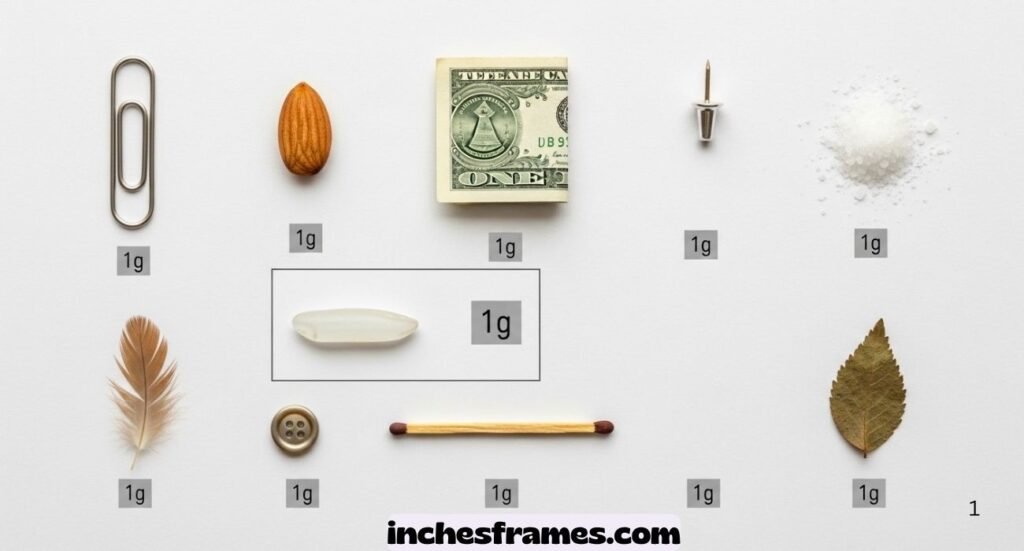
You can estimate 1 gram at home using simple methods. The paperclip method lets you hold a familiar object for comparison. Similarly, using a US dollar bill weight or water volume method with 1 milliliter of water provides an accurate reference without digital tools.
These methods are both practical and educational. Children, cooks, or hobbyists can practice measuring 1 gram without special equipment. Observing differences between objects, liquids, and small weights develops skill and confidence in handling things that weigh 1 gram in everyday scenarios.
The Importance of 1 Gram in Daily Life
Though small, 1 gram affects many areas of life. Chefs measure spices, jewelers count 5 carats, and pharmacists dose medications using 1 gram as a standard. Understanding the weight of 1 gram ensures accuracy and safety in countless daily tasks.
Everyday objects like a thumbtack / push pin, pen cap, or plastic bottle cap give tangible meaning to this tiny measurement. Familiarity with these references allows people to quickly estimate 1 gram, improving efficiency, reducing mistakes, and making the metric system approachable for everyone.
FAQs
How big does 1 gram look like?
1 gram is very small and feels almost weightless, like holding a standard paperclip or a single grape in your hand.
What objects are weighed in grams?
Small items like spices, jewelry, medication, raisins, and coins are commonly weighed in grams.
What has a mass of 1 g?
A US dollar bill, standard paperclip, single raisin, or thumbtack each has a mass of about 1 gram.
What currency weighs a gram?
The US dollar bill and Japanese 1 yen coin each weigh exactly 1 gram.
Conclusion
Understanding 1 Gram helps us see how small but important this weight is in everyday life. Many common things, like a standard paperclip, a single grape, or a US dollar bill, weigh about 1 Gram. Chefs, jewelers, and scientists use this tiny measurement every day to be accurate. Learning about 1 Gram makes it easier to measure food, sugar, or small objects at home or school.
By noticing everyday items weighing 1 Gram, we can practice measuring without a scale. Holding a thumbtack, a piece of chewing gum, or a plastic bottle cap shows how light 1 Gram is. This knowledge helps in cooking, crafts, and learning about numbers. 1 Gram is small, but it matters a lot.