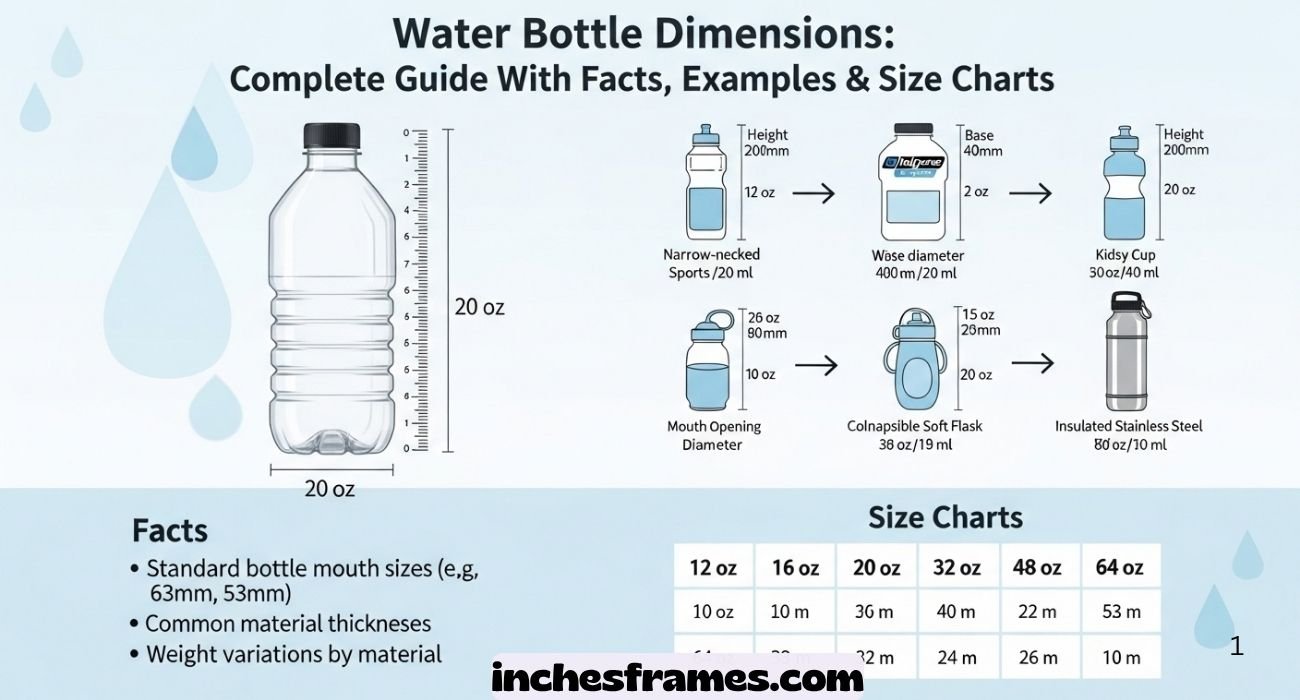
Water Bottle Dimensions: Complete Guide With Facts, Examples & Size Charts
Understanding water bottle dimensions is important when choosing the right bottle for everyday hydration. The size, height, and width of a bottle affect how easy it is to carry, store, and drink from. Many people do not realize that different water bottle sizes are designed for different situations such as work, sports, travel, or outdoor activities.
A typical standard water bottle used in the United States usually holds about 16.9 ounces (500 milliliters). However, bottles come in many shapes, materials, and capacities. From a small portable water bottle used in school lunches to a large hiking water bottle used on long outdoor adventures, the dimensions can vary greatly.
This complete guide explains everything about water bottle dimensions, including height, diameter, length, and bottle capacity. You will also learn about plastic water bottle measurements, stainless steel water bottle sizes, weight differences, and charts that make it easy to compare bottles.
Dimensions Of A Water Bottle
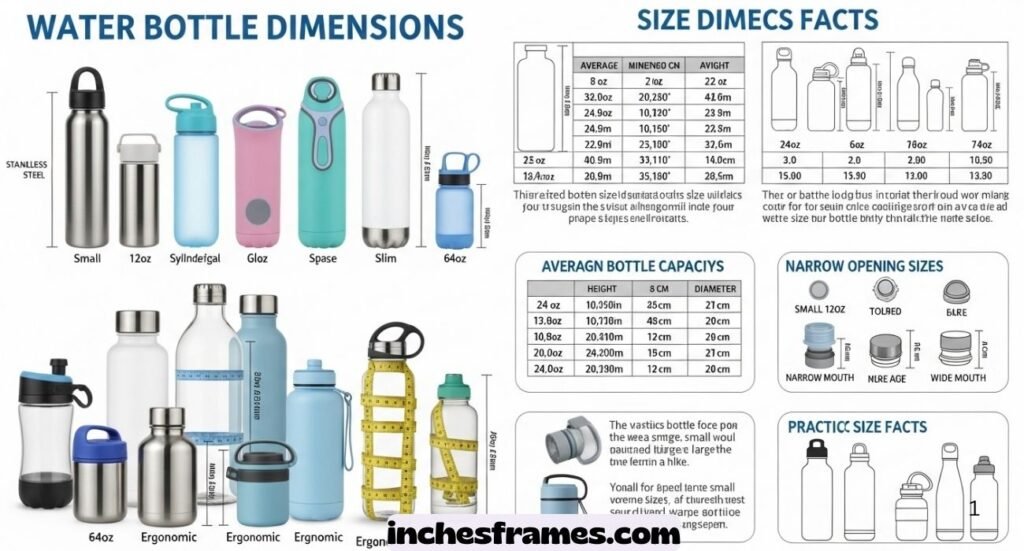
The water bottle dimensions depend on several factors including the water bottle material, bottle shape, and the amount of water it holds. In general, most bottles follow similar size ranges so they can fit in bags, refrigerators, and car cup holders.
A typical bottle has three important bottle measurements which include the water bottle height, water bottle diameter, and bottle length. These measurements help determine the bottle volume and how comfortable the bottle feels in your hand.
The table below shows common water bottle sizes and their general dimensions.
| Water Bottle Size | Height | Diameter | Bottle Capacity |
| Small Bottle | 6–7 inches | 2–2.25 inches | 8–12 oz |
| Medium Bottle | 8–9 inches | 2.5 inches | 16.9 oz |
| Large Bottle | 10–11 inches | 3 inches | 1 liter |
| Extra Large Bottle | 12–13 inches | 3.5–4 inches | 2 liters |
The design of the bottle also changes the bottle shape and bottle width. A slim travel water bottle may be taller but thinner, while a large gym water bottle may be wider and easier to grip.
Experts often say that choosing the right bottle size helps improve daily water intake. According to hydration specialists, “A bottle that is comfortable to carry and easy to refill encourages people to drink more water during the day.”
How Many Inches Is A Water Bottle?
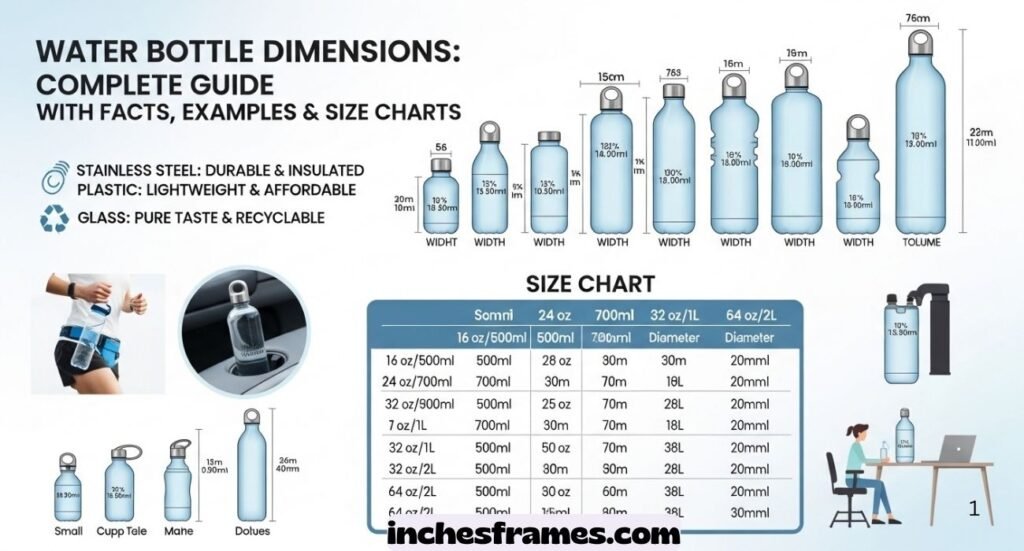
Most standard water bottle designs fall within a height range of 8 to 10 inches. This size makes the bottle easy to hold, place in a backpack, or store in a cup holder.
Smaller bottles designed for children or lunchboxes are often around 5 to 7 inches tall. Larger bottles used for sports or hiking may reach 11 to 13 inches. These larger bottles usually have higher bottle capacity to support longer activities.
The table below shows typical bottle heights based on capacity.
| Bottle Volume | Average Height |
| 8 oz bottle | 5.5 inches |
| 12 oz bottle | 7 inches |
| 16.9 oz water bottle | 8 inches |
| 1 liter water bottle | 11 inches |
| 2-liter water bottle | 12–13 inches |
The exact height can vary depending on the bottle shape and the type of lid used. Some bottles include flip caps or straw lids that slightly increase the total height.
How Many Ounces Is A Standard Water Bottle?
In the United States, the most common standard water bottle size is 16.9 ounces. This is the same as a 500ml water bottle, which is widely used in supermarkets, offices, and schools.
Manufacturers prefer this size because it provides a good balance between portability and hydration. It is large enough to provide water but still small enough to carry comfortably.
Common bottle capacities used in daily life include:
| Bottle Size | Milliliters | Usage |
| 8 oz | 237 ml | Kids bottles |
| 12 oz | 355 ml | Small hydration bottles |
| 16.9 oz water bottle | 500 ml | Everyday use |
| 20 oz | 591 ml | Sports bottles |
| 32 oz | 946 ml | Large reusable bottles |
Many reusable water bottle brands now offer larger sizes to support better daily water intake, especially for athletes or people working outdoors.
What Is The Diameter Of A Water Bottle?
The water bottle diameter is another important measurement because it determines how comfortable the bottle is to hold and whether it fits inside a car cup holder.
Most bottles have a diameter between 2.5 and 3 inches. Slim bottles designed for travel may be closer to 2.25 inches, while large sports bottles can reach 3.5 inches.
The table below shows common diameters.
| Bottle Type | Diameter |
| Small bottle | 2.25 inches |
| Medium bottle | 2.5 inches |
| Large bottle | 3 inches |
| Wide sports bottle | 3.5 inches |
The bottle width also depends on the water bottle material. A plastic water bottle often has thinner walls, while a stainless steel water bottle may be slightly wider because of insulation layers.
What Is The Length Of A Water Bottle?
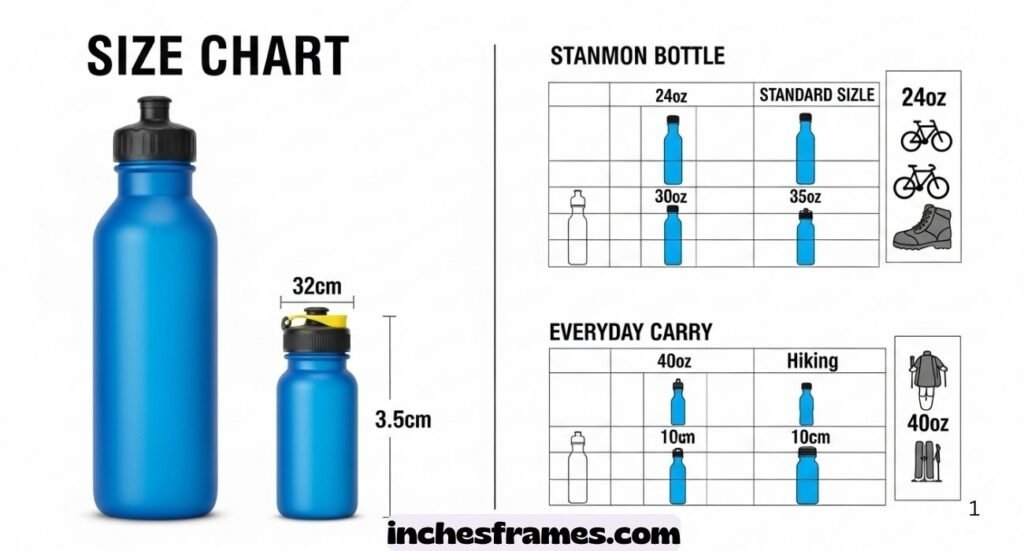
The bottle length of a water bottle generally refers to the overall height from bottom to top. Most bottles measure between 8 and 12 inches in length.
Smaller bottles designed for portability are shorter, while bottles designed for sports or hiking can be longer. A hiking water bottle often holds more water and therefore needs a larger size.
The average bottle length by capacity is shown below.
| Bottle Capacity | Average Length |
| 8 oz | 6 inches |
| 12 oz | 7 inches |
| 500 ml | 8 inches |
| 1 liter | 11 inches |
| 2 liters | 12–13 inches |
Longer bottles are useful for people who want fewer refills during long outdoor trips.
What Is The Height Of A Water Bottle?
The water bottle height is closely related to the bottle’s capacity and design. The average bottle height for a standard disposable bottle is about 8 inches.
However, bottles designed for sports or outdoor activities are usually taller. A gym water bottle may reach 10 inches, while a hiking water bottle can be 12 inches or more.
Factors affecting bottle height include the bottle capacity, the lid design, and the water bottle material used during manufacturing.
Standard Water Bottle Dimensions Chart
A quick comparison chart makes it easier to understand different water bottle dimensions.
| Bottle Capacity | Height (inches) | Diameter (inches) | Height (cm) | Diameter (cm) | Bottle Cap |
| 8 oz | 5.5 | 2.25 | 14 | 5.7 | 28 mm |
| 12 oz | 7 | 2.5 | 17.8 | 6.4 | 28 mm |
| 16.9 oz water bottle | 8 | 2.5 | 20.3 | 6.4 | 28 mm |
| 20 oz | 8.9 | 2.75 | 22.6 | 7 | 28 mm |
| 1 liter water bottle | 11 | 3 | 27.9 | 7.6 | 30 mm |
| 2-liter water bottle | 12.5 | 4 | 31.8 | 10.2 | 33 mm |
This chart shows how bottle measurements change as the bottle volume increases.
Plastic Water Bottle Dimensions
A plastic water bottle is the most common bottle used around the world. These bottles are lightweight, inexpensive, and easy to recycle.
Most disposable plastic bottles follow standard water bottle dimensions so they can fit inside vending machines and store shelves. The most common sizes are 500 ml, 1 liter, and 1.5 liters.
A typical 500ml water bottle is about 8 inches tall and 2.5 inches wide. A larger 2-liter water bottle may reach 12 inches tall and 4 inches wide.
Plastic bottles are popular because they are lightweight and easy to carry as a portable water bottle during travel.
Plastic Bottle Cap Size Chart
The bottle cap size is another important part of bottle design. The cap must fit tightly to prevent leaks and protect the water inside.
| Bottle Capacity | Cap Size (inches) | Cap Size (mm) |
| 8 oz | 1.0 | 28 mm |
| 12 oz | 1.0 | 28 mm |
| 16.9 oz | 1.1 | 28 mm |
| 1 liter | 1.2 | 30 mm |
| 2 liters | 1.3 | 33 mm |
Different cap sizes also affect how easy it is to drink from the bottle.
Standard Water Bottle Sizes
The most popular water bottle sizes used in everyday life include 350 ml, 500 ml, 750 ml, and 1 liter.
Smaller bottles are useful for quick hydration, while larger bottles support longer activities. A travel water bottle or gym water bottle often holds 750 ml to 1 liter so the user can drink water for several hours without refilling.
Many people also choose an eco-friendly bottle made from durable materials that can be reused for years.
Water Bottle Size Chart
The table below shows a simple comparison of different water bottle sizes.
| Bottle Type | Height | Diameter | Bottle Volume |
| Small bottle | 6 inches | 2.25 inches | 8 oz |
| Medium bottle | 8 inches | 2.5 inches | 16.9 oz |
| Large bottle | 11 inches | 3 inches | 1 liter |
| Extra large bottle | 12.5 inches | 4 inches | 2 liters |
This chart helps readers quickly understand different water bottle dimensions.
Water Bottle Weight
The water bottle weight depends mainly on the water bottle material and size. A typical empty plastic bottle weighs between 10 and 15 grams.
A stainless steel water bottle is heavier because it contains thicker walls and insulation layers. A standard stainless bottle may weigh around 200 grams when empty.
When filled with water, the weight increases because water weighs about 1 gram per milliliter. A full 16.9 oz water bottle can weigh around 500 grams.
This difference in water bottle weight is important for athletes, hikers, and travelers.
How Many Oz Is A Water Bottle?
A typical water bottle usually contains between 16 and 20 ounces of water. The most common bottle sold in stores is the 16.9 oz water bottle, which equals 500 milliliters.
However, larger bottles used for sports may contain 32 ounces or more. These bottles are often used as a hydration bottle during long workouts or outdoor activities.
How Many Oz Is A Regular Water Bottle?
A regular water bottle usually contains 16.9 ounces of water. This amount is convenient because it is easy to carry and provides enough hydration for a short period.
Many offices and schools prefer this size because it balances portability and bottle capacity.
How Many Water Bottles Is 1 Liter?
One liter equals about 33.8 ounces of water. If you are using a 500ml water bottle, you would need two bottles to make one liter.
The comparison table below makes this easier to understand.
| Bottle Size | Bottles Needed for 1 Liter |
| 250 ml | 4 bottles |
| 500 ml | 2 bottles |
| 750 ml | 1.3 bottles |
| 1 liter water bottle | 1 bottle |
Understanding these measurements helps people track their daily water intake more accurately.
Importance of Choosing the Right Water Bottle Dimensions
Selecting the right water bottle dimensions can make daily hydration easier and more comfortable. Bottles that are too large may feel heavy to carry, while very small bottles may require constant refilling. Understanding bottle measurements such as height, width, and capacity helps people choose a bottle that fits their daily lifestyle and hydration habits.
For example, students and office workers often prefer a portable water bottle that easily fits into backpacks or desk spaces. Outdoor enthusiasts may choose larger water bottle sizes to avoid frequent refills during activities. Choosing the correct dimensions improves convenience, supports better hydration, and ensures the bottle fits common spaces like cup holders or gym bags.
See Also : 20 Daily-Use Items Measuring 5 Inches Long (Real-Life Size Guide)
Common Water Bottle Sizes Used in Daily Life
There are several common water bottle sizes used around the world. Small bottles usually hold around 8 to 12 ounces, medium bottles hold about 16.9 ounces, and larger bottles range from 1 liter to 2 liters. These sizes are designed to meet different hydration needs throughout the day.
A 500ml water bottle is considered the most popular everyday option because it balances portability and hydration. Larger bottles like a 1 liter water bottle or 2-liter water bottle are commonly used for workouts, travel, and outdoor adventures where access to water may be limited.
Understanding Water Bottle Height and Portability
The water bottle height directly affects how easy it is to carry and store the bottle. Most standard water bottle designs measure around 8 to 10 inches tall. This height allows the bottle to fit easily in car cup holders, refrigerator shelves, and backpack pockets.
Shorter bottles are often used by children or for quick hydration during short trips. Taller bottles are commonly used as a gym water bottle or hiking water bottle, where larger capacity is needed to maintain proper daily water intake during long workouts or outdoor activities.
How Water Bottle Diameter Affects Comfort
The water bottle diameter plays an important role in how comfortable the bottle feels in your hand. Most bottles have a diameter between 2.5 and 3 inches, which allows for an easy grip while drinking or carrying the bottle during movement.
A wider diameter increases the bottle capacity, allowing the bottle to hold more water. However, it may not fit into smaller cup holders. This is why many manufacturers design bottles with balanced bottle width and ergonomic shapes to create a comfortable and practical hydration solution.
Differences Between Plastic Water Bottle and Stainless Steel Water Bottle
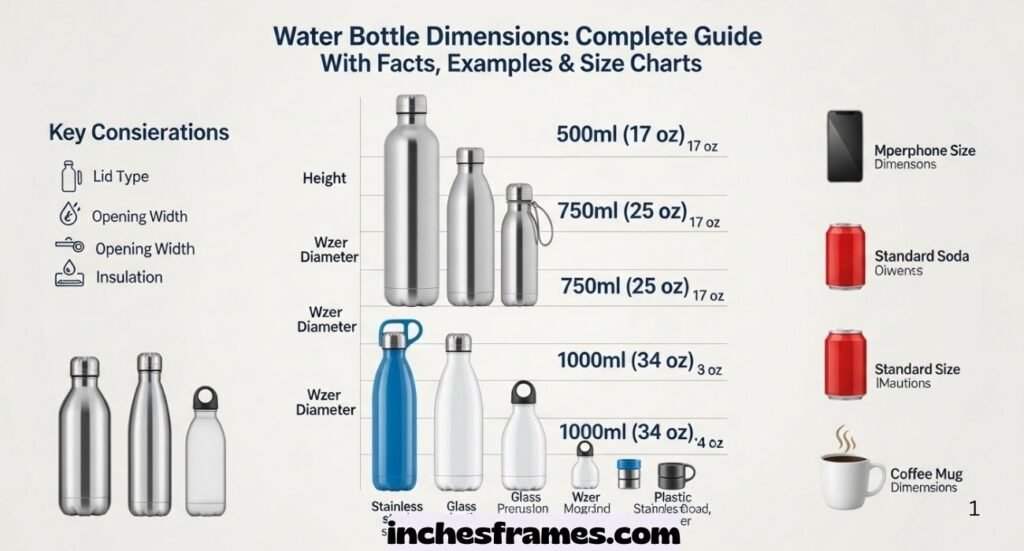
A plastic water bottle is lightweight, inexpensive, and widely used for everyday hydration. These bottles are easy to carry and commonly sold in stores as disposable or reusable options. Their lighter structure makes them popular as a travel water bottle or quick-use hydration bottle.
A stainless steel water bottle, on the other hand, is stronger and more durable. It often includes insulation that keeps water cold or hot for long periods. Many people choose these bottles as an eco-friendly bottle because they are reusable and reduce plastic waste.
Role of Bottle Capacity in Daily Hydration
The bottle capacity determines how much water a bottle can hold at one time. Smaller bottles may hold around 8 ounces, while larger bottles can hold up to 2 liters. Choosing the right capacity helps people maintain healthy hydration habits throughout the day.
For example, someone working in an office may prefer a 500ml water bottle, while athletes might use a larger hydration bottle to reduce the number of refills needed during exercise. Proper bottle capacity supports better tracking of daily water intake.
Understanding Water Bottle Weight and Material
The water bottle weight depends mainly on the water bottle material used to manufacture it. A plastic water bottle is extremely lightweight and usually weighs only a few grams when empty. This makes it easy to carry during travel or short activities.
A stainless steel water bottle is heavier but provides additional benefits such as durability and insulation. When filled with water, the weight increases because water adds to the overall bottle volume, which is important to consider for hiking or sports activities.
See Also : 22 Daily-Use Items Measuring 6 Inches Long
Importance of Bottle Cap Size and Design
The bottle cap size is a small but important part of overall water bottle dimensions. Caps are designed to prevent leaks, protect the water from contamination, and allow comfortable drinking. Most bottle caps range from 28 mm to 33 mm depending on bottle size.
Larger bottles often use wider caps because they allow faster water flow while drinking. Many modern bottles also include flip lids, straw caps, or sports tops. These features improve the usability of a reusable water bottle and make it more convenient for everyday hydration.
FAQs
Is a water bottle 8 inches?
Yes, many standard water bottle designs are about 8 inches tall, especially the common 16.9 oz (500 ml) bottle. However, the exact height can vary depending on the bottle shape and material.
Is a water bottle 6 inches?
Yes, smaller bottles such as 8 oz or 250 ml water bottles are often around 5.5 to 6 inches tall. These compact sizes are commonly used for kids or travel.
How many inches is a 16.9 fl water bottle?
A 16.9 fl oz (500 ml) water bottle is usually about 8 inches tall with a diameter of around 2.5 inches. This size is considered the most common standard bottle.
How tall is a 250ml water bottle?
A 250 ml water bottle is typically about 5 to 6 inches tall, depending on the design. These smaller bottles are lightweight and easy to carry.
Conclusion
Knowing water bottle dimensions helps you choose the right bottle for your lifestyle. Whether you need a compact portable water bottle for work, a durable stainless steel water bottle for the gym, or a large hiking water bottle for outdoor adventures, understanding bottle sizes makes the decision easier.
Most people prefer a 16.9 oz water bottle or 500ml water bottle because it balances portability and hydration. However, larger options such as a 1 liter water bottle or 2-liter water bottle are perfect for longer activities.
Choosing the right bottle size, material, and design ensures better comfort, better hydration, and a healthier daily routine.