20 Things That Measure 30 Feet Long or Are Big
30 Feet Long is a measurement that shows how long something is. It equals 30 feet from one end to the other. In meters, it is about 9.14 meters. This length is easy to imagine with cars, buildings, or people.
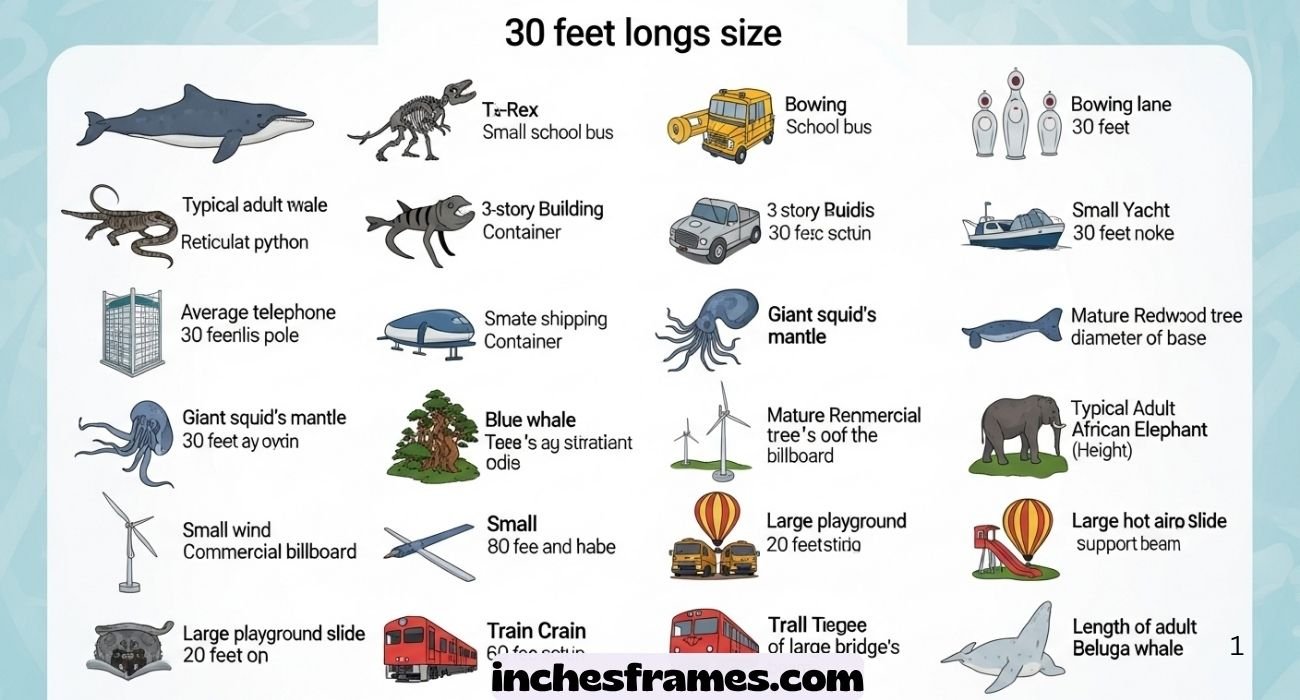
Many things in life are 30 Feet Long. A school bus, a small yacht, or a three-story building can all be this long. Seeing these objects helps you picture the size. It is fun and easy to compare.
Knowing 30 Feet Long helps with planning and measuring. You can use it for yards, rooms, or furniture. Walking ten seconds covers this distance. It also helps when looking at vehicles or boats.
Quick Conversion
Before diving into examples, let’s understand what 30 feet really means in different units. 30 ft in meters is about 9.14 meters, which is a little over 9 meters. In yards, it is exactly 10 yards. If we convert it to inches, 30 feet equals 360 inches. For larger distances, it’s about 0.0057 miles.
Understanding these conversions is helpful for spatial estimation in construction, landscaping, or interior design. Whether you are measuring a residential lot width or the height of a small building, knowing these numbers gives clarity to your planning.
How Long Is 30 Feet?
To truly understand how long is 30 ft, we can look at human and object comparisons. Five to six average adults lying head-to-toe make approximately 30 feet. Walking at a normal pace of 3 feet per second, it would take about ten seconds to cover this distance. In terms of vehicles, three standard sedans parked bumper-to-bumper also approximate this length, creating a tangible car length comparison for visualization.
This practical example allows anyone to see everyday size references in real life. Even a small three-story building height or a standard utility pole fits into this 30-foot measurement, bridging the gap between abstract numbers and physical objects.
Things That Measure 30 Feet Long or Big
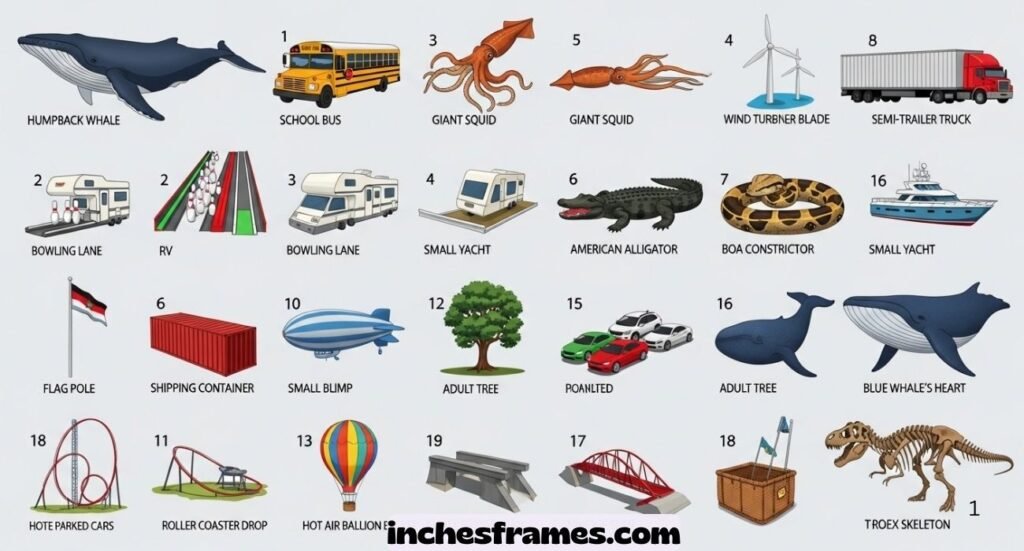
There are many objects of similar length that can help us visualize distance. From vehicles to buildings, boats, and residential lots, 30 feet appears more often than we realize.
School Bus (Slightly Shorter)
A standard school bus length is around 35 feet, so 30 feet is slightly shorter. Imagining a bus without its back section provides a practical reference. Parents and students see buses daily, making it easy to visualize distance in familiar settings.
This length also helps with practical space planning. Parking, street layouts, and bus storage all relate to this measure. Comparing to other vehicles, like sedans or SUVs, provides a car length comparison that is simple to understand and apply in daily scenarios.
The bus example illustrates objects of similar length beyond numbers. For construction or renovations near streets or school zones, this measurement provides a clear, everyday standard. It also helps in room and garden planning, showing how long 30 feet really is.
Three Average Cars (End-to-End)
Standard sedans are about 14–16 feet long. Lining three cars end-to-end gives roughly 30 feet. This distance in feet is ideal for estimating driveways, parking spaces, or garages. It’s a clear, relatable way to visualize distance using common vehicles.
Using cars as a reference makes spatial estimation intuitive. Homeowners and planners can see how much space 30 feet occupies without measuring. This practical example links directly to furniture and vehicle fit, helping determine layouts for parking lots and private driveways.
This method also reinforces human height comparison indirectly. If a person stands next to a car, you can mentally map 30 feet using five or six people, making the measurement tangible. It’s an everyday size reference anyone can apply.
Three-Story Building Height
Most small residential buildings or townhouses have floors about 10 feet tall. A three-story building height reaches roughly 30 feet. This ceiling height reference helps visualize vertical distances in urban or suburban neighborhoods for construction or real estate purposes.
The visual of a small building height is excellent for distance visualization. It helps planners, homeowners, and architects quickly understand proportions and assess design options without complex calculations. It’s a reliable, everyday practical measurement example.
Even small renovations, like adding decks or fences, benefit from this reference. Comparing a three-story building with other objects of similar length makes 30 feet tangible for home projects, landscaping, or evaluating yard dimensions.
Large RV or Motorhome
Class A motorhomes often range from 26 to 35 feet. A 30-foot RV balances RV and motorhome size with drivability, offering comfortable living space for families. This practical space planning helps travelers judge parking spots and storage requirements.
Knowing this measurement also assists with furniture and vehicle fit inside the RV. It’s large enough to include essential amenities, yet short enough to drive safely. Understanding objects of similar length helps buyers visualize the space before purchasing.
For road trips or camping, this measurement becomes even more practical. Comparing a large RV to a small building height or three cars end-to-end helps Americans grasp 30 feet easily in real-world contexts.
Telephone Pole
Standard utility poles range from 30–40 feet. A 30-foot pole represents the shorter end. Street lines, power cables, and phone connections in neighborhoods make standard utility pole height a reliable visual for distance in feet and spatial estimation.
Seeing a pole helps homeowners imagine vertical measurements for fences, trees, or buildings. It’s a simple, everyday size reference connecting ceiling height reference and practical construction planning.
Comparing poles to three-story building height or RVs gives perspective. Poles also serve as markers in property surveys or yard layouts, showing how objects of similar length appear in public spaces.
Small Yacht or Sailboat
Many yachts and sailboats measure 28–32 feet, placing 30 feet in the middle. These yacht and boat length examples are popular for recreational sailing, balancing space and manageability. Distance visualization helps in docking and marina planning.
This measurement aids in vehicle and boat measurements planning. Owners can see if a 30-foot vessel fits specific docks or boat lifts. Comparing to a residential lot width or parked cars provides practical context for space allocation.
30-foot boats also show practical measurement examples for interior layouts. Cabins, seating, and deck space can be visualized clearly using the 30-foot reference. It’s an everyday size reference for nautical enthusiasts.
Half a Basketball Court (Width)
A standard NBA court is 50 feet wide, so half a court is roughly 25 feet. Rounding to 30 feet provides a useful sports court dimensions reference. Coaches and athletes can use this for drills and distance visualization during practice.
This measurement also helps plan room and garden layouts. Playing areas, patios, or gym spaces can be compared to the width of a basketball court, showing how objects of similar length fit into daily life.
Using the court width makes practical space planning simple for sports or home design. Combining this with human or car comparisons further strengthens everyday size references, making 30 feet tangible.
Large Shipping Container (Plus Extension)
Standard shipping containers are 20 or 40 feet long. A 30-foot container falls right in between. These shipping container sizes are common in logistics, storage, and even home construction projects, helping visualize distance in feet.
Containers are useful for practical measurement examples like warehouse layouts, modular homes, or office spaces. Seeing a 30-foot container next to a car or small building height makes spatial estimation easier.
The extended container example also applies to property measurement and industrial planning. Builders and planners can instantly imagine 30 feet without measuring, reinforcing everyday size references for large objects.
Five to Six Adults (Head-to-Toe)
With the average adult about 5.5–6 feet tall, lining five or six people head-to-toe equals roughly 30 feet. This human height comparison gives a tangible distance visualization for outdoor or interior spaces.
Using people as a reference helps with room and garden planning, providing a mental image for furniture and vehicle fit, pathways, or playground layouts. It is also a fun method for educational activities.
This example emphasizes practical measurement examples in daily life. Measuring by humans is simple, flexible, and relatable, making it a perfect everyday size reference.
Residential Lot Width
Suburban residential lots often range 30–50 feet wide. A 30-foot residential lot width provides enough space for a modest home and side yards. This property measurement example helps homeowners and planners visualize land use efficiently.
This measurement is ideal for practical space planning in landscaping, driveways, or patios. Seeing the lot compared to parked cars or a small building provides a visualize distance context.
Understanding lot width also helps in estimating furniture and vehicle fit outdoors. When purchasing property, a 30-foot lot gives a tangible reference to objects of similar length, easing decision-making.
Large Ladder (Extension Ladder)
Professional extension ladder measurement ranges from 28–32 feet fully extended. These ladders reach three-story building height safely. Contractors and firefighters regularly rely on this practical measurement example in urban and suburban projects.
The ladder length also helps with room and garden planning. Reaching tall trees, fences, or building roofs becomes easier to estimate without physically measuring every time.
Ladders provide an everyday size reference in vertical spaces. Comparing them to RVs or small buildings helps with distance visualization and ensures safety when planning tasks at heights.
30 Feet Without Measuring
You can estimate 30 feet without a tape measure using familiar objects. Three cars end-to-end, a school bus minus the back section, or walking for 10 seconds of normal walking all provide accurate distance in feet.
This method enhances spatial estimation and practical space planning. It’s useful for homeowners, landscapers, and anyone who needs to visualize objects of similar length quickly.
Using these techniques also improves awareness for property measurement and interior layouts. Everyday tasks, like arranging furniture or assessing yard space, become simpler when you can visualize distance without tools.
Playground Slide Length
Many large playground slides measure close to 30 feet long. This everyday size reference helps parents and school planners visualize distance for safe spacing and installation. The length allows children to enjoy a thrilling ride while keeping practical measurement examples in mind.
Slide design also involves spatial estimation. Ensuring adequate ground clearance and landing zones requires considering human height comparison and slide length relative to playground dimensions. This practical approach aids in room and garden planning for safe play areas.
Comparing slides to three-story building height or three cars end-to-end helps adults see scale clearly. It is an excellent example of objects of similar length used in recreational spaces and public parks.
Small Airplane Wingspan
Light aircraft, such as small private planes, often have wingspans around 30 feet. This 30 feet measurement is critical for hangar planning, runway spacing, and parking. Distance visualization ensures pilots and planners safely maneuver aircraft.
Understanding wingspan helps in practical space planning for aviation enthusiasts. Measuring alongside standard vehicles or a large RV or motorhome size provides tangible perspective for furniture and vehicle fit in hangars.
Using airplanes as a reference also gives insight into everyday size references in aviation education or hobby flying. Comparing wingspan to cars or three-story building height makes abstract numbers easier to grasp.
Swimming Pool Length (Small Residential Pool)
A common small residential pool often measures around 30 feet long. This distance in feet provides enough room for laps while fitting typical backyard spaces. Homeowners can use 30 ft in meters to plan pool landscaping.
Pools require careful practical space planning, including deck areas, safety barriers, and furniture placement. Comparing pool length to three cars end-to-end or a residential lot width helps with spatial estimation.
Using a pool as an example also enhances everyday size references. Homeowners and designers can visualize depth and length relative to human height comparison for safe swimming areas.
Large Garden Pergola
A large backyard pergola may span 30 feet long, making it a practical objects of similar length example. This 30 feet measurement accommodates outdoor furniture and walking space underneath comfortably.
Room and garden planning benefit from knowing this size. It ensures furniture placement, plant spacing, and lighting fixtures fit properly. Designers can compare the pergola to small building height or three cars end-to-end for mental reference.
Pergolas are also excellent everyday size references for DIY enthusiasts. They connect abstract numbers with tangible spaces, enhancing practical measurement examples for landscaping or outdoor design projects.
30 Feet Matters in Everyday Life
Understanding 30 feet measurement affects many aspects of daily life. Homeowners use it for furniture placement, yard layouts, and renovation planning. Landscapers apply it in room and garden planning, while vehicle and boat buyers check furniture and vehicle fit in garages or docks.
Knowing 30 feet improves practical space planning in homes, neighborhoods, and industrial settings. It also helps in property measurement, ensuring accurate assessment of residential lot widths or parking areas.
Finally, using objects of similar length for reference—cars, buses, ladders, or small buildings—turns abstract numbers into everyday size references, improving decision-making and visualization in daily activities.
See Also : 22 Things That Measure 3 Feet Long or Are Big
30 Feet Without Measuring
You can estimate 30 feet without a tape measure by using familiar everyday size references. For example, the front portion of a standard school bus, three parked cars end-to-end, or a small three-story building provides immediate visualization. Walking at normal pace for 10 seconds of normal walking also covers roughly 30 feet. Using these methods makes distance in feet tangible, especially when planning spaces.
School Bus (Minus the Back Section)
By imagining a school bus minus its back section, you get a clear sense of 30 ft measurement. This method is often used in parking design, urban planning, and education settings.
Three Parked Cars End-to-End
Three sedans parked bumper-to-bumper serve as a visual guide for car length comparison and practical space planning in garages, driveways, and parking lots.
Three-Story Building Height
Using a nearby small building height or townhouse, you can easily gauge the vertical dimension of 30 feet. This comparison also helps with estimating ceiling height reference in construction and renovation projects.
10 Seconds of Normal Walking
Walking at a standard pace of three feet per second, you can cover 30 feet in about ten seconds. This quick and practical trick helps with distance visualization in gardens, yards, and interior spaces.
30 Feet Matters in Everyday Life
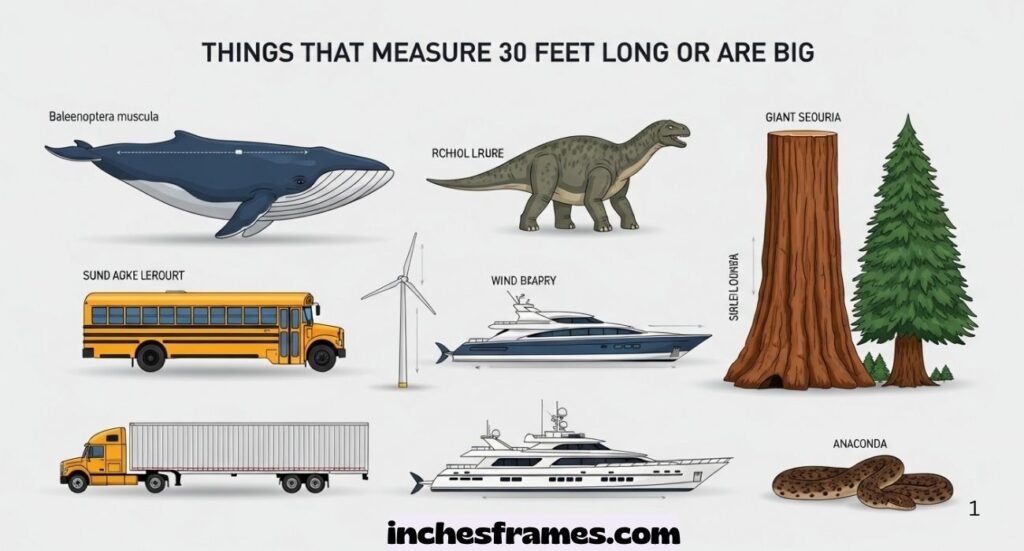
Understanding 30 feet measurement has many practical applications. Homeowners benefit when planning renovations or furniture placement. Landscapers and gardeners can accurately plan room and garden layouts. Buyers of RVs, boats, or trailers can ensure furniture and vehicle fit. Real estate professionals use 30-foot references for lot and property evaluations. Recognizing practical measurement examples in everyday life improves spatial awareness and decision-making.
Visualizing 30 Feet in Everyday Life
Understanding 30 feet can be tricky without relatable references. Think of three standard cars parked end-to-end or a small three-story building. Using objects of similar length helps you visualize distance and better understand spatial estimation for everyday tasks, like furniture placement or garden planning.
This 30 feet measurement is not just a number; it’s a practical tool. From planning a driveway to estimating property and lot width, knowing what fits in 30 feet helps save time, space, and effort. It transforms abstract numbers into clear, tangible references for home, office, or outdoor projects.
Using Vehicles to Measure 30 Feet
Cars, buses, and RVs are excellent ways to grasp 30 feet. Three sedans three cars end-to-end equal roughly 30 feet. Similarly, large recreational vehicles or motorhomes provide a vehicle and boat measurement reference, showing the balance of space and maneuverability in real-world scenarios.
A standard school bus is slightly longer, around 35 feet. Mentally removing the back section gives a precise 30-foot reference. These examples demonstrate practical measurement examples that anyone can see daily, helping with parking lot spacing and vehicle storage visualization.
Boats and Yachts as 30-Foot References
Small yachts and sailboats often measure between 28 and 32 feet. These yacht and boat length examples show how a 30-foot measurement applies to recreational and coastal planning, including dock spacing and marina layouts.
Understanding boat lengths helps enthusiasts plan trips, ensure proper dock placement, and manage furniture and vehicle fit onboard. Using 30 feet as a reference creates clarity when choosing mid-size vessels for travel or leisure.
30 Feet in Building Measurements
A three-story building height roughly equals 30 feet, including ceilings and floor thickness. This gives a visual comparison for home or small commercial construction. Knowing this helps architects, builders, and homeowners visualize distance for design accuracy.
Ceiling heights, floor layouts, and building dimensions can all be measured using 30 feet as a reference. Even small structures like garages, sheds, or tiny offices benefit from understanding practical space planning, making renovation and construction more precise.
Human Height and 30 Feet Comparisons
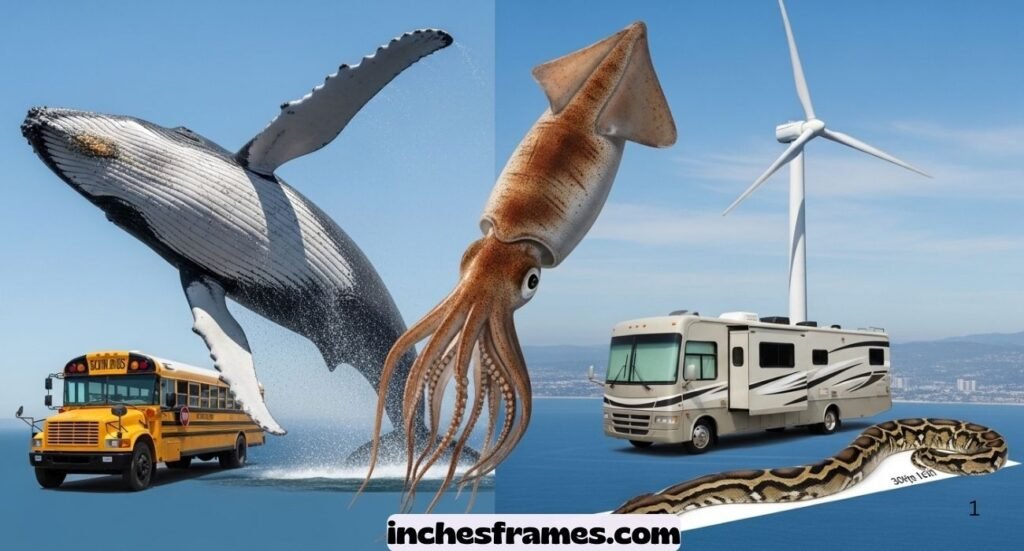
Five or six average adults lying head-to-toe reach about 30 feet. This human height comparison makes it easy to understand scale in everyday size references, from hallways to playground measurements.
Walking at a normal pace for ten seconds also covers 30 feet. Combining walking distance in feet with human chains helps in room and garden planning, sports drills, and outdoor activities, giving a tangible sense of space.
See Also : 22 Things That Measure 40 Feet Long or Are Big
Outdoor and Property Applications
Many suburban lots in the USA have a residential lot width around 30 to 50 feet. This measurement is crucial for landscaping, fencing, and driveway planning, giving homeowners a clear property measurement reference.
Garden paths, patios, and yard layouts often rely on 30-foot distances. Whether spacing trees or placing outdoor furniture, using 30 feet measurement as a practical guide ensures practical space planning and avoids mistakes during construction or decoration.
Sports and Recreation References

A standard basketball court width is 50 feet, making half the court roughly 25–30 feet. This sports court dimensions reference shows how 30 feet works in athletic planning, including drills, playgrounds, or practice areas.
Visualizing these distances helps coaches and athletes with game strategy, distance visualization, and practice setups. Even informal backyard games or exercise routines can benefit from using 30 feet as a practical measurement example.
Tools and Equipment for 30 Feet
Extension ladders used by firefighters or contractors range from 28 to 32 feet. This extension ladder length serves as a vertical 30-foot reference, essential for construction, tree trimming, and emergency access.
Understanding ladder lengths aids in furniture and vehicle fit, reaching high ceilings, and safely planning projects. The 30-foot dimension also connects to ceiling height reference and small building height, making everyday work safer and more efficient.
FAQs
How many stories is 30 feet tall?
About three stories, assuming each floor is roughly 10 feet including ceiling and floor thickness.
How big is 30 square feet visually?
A 5×6 feet area, roughly the size of a small bathroom or walk-in closet.
How tall is 30 in feet?
30 feet tall equals the height of a small three-story building or five to six adults stacked head-to-toe.
How many floors is 30 feet?
Approximately three floors, based on standard residential floor height of 10 feet each.
Conclusion
Understanding 30 Feet Long helps us see how big objects and spaces really are. From three cars parked end-to-end to a small three-story building, this length appears in many places. People use it for home planning, yard measurements, and vehicle sizes. Knowing what fits in 30 Feet Long makes it easier to arrange furniture, build patios, and organize spaces. It also helps when looking at RVs, boats, and shipping containers.
Using 30 Feet Long in everyday life makes measuring simple. Walking ten seconds covers this distance, and five or six adults lying head-to-toe reach it too. With this knowledge, anyone can visualize distance clearly. It helps plan rooms, gardens, and property with confidence and accuracy.