25 Things That Measure 100 Feet (ft) In Length
100 Feet is a length that equals 100 feet long. It is the same as 33.33 yards or 30.48 meters. It is used to measure big things in daily life.
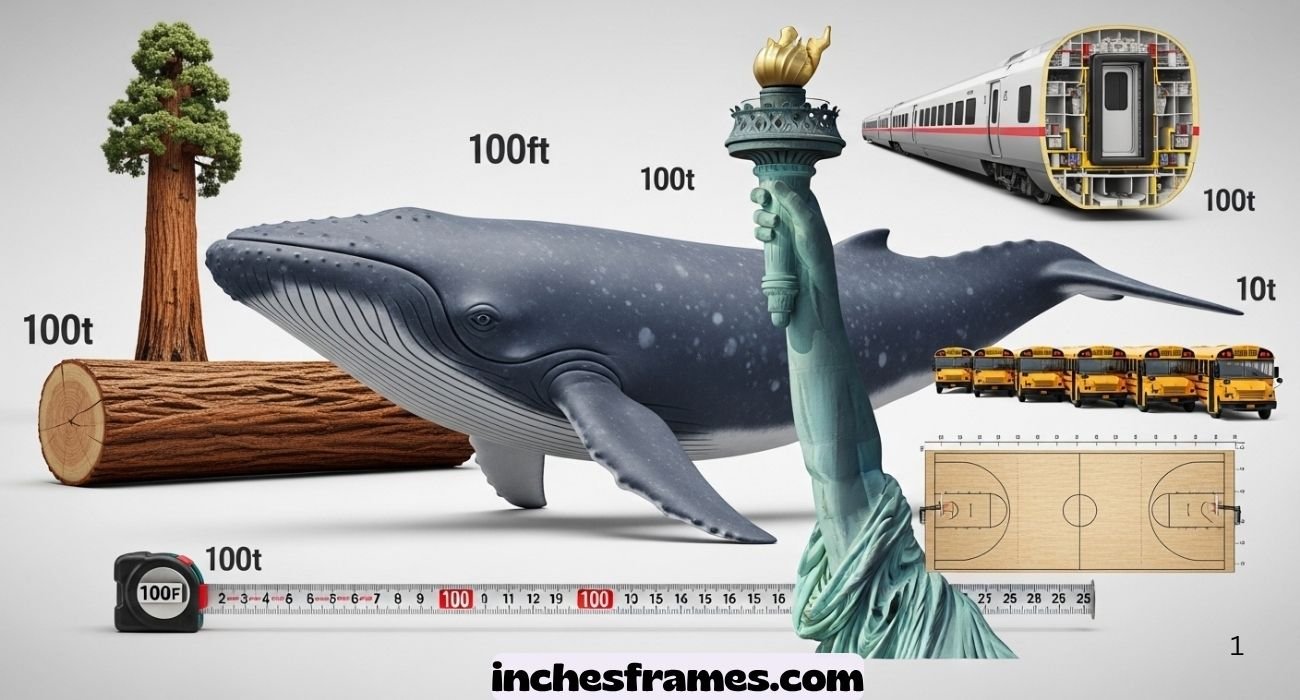
Many things in life can be 100 feet long. School buses, basketball courts, and trees are examples. Seeing these objects helps you imagine the length easily.
People use 100 feet in sports, buildings, and roads. It helps plan space and measure objects. Knowing 100 feet makes it easy to compare things.
Quick Conversion
For anyone wondering how long is 100 feet, it helps to convert it into other units for perspective. 100 feet equals 33.33 yards, 30.48 meters, 1,200 inches, or approximately 0.019 miles. These conversions are practical for architects, construction workers, and athletes who work with 100-foot measurements regularly. For instance, a basketball court, a standard school bus, and even a small apartment building can all be visualized better when using these equivalent measurements.
| Measurement | Equivalent |
| Feet | 100 ft |
| Yards | 33.33 yards |
| Meters | 30.48 meters |
| Inches | 1,200 inches |
| Miles | 0.019 miles |
These simple conversions provide a foundation to understand the horizontal and vertical dimensions of objects that are 100 feet long.
How Long Is 100 Feet?
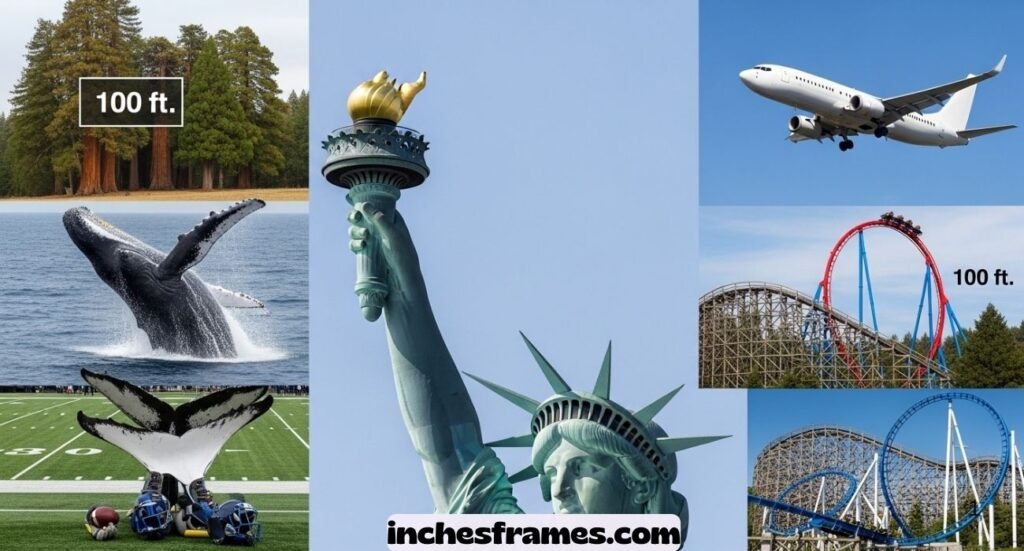
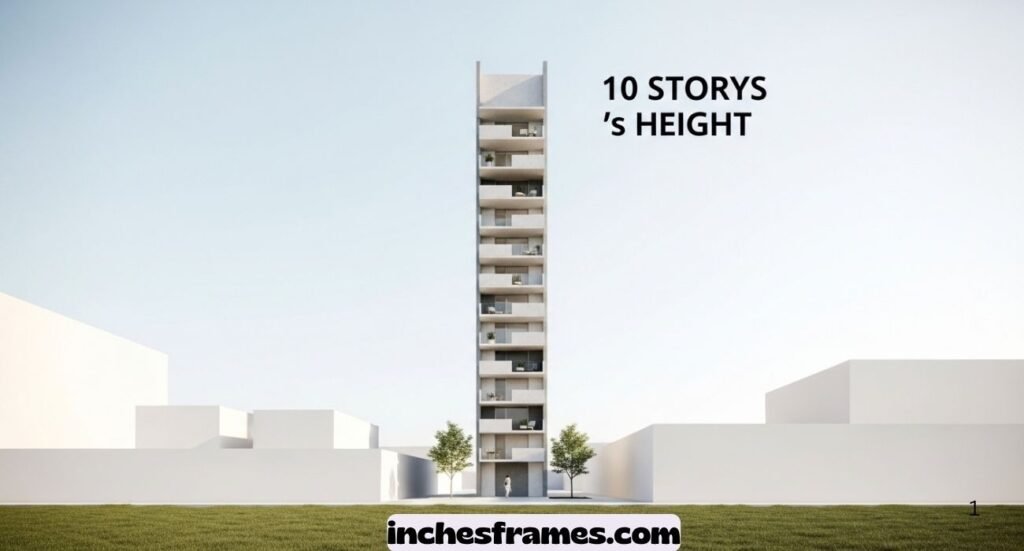
To put 100 feet into perspective, think of it as roughly the height of a ten-story building or the length of about 18 adults lying head-to-toe, which provides a useful human height comparison. Walking 100 feet takes roughly 33 to 40 seconds at a normal pace, making it a measurable yet manageable distance in daily life.
This distance also represents approximately one-third of a football field, a common reference for sports enthusiasts. Whether you are planning urban planning measurements for sidewalks, parking lots, or recreational spaces, understanding 100-foot structures is essential.
Things That Measure 100 Feet In Length
Standard School Bus (Plus Small Car)
A standard school bus length measures about 35 to 40 feet. Adding a compact car of 10 to 15 feet at the end reaches roughly 100 feet. This combination is a practical reference for vehicle lengths in parking lots or urban planning.
City planners often use buses and cars as construction reference points for designing streets and parking spaces. Visualizing 2.5 school buses provides a tangible understanding of 100-foot measurement, helping people estimate horizontal dimensions quickly without rulers or measuring devices.
For American families, seeing a school bus next to a car gives a real-life sense of long-distance measurements. This method is easy to understand, making 100 ft in length relatable and simple for everyone from children to professionals.
One-Third of a Football Field
An American football field measures 300 feet from goal line to goal line. One-third of a football field equals 100 feet. Athletes, coaches, and fans use this sports reference to estimate sports field dimensions in gyms, schools, and stadiums.
Understanding this measurement helps in athletic training and planning field layouts. Visualizing 100 feet from the goal line to the 33-yard line demonstrates horizontal dimensions of playing areas clearly. Football fields provide a perfect example of large-scale objects in the USA.
This distance also allows for easy comparison with other 100-foot structures, like buildings or rows of cars. Sports enthusiasts can quickly gauge long-distance measurements while practicing drills or planning game strategies, making 100 ft in length instantly recognizable.
Ten-Story Building
A typical ten-story building measures approximately 100 feet tall, assuming each story is about 10 feet. This provides a simple vertical reference for architectural dimensions in downtown areas. Residents often encounter buildings of this height regularly.
Urban planners and real estate developers use ten-story building heights to design spaces efficiently. Understanding this vertical measurement helps in evaluating building density, shadow coverage, and large-scale objects within cities, giving perspective on 100-foot measurement in real-world contexts.
City dwellers see ten-story buildings throughout urban landscapes. Comparing these structures to objects that are 100 feet long helps the public understand vertical dimensions intuitively, bridging the gap between numbers and visual perception in everyday life.
Seven Average Cars (End-to-End)
The average sedan measures 14 to 16 feet long. Placing six or seven vehicles end-to-end equals roughly 100 feet, providing a practical reference for vehicle lengths in parking lots or streets. This is useful for both drivers and planners.
This visualization helps illustrate horizontal dimensions for traffic engineers and urban designers. Seven cars in a line make large-scale objects more understandable, showing how 100 ft in length fits into everyday city layouts and recreational areas.
Drivers and pedestrians can estimate distances using cars in line. This method makes 100-foot measurement tangible without tools, offering an intuitive way to understand long-distance measurements and 100-foot structures commonly seen in American cities.
Standard Bowling Lane (With Approach)
A regulation bowling lane measures 60 feet from the foul line to the pins. Including the 15-foot approach area and surrounding space totals roughly 100 feet. This reference helps visualize recreational area sizes in bowling alleys.
Bowling alleys across the USA maintain these dimensions, providing a familiar environment for both professionals and casual players. The lane demonstrates horizontal dimensions and 100-foot measurement, making long-distance measurements accessible through recreational activities.
This measurement also aids planners in designing bowling centers, ensuring lanes, seating, and walkways accommodate large-scale objects efficiently. Patrons gain a real-world sense of 100 ft in length while enjoying their sport.
Basketball Court (Slightly Longer)
A standard basketball court is 94 feet long, slightly shorter than 100 feet. Coaches, players, and fans often imagine the extra six feet to understand 100-foot structures in indoor or outdoor sports facilities.
This reference is perfect for teaching sports field dimensions, showing horizontal dimensions in an easy, visual way. Basketball courts provide a relatable comparison to objects that are 100 feet long for schools, gyms, and parks.
Visualizing this measurement helps players plan drills, estimate distances, and understand court spacing. Long-distance measurements like 100 feet become easier to grasp when compared with familiar athletic large-scale objects in everyday environments.
Mature Oak or Pine Tree
Some large oak or pine tree height reaches 80 to 120 feet. Mature specimens often measure near 100 feet, providing a natural vertical reference. Arborists and nature enthusiasts frequently use trees to understand 100-foot measurement in real life.
These towering trees demonstrate vertical dimensions clearly, offering outdoor contexts for long-distance measurements. Visitors to parks or forests can compare their own height to estimate 100 ft in length, enhancing spatial awareness.
For environmental planning and landscaping, understanding tree height helps in urban planning measurements and designing green spaces. 100-foot structures like these trees connect nature with human-scaled visualization of large objects.
Semi-Truck and Full Trailer
A semi-truck tractor typically measures 20–25 feet, with trailers adding 48–53 feet, totaling around 70–78 feet. Longer combinations approach 100 feet, giving a practical example of vehicle lengths for highways and logistics.
Highway engineers and transportation planners rely on semi-truck with trailer length for designing lanes, rest areas, and parking spaces. Understanding 100-foot structures is critical for managing traffic flow and ensuring safety for all drivers.
For travelers in the USA, seeing these massive vehicles provides a tangible sense of long-distance measurements. Comparing trucks to other large-scale objects makes 100 ft in length easier to visualize in real-world situations.
Three-Lane Swimming Pool (Length)
Many recreational swimming pools measure approximately 25 yards, which is about 75 feet. Some three-lane pools stretch to 30 meters, equaling roughly 100 feet. These pools demonstrate swimming pool length for exercise and competition while providing a real-life reference for 100-foot measurement.
Athletes and coaches use pools to plan laps and drills, giving horizontal dimensions context. Visualizing the water length helps swimmers understand long-distance measurements and how large-scale objects fit within recreational spaces, making 100 ft in length easy to picture.
Pool designers rely on 100-foot structures to optimize spacing for lanes, walkways, and safety zones. Whether in public gyms, schools, or private clubs, the standard pool length provides a tangible example of objects that are 100 feet long for everyone.
Fire Truck with Ladder Extended
Fire trucks with aerial ladders can reach 75 to 100 feet when fully extended. This 100-foot measurement is crucial for emergency response, allowing firefighters to reach high buildings or rescue individuals safely during urban operations.
The vertical dimensions of these trucks make them excellent real-world references for large-scale objects. Residents in cities often observe these vehicles, gaining an intuitive understanding of long-distance measurements without the need for tools or calculations.
Urban planners and fire departments use this knowledge for designing roads, fire lanes, and access points. Comparing ladders to 100-foot structures ensures safety while offering a relatable example of 100 ft in length for everyday Americans.
Five Standard RVs (End-to-End)
Class C motorhomes usually measure 20–25 feet each. Lining up four or five RVs end-to-end roughly equals 100 feet. This practical reference is useful for understanding vehicle lengths and horizontal dimensions in campgrounds and parking areas.
Recreational vehicle enthusiasts often use these examples to plan spaces, estimate distances, and visualize large-scale objects. Counting RVs in a row provides an easy way to estimate 100-foot measurement without measuring tapes or rulers.
For campgrounds and urban planners, aligning five RVs illustrates 100 ft in length effectively. It helps design parking layouts, ensure safe spacing, and understand how objects that are 100 feet long fit into everyday life.
Tennis Court (Three Times Length)
A standard singles tennis court is 78 feet long, slightly shorter than 100 feet. By adding approximately 22 feet, one can visualize 100-foot structures easily. This reference is helpful for athletes and coaches planning drills or recreational areas.
Understanding sports field dimensions allows players and organizers to gauge spacing, practice strategies, and measure distances. Comparing tennis courts to 100-foot measurement provides a practical perspective on horizontal dimensions for sports and recreational facilities.
Tennis courts also demonstrate large-scale objects in smaller settings. Whether for private clubs or school gyms, adding extra court length gives a visual representation of 100 ft in length, making abstract numbers concrete for Americans.
Large Yacht or Small Ship
Luxury yachts often range from 80 to 120 feet, with 100 feet representing a substantial vessel. Marinas and harbors use these dimensions to plan docks, slips, and navigation routes, offering a tangible example of marina and yacht sizes.
For travelers and sailors, seeing a 100-foot yacht helps estimate long-distance measurements on water. This visual comparison demonstrates large-scale objects in maritime environments, connecting everyday concepts to the sea.
Yachts of this size require specialized infrastructure and professional crews. Understanding 100-foot structures in water transport provides insight into 100 ft in length in recreational and commercial contexts, making abstract measurements practical.
18 Adults (Head-to-Toe)
The average adult measures roughly 5.5 to 6 feet in height. Lining up 16 to 18 adults head-to-toe equals about 100 feet. This simple human height comparison helps visualize long-distance measurements in everyday life without any tools.
This method is commonly used in educational activities, team-building exercises, and safety demonstrations. Seeing people line up shows horizontal dimensions clearly and illustrates objects that are 100 feet long in a human-scale context.
This approach is perfect for classrooms, parks, or public events. By using adults as a reference, anyone can grasp 100-foot measurement intuitively, making 100 ft in length tangible and memorable for everyday Americans.
Small Apartment Building
Low-rise apartment buildings typically measure between 30 and 100 feet wide. These structures provide a horizontal perspective on architectural dimensions, showing how 100-foot structures fit within residential areas. This helps visualize large-scale objects in neighborhoods.
Urban planners rely on these measurements for spacing, sunlight exposure, and accessibility planning. Knowing a building width of roughly 100 feet simplifies understanding horizontal dimensions for city blocks and streets, making 100 ft in length practical.
For residents, comparing buildings to familiar objects like cars or people demonstrates 100-foot measurement visually. This connection between numbers and long-distance measurements enhances spatial awareness in everyday urban life.
100 Feet Without Measuring
Estimating 100 feet without tools can be done using familiar references like 2.5 school buses, seven cars, or roughly 18 adults lying head-to-toe. This approach simplifies long-distance measurements and visualizes 100-foot structures clearly.
Understanding this method helps pedestrians, athletes, and planners gauge space quickly. By comparing distances with known objects, people can estimate horizontal dimensions and 100 ft in length efficiently without using instruments.
This skill is useful in urban areas, parks, and construction sites. Visualizing large-scale objects without measurement tools encourages intuitive understanding of objects that are 100 feet long, making abstract distances practical.
Ten-Story Building Height
Revisiting vertical perspectives, a ten-story building is roughly 100 feet tall. This example illustrates vertical dimensions in architecture, providing a reference for construction, urban planning, and real estate projects.
City residents can relate building height to human height comparison or vehicles, helping to understand 100-foot structures in everyday contexts. Comparing the building to known objects makes 100 ft in length easier to visualize.
For planners and architects, knowing a 100-foot building height aids in estimating shadow coverage, zoning, and cityscape planning. This concrete 100-foot measurement demonstrates how vertical large-scale objects impact urban design and safety.
One-Third of a Football Field
Revisiting one-third of a football field, this distance equals 100 feet, as a standard American football field is 300 feet long. Coaches and players often use this measure to plan sports field dimensions and understand horizontal dimensions of playing areas.
Visualizing from the goal line to the 33-yard line offers a practical method for understanding large-scale objects. This reference helps athletes, referees, and stadium designers compare 100-foot measurement to familiar field layouts, enhancing spatial awareness during games and training.
For schools and recreational leagues, objects that are 100 feet long like one-third of a football field make estimating distances easy. Players quickly relate 100 ft in length to drills, sprints, and tactical planning, making it intuitive.
Seven Standard Cars Bumper-to-Bumper
Lining up seven average cars bumper-to-bumper equals roughly 100 feet, providing a practical visualization for vehicle lengths. This method helps drivers, city planners, and parking lot designers understand horizontal dimensions and large-scale objects in everyday spaces.
This comparison also demonstrates 100-foot structures in a relatable way. People often estimate distances in streets or driveways using cars as a reference, giving a visual cue for 100 ft in length without rulers or measuring tapes.
Using cars as measurement units simplifies long-distance measurements for pedestrians, drivers, and planners. It bridges abstract numbers with tangible objects that are 100 feet long, making 100 feet understandable in urban, residential, and recreational environments.
33–40 Seconds of Normal Walking
Walking 100 feet at an average pace takes about 33 to 40 seconds. This time-based reference gives pedestrians a natural sense of long-distance measurements and the scale of 100-foot structures in everyday life.
Athletes, coaches, and urban planners often use this method to estimate horizontal dimensions quickly. Visualizing 100 ft in length in seconds helps people manage walking distances, park layouts, and recreational paths without instruments.
Even in casual daily life, timing walks for approximately 33–40 seconds gives a tangible measure of objects that are 100 feet long. This approach makes large-scale objects practical and intuitive for Americans navigating urban and recreational spaces.
100 Feet Matters in Everyday Life
The concept of 100 feet appears everywhere—from large oak or pine tree height to ten-story buildings, basketball courts, and school buses. Understanding 100-foot measurement provides insight into both horizontal and vertical dimensions in homes, parks, and cities.
This measurement helps architects, urban planners, athletes, and ordinary people relate to large-scale objects. Comparing distances using familiar references makes 100 ft in length tangible, assisting in construction, recreation, and visualizing space effectively.
Whether designing parking lots, measuring vehicle lengths, or estimating sports field dimensions, knowing objects that are 100 feet long improves planning accuracy. 100 feet matters in everyday life because it bridges the gap between numbers and real-world understanding.
Small Apartment Building
Low-rise apartments often measure up to 100 feet wide. This provides a clear example of architectural dimensions and horizontal dimensions in city planning. Residents can understand 100-foot structures by comparing buildings to familiar objects.
Urban developers rely on 100-foot measurement to optimize spacing, lighting, and building placement. Understanding large-scale objects like these apartments ensures neighborhoods are functional and aesthetically pleasing while maintaining safe distances.
For residents and city planners, comparing objects that are 100 feet long like buildings to cars, trees, or adults helps visualize 100 ft in length. This knowledge makes urban landscapes more comprehensible and navigable.
Ten-Story Building Height (Emphasis)
A ten-story building height measures approximately 100 feet. Architects and engineers use this vertical measurement as a reference for large-scale objects and vertical dimensions, ensuring structures fit within zoning laws and city skylines.
For residents and visitors, comparing building height to human height comparison or nearby vehicles provides a tangible sense of 100-foot structures. Observing these buildings helps people relate numbers to real-life long-distance measurements.
Understanding 100 ft in length through building height also aids in construction, emergency planning, and urban design. This practical perspective demonstrates how vertical objects that are 100 feet long impact everyday city life.
One-Third of a Football Field (Emphasis)
Re-emphasizing one-third of a football field, this measurement equals 100 feet. Sports coaches, referees, and players use this distance for drills, planning, and understanding sports field dimensions in schools, parks, and professional arenas.
Visualizing 100-foot structures on a familiar field helps athletes understand horizontal dimensions intuitively. This reference also bridges the gap between abstract numbers and large-scale objects, making the distance tangible.
For children and adults alike, comparing objects that are 100 feet long to one-third of a football field improves spatial awareness and enhances learning in sports, recreation, and everyday life.
Seven Standard Cars Bumper-to-Bumper (Emphasis)
Again considering cars, lining up seven average vehicles provides a simple visual for 100-foot measurement. Planners and drivers use this technique to gauge horizontal dimensions in streets, parking lots, and recreational areas efficiently.
This visualization demonstrates large-scale objects in everyday contexts. Comparing 100 ft in length to familiar vehicle lengths allows Americans to estimate distances quickly without tools or measuring devices.
Even in daily life, estimating objects that are 100 feet long using cars is practical. It provides a tangible reference for understanding space in urban planning, construction, and pedestrian navigation.
33–40 Seconds of Normal Walking (Emphasis)
Walking 100 feet in roughly 33–40 seconds is a natural way to estimate 100-foot measurement. Pedestrians and planners alike can use this human-scale reference to understand long-distance measurements in streets, parks, or recreational areas.
Athletes and teachers can apply this timing to drills and exercises, converting time into horizontal dimensions. Observing objects that are 100 feet long while walking helps reinforce spatial understanding intuitively.
Using time as a measure also links large-scale objects to everyday human activity. 100 ft in length becomes understandable for everyone, whether designing public spaces, planning routes, or visualizing urban layouts.
See Also : 25 Daily-Use Items Measuring 12 Inches Long
100 Feet Without Measuring

Estimating 100 feet without a ruler can be done using familiar objects: 2.5 school buses, seven cars bumper-to-bumper, or roughly 18 adults lying down. Using visual references like these simplifies long-distance measurements in everyday situations.
Ten-Story Building Height
Reemphasizing the vertical perspective, a ten-story building stands approximately 100 feet tall. This example is useful in construction, real estate, and city planning to illustrate vertical dimensions in large-scale objects.
One-Third of a Football Field
Returning to sports references, one-third of a football field equals 100 feet. This comparison is excellent for sports field dimensions and helps athletes, coaches, and designers understand horizontal dimensions of athletic spaces.
Seven Standard Cars Bumper-to-Bumper
A row of seven standard cars measures roughly 100 feet. This visualization works in parking lots, driveways, and streets, providing a practical reference for vehicle lengths and long-distance measurements in everyday environments.
33–40 Seconds of Normal Walking
Walking 100 feet takes approximately 33 to 40 seconds at a normal pace. This time-based measurement is an intuitive way to grasp 100-foot measurement distances without using rulers or devices. Pedestrians, urban planners, and sports trainers often use this technique for estimating distances.
100 Feet Matters in Everyday Life
From construction and architecture to vehicles, sports fields, and natural landmarks, 100 ft in length is a versatile measurement. Recognizing 100-foot structures helps in planning, visualizing, and navigating both urban and recreational environments. Understanding horizontal and vertical dimensions of familiar objects that are 100 feet long makes this distance tangible in multiple aspects of life.
Understanding 100 Feet in Construction Projects
When planning construction, 100 ft in length is a common benchmark for measuring building footprints, parking lots, and roadways. Architects and civil engineers rely on architectural dimensions and construction reference points to visualize 100-foot structures, ensuring projects are safe and well-proportioned.
From high-rise buildings to recreational areas, knowing horizontal and vertical dimensions is essential. Contractors frequently compare layouts to large-scale objects like buses, trees, or sports fields to estimate long-distance measurements and optimize space effectively.
Visualizing 100 Feet Through Everyday Vehicles
Using vehicle lengths is one of the simplest ways to estimate objects that are 100 feet long. Standard school buses, semi-trucks, and cars provide tangible examples of 100-foot measurement, helping people relate numbers to familiar objects.
Urban planners and drivers often rely on these comparisons for street design, parking spaces, and recreational area sizes. Observing large-scale objects like seven cars bumper-to-bumper or five RVs end-to-end makes 100 ft in length intuitive and practical.
Sports Fields as 100-Foot References
Sports facilities provide excellent examples of 100-foot structures. One-third of a football field or slightly longer than a basketball court demonstrates sports field dimensions and horizontal dimensions in a memorable way.
Athletes, coaches, and students use these comparisons to practice drills, estimate distances, and understand long-distance measurements. Visualizing 100 ft in length through familiar sports layouts helps bridge abstract numbers with real-world large-scale objects.
Trees and Nature Measuring 100 Feet

Many mature oak and pine trees reach large oak or pine tree height close to 100 feet. These natural vertical references allow for understanding vertical dimensions without rulers or tools.
Environmental planners, hikers, and educators often compare 100-foot measurement to surrounding objects. Using nature as a reference helps people intuitively visualize 100 ft in length while understanding large-scale objects in forests, parks, and open spaces.
100 Feet in Maritime Settings
Luxury yachts and small ships often measure 80 to 120 feet, with 100 feet representing significant marina and yacht sizes. These vessels provide real-world context for 100-foot structures in nautical environments.
Marinas use these dimensions for slip placement, dock spacing, and navigation planning. Understanding 100 ft in length through water-based objects gives insight into horizontal dimensions and large-scale objects in recreational and commercial maritime settings.
See Also : 22 Daily-Use Items Measuring 4 Inches Long
Using Human Scale to Measure 100 Feet
Lining up 16–18 adults head-to-toe provides a simple human-scale reference for 100-foot measurement. This human height comparison is useful in classrooms, public demonstrations, and outdoor education.
Teachers, planners, and event organizers can quickly visualize objects that are 100 feet long using people as units. This method helps grasp long-distance measurements intuitively, making 100 ft in length tangible in everyday life.
Time as a Measurement for 100 Feet
Walking 100 feet typically takes about 33–40 seconds at a normal pace. Using time as a guide gives a practical sense of long-distance measurements and 100-foot structures without physical measurement tools.
Coaches, pedestrians, and planners often use this technique for drills, urban design, or recreation. Understanding 100 ft in length through time links horizontal dimensions to human activity, making abstract distances easier to visualize.
Recreational Spaces and 100-Foot Distances
Bowling lanes, swimming pools, and tennis courts are common recreational areas close to 100-foot measurement. These spaces allow people to understand horizontal dimensions while enjoying familiar leisure activities.
Designers and planners rely on these dimensions to allocate space effectively. By comparing recreational setups to large-scale objects, users can intuitively grasp 100 ft in length and incorporate it into urban planning measurements and recreational area sizes.
FAQs
How long is 100 feet visually?
About the length of 2.5 school buses or one-third of a football field.
How many car lengths is 100 feet?
Roughly 6 to 7 standard cars parked bumper-to-bumper.
What is equivalent to 100 feet?
33.33 yards, 30.48 meters, 1,200 inches, or 0.019 miles.
How many floors is 100 feet?
Approximately 10 standard building floors, assuming 10 feet per floor.
Conclusion
Understanding 100 Feet helps us see and measure things in real life. Many objects, like school buses, cars, basketball courts, and trees, can show how long 100 Feet is. People use this measurement in schools, parks, cities, and sports fields to plan space and make areas safe and organized.
Knowing 100 Feet makes it easier to compare things and imagine distances. Builders, athletes, drivers, and students can all use 100 Feet as a guide. It helps in construction, sports, and daily life. Visualizing 100 Feet with familiar objects makes learning and planning simple and clear for everyone.