How Long Until 2:00 PM? Calculate the Exact Time Remaining Today
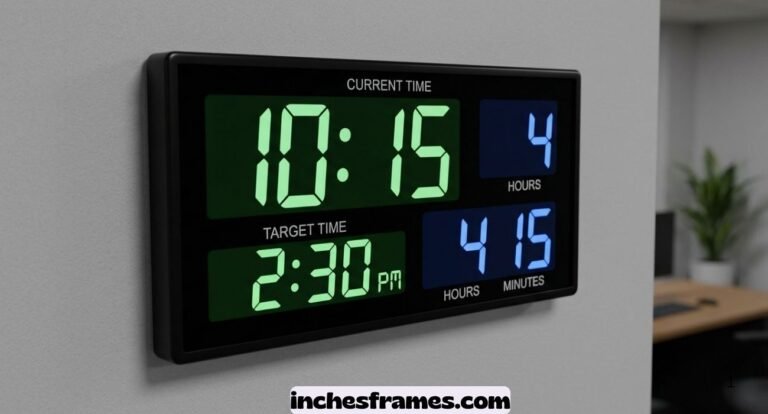
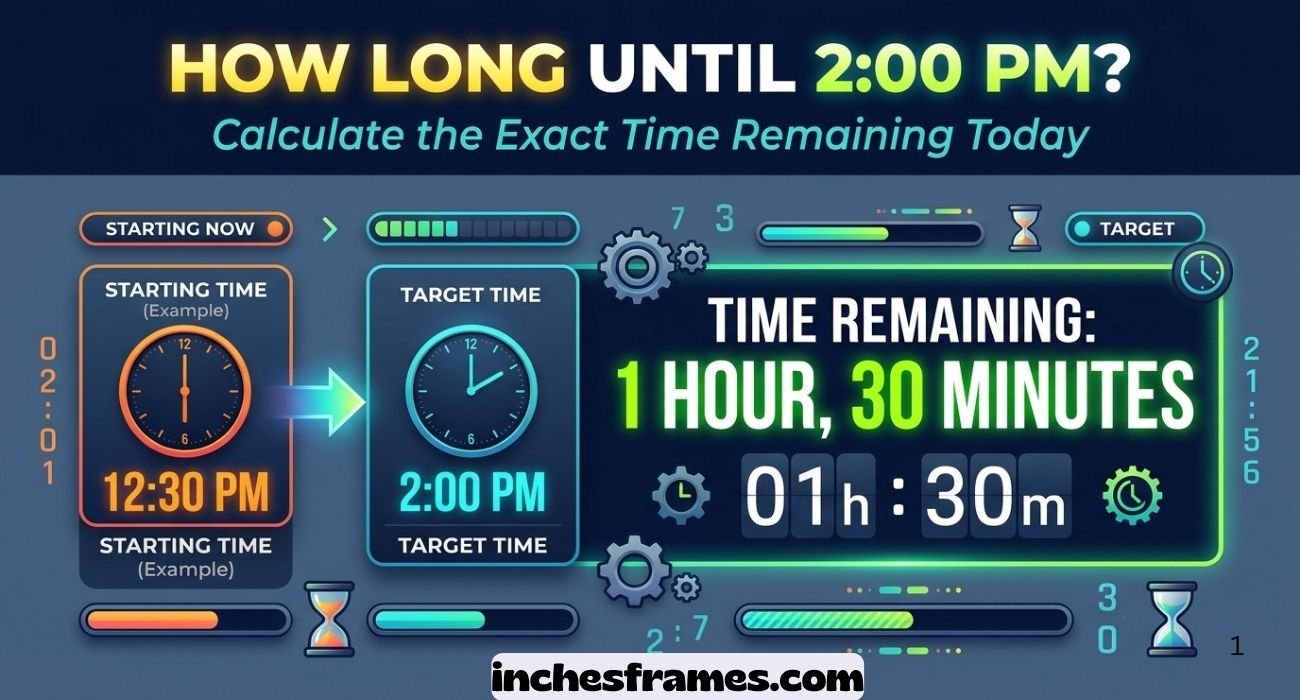
How long until 2:00 PM depends on your current local time. If it is 10:00 AM, you have 4 hours left. If it is 12:30 PM, you have 1 hour and 30 minutes remaining. If it is 1:45 PM, only 15 minutes remain before 2:00 PM.
You can calculate the time remaining by subtracting the current time from 2:00 PM. A live countdown timer can also show the remaining hours, minutes, and seconds without requiring manual calculations.
Knowing how long until 2:00 PM helps you plan work, prepare for appointments, manage study sessions, and stay on schedule for meetings or online events. This guide explains how to calculate the exact time remaining, use a countdown, understand time zones, and plan your day more effectively.
Quick Answer: How Long Until 2:00 PM Today?
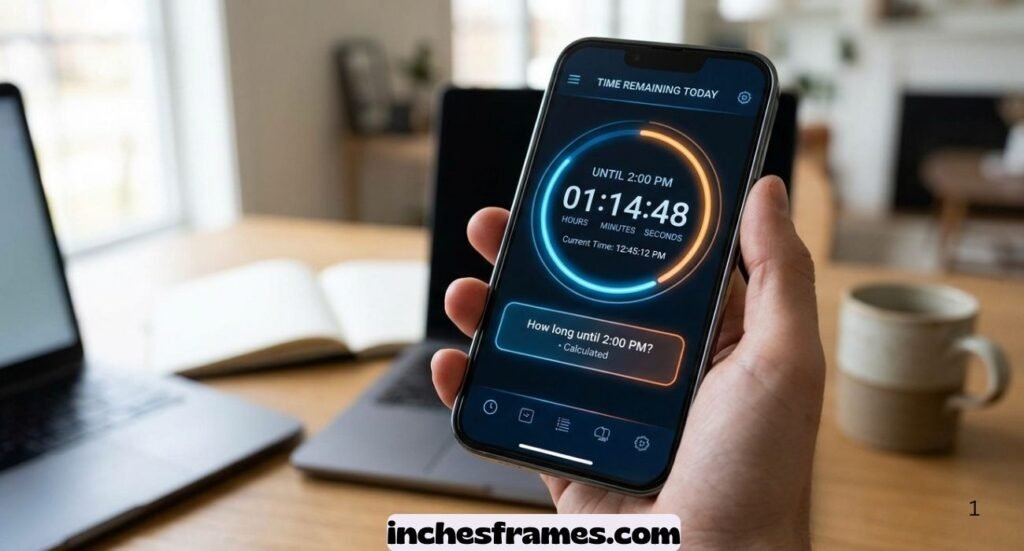
The time remaining until 2:00 PM is the difference between your current local time and the target time. The exact answer changes every minute and second, so you need an accurate clock to determine the current countdown.
Here are some examples of how much time remains when the current time is before 2:00 PM.
| Current time | Time remaining until 2:00 PM |
|---|---|
| 7:00 AM | 7 hours |
| 8:00 AM | 6 hours |
| 9:00 AM | 5 hours |
| 10:00 AM | 4 hours |
| 10:30 AM | 3 hours 30 minutes |
| 11:00 AM | 3 hours |
| 11:30 AM | 2 hours 30 minutes |
| 12:00 PM | 2 hours |
| 12:30 PM | 1 hour 30 minutes |
| 1:00 PM | 1 hour |
| 1:15 PM | 45 minutes |
| 1:30 PM | 30 minutes |
| 1:45 PM | 15 minutes |
| 1:55 PM | 5 minutes |
| 2:00 PM | 0 minutes |
These examples assume the listed time is the current local time on the same day. If it is already past 2:00 PM, the next occurrence is tomorrow at 2:00 PM, unless you are measuring the time since today’s target instead.
How Long Until 2:00 PM Depends on the Current Time
The answer to how long until 2:00 PM changes throughout the day. In the morning, several hours may remain. Around lunchtime, the wait becomes shorter. Just before 2 PM, the remaining time may be only a few minutes.
The easiest way to understand the calculation is to compare the current time with the target time. For example, if you check the clock at 9:20 AM, you have 4 hours and 40 minutes until 2:00 PM. If you check again at 12:20 PM, only 1 hour and 40 minutes remain.
The same method works when the current time includes seconds. If it is 1:59:30 PM, the target is only 30 seconds away. A regular clock shows the current time, while a live countdown timer can display the remaining duration continuously.
Examples of Time Remaining Until 2 PM
Consider a few everyday situations. If you begin working at 8:30 AM and want to know how long until 2 PM, count 5 hours and 30 minutes. If you check at 10:15 AM, the remaining time is 3 hours and 45 minutes. At 11:45 AM, you have 2 hours and 15 minutes left.
The calculation becomes even simpler when you are close to the target. From 1:20 PM to 2:00 PM, you have 40 minutes. From 1:35 PM, you have 25 minutes. From 1:50 PM, you have only 10 minutes.
These examples also show why checking the current time matters. A calculation made earlier in the day will no longer be accurate after several minutes have passed.
Why People Search for How Long Until 2:00 PM
People often use 2 PM as a reference point for daily responsibilities. It may mark the beginning of an afternoon meeting, the end of a study period, an appointment, a work deadline, or the start of a planned activity.
Knowing the time remaining makes it easier to decide what can be completed before that point. Someone with three hours available may have enough time to finish a report and answer emails. Someone with 15 minutes remaining may need to focus on one urgent task instead.
Searching for time remaining until 2 PM can also help people avoid arriving late. A countdown provides a clear picture of the available time, while an alarm or calendar reminder helps them take action when the deadline approaches.
Common Reasons to Check the Time Until 2 PM
A person may want to know how long until 2 PM because a meeting begins at that time, an appointment is approaching, or an online class is about to start. Students may use the countdown to organize revision, while office workers may use it to divide their morning into manageable tasks.
The target time can also help with errands, exercise, cooking, travel preparation, and personal plans. In each case, the calculation provides a useful starting point. However, people should also account for preparation and travel time instead of assuming they can begin an activity at the exact target time.
Understanding 2 PM, 14:00, and Military Time
The 12-hour clock divides the day into two periods: AM and PM. AM covers midnight through the period before noon, while PM covers noon through the period before midnight.
Therefore, 2:00 PM means two hours after noon. It is different from 2:00 AM, which occurs during the early morning.
The 24-hour clock represents the same time as 14:00. This format is often called military time in the United States, although it is also widely used in transportation, healthcare, international scheduling, and other settings.
Understanding these formats helps prevent mistakes when calculating the time remaining until a scheduled event.
Converting 2 PM to 24-Hour Time
For afternoon times from 1 PM through 11 PM, you can generally convert the hour to the 24-hour format by adding 12. The minutes remain unchanged.
| 12-hour format | 24-hour format |
|---|---|
| 12:00 PM | 12:00 |
| 1:00 PM | 13:00 |
| 2:00 PM | 14:00 |
| 3:00 PM | 15:00 |
| 4:00 PM | 16:00 |
| 6:00 PM | 18:00 |
| 9:00 PM | 21:00 |
| 11:00 PM | 23:00 |
For example, if a schedule lists an appointment at 14:00, it begins at 2 PM. If the current time is 13:15, you have 45 minutes remaining.
Remember that midnight is written as 00:00, while noon is written as 12:00 in the 24-hour format. These two times are common sources of confusion when people convert between clock systems.
The Best Ways to Calculate the Time Remaining
You can calculate the time until 2 PM mentally, use a digital device, or enter the current and target times into an online calculator. Each method can be useful in a different situation.
Mental subtraction works well for simple estimates. A smartphone clock provides the current local time, while a calculator can make longer or more complicated time differences easier to work out.
For the most useful result, make sure the starting time and target time use the same time zone and refer to the intended date.
Calculate It Mentally
Mental calculation is often the quickest method when the current time is easy to read. Start by finding the difference between the current hour and 2 PM. Then account for any extra minutes.
For example, if it is 10:00 AM, the calculation is straightforward: 2 PM is four hours later. If it is 10:30 AM, subtract the extra 30 minutes from the four-hour difference to get 3 hours and 30 minutes.
When the current time includes minutes, you can count forward to the next full hour and then continue toward 2 PM. If it is 12:40 PM, you need 20 minutes to reach 1 PM, followed by another hour. The total is 1 hour and 20 minutes.
This counting-forward method is especially helpful when subtraction seems confusing. It also makes it easier to check whether your answer is reasonable.
Use a Digital Device
A smartphone, computer, tablet, or smartwatch can provide the current local time. Read the displayed time and compare it with 2:00 PM to determine the remaining duration.
For example, if your computer displays 11:25 AM, you have 2 hours and 35 minutes until 2 PM. You can then set an alarm or reminder if you need to stop working or attend an event at that time.
Digital devices are convenient because they usually update their clocks automatically when the correct settings are enabled. However, the device may display the wrong time if its clock or time zone settings are incorrect.
For important meetings, check the time zone listed in the invitation rather than relying only on the clock displayed on your screen.
Use an Online Calculator
An online time calculator can determine the interval between a starting time and a target time. Enter the current time, choose 2:00 PM as the target, and review the calculated difference.
For example, entering 11:35 AM as the starting time and 2:00 PM as the target should produce 2 hours and 25 minutes.
Some calculators also support seconds, future dates, and calculations that cross midnight. These features are useful when you need to calculate a longer interval or determine the time remaining until 2 PM tomorrow.
Check whether the calculator assumes both times fall on the same day. If the target has already passed, a calculator may interpret the interval differently depending on its settings.
See Also : How Long Until 2:45 PM? Calculate the Exact Time Remaining Today
How Long Until 2:00 PM with a Live Countdown
A live countdown shows how much time remains before 2 PM arrives. Instead of subtracting the times yourself, you can watch the remaining hours, minutes, and seconds decrease as the target approaches.
For example, a countdown that begins at 1:00 PM starts with one hour remaining. At 1:30 PM, 30 minutes remain. At 1:59 PM, the remaining time is one minute.
A real-time countdown timer is useful when you need to monitor a deadline while working, studying, preparing for a meeting, or waiting for an event to begin. It reduces the need to keep checking the clock and recalculating the difference.
The timer should use an accurate clock and the correct target time. If you are attending a remote event, confirm whether 2 PM refers to your local time or the organizer’s time zone.
What a 2 PM Countdown Timer Should Display
A useful countdown displays the remaining hours, minutes, and seconds in a clear format. It should also identify the target time so that you know whether you are counting down to today’s 2 PM or tomorrow’s occurrence.
The timer should update automatically rather than displaying a fixed calculation. If the target time passes, its behavior should be clear. It may stop at zero, show that the event has started, or begin a new countdown toward the next day’s 2 PM.
These details matter because a timer that continues counting toward a past target without explaining its behavior can confuse users.
What Happens When the Countdown Reaches Zero?
When the countdown reaches zero, the target time has arrived. If you were waiting for a meeting, class, or appointment, this is the moment to begin the planned activity.
You can combine the countdown with an alarm or calendar notification to receive a reminder. For example, if a meeting starts at 2 PM, setting a reminder for 1:50 PM gives you 10 minutes to prepare.
A countdown alone does not guarantee that you will receive an alert. The alert depends on the tool or device you use, so check its notification settings if you need a sound or message at the target time.
Countdown Timers Improve Productivity
A countdown can make a deadline easier to manage because it shows how much time is available. Rather than treating the entire morning as open-ended, you can divide the period before 2 PM into smaller blocks for specific tasks.
For example, if you have three hours until 2 PM, you might spend the first hour completing a report, the second hour handling email, and the final hour preparing for a meeting. The exact schedule should reflect your workload, but assigning tasks to time blocks can help you decide what to do first.
A countdown can also help you recognize when a task is taking longer than expected. If only 20 minutes remain, you may need to finish the most important part and move less urgent work to the afternoon.
The key is to use the timer as a planning aid, not as a reason to rush every activity. Realistic goals and short breaks can make the countdown more useful.
Using the 2 PM Countdown to Finish Important Tasks
Start by choosing the task that matters most before 2 PM. Estimate how long it will take, then compare that estimate with the available time.
If you have 90 minutes remaining and your task should take one hour, you have about 30 minutes for review or unexpected problems. If the task will take two hours, you may need to simplify it, begin the most urgent part, or adjust your schedule.
This approach turns the countdown into a practical decision-making tool. Instead of merely watching the seconds pass, you use the remaining time to set priorities and make steady progress.
Common Daily Situations Where a 2 PM Countdown Helps
The time until 2 PM can be useful in many everyday situations. People may use it to prepare for work deadlines, organize school assignments, remember appointments, plan travel, or get ready for online events.
The value of a countdown depends on what must happen at the target time. A person attending a meeting may need to finish preparing beforehand, while someone planning an errand may need to leave early enough to reach the destination.
Office Work
Office workers can use a countdown to prepare reports, answer emails, review documents, and organize meetings before 2 PM. If a team meeting begins at that time, the countdown provides a clear deadline for finishing the necessary preparation.
For example, a worker who checks the clock at 12:15 PM has 1 hour and 45 minutes left. That interval may be enough to review a presentation, collect important figures, and prepare questions for the meeting.
The best approach is to identify the tasks that must be finished before the meeting and complete the highest-priority work first.
Education
Students can use a 2 PM countdown to manage study periods, assignment deadlines, tutoring sessions, and online lessons. A clear target time can help them divide a large assignment into smaller steps.
Suppose a student has a lesson at 2 PM and checks the clock at 12:30 PM. The student has 90 minutes to review notes, complete a short exercise, and prepare any questions.
Students should leave a few minutes for opening learning materials and checking their internet connection if the lesson takes place online.
Healthcare
A countdown can help patients prepare for scheduled appointments and help staff organize routine activities around a planned time. Someone with an appointment at 2 PM can use the remaining time to gather documents, confirm transportation, and plan when to leave.
However, the countdown should not replace official appointment instructions or medical guidance. Some appointments require arrival well before the listed time, and preparation requirements may vary.
For medication schedules or other clinical tasks, follow the instructions provided by the appropriate healthcare professional rather than relying on a general countdown alone.
Travel
Travel plans often involve several time-sensitive steps, including packing, reaching a station, getting to an airport, or meeting a driver. A countdown to 2 PM can help you organize these steps, but the target time should not be treated as the time you must begin traveling.
For example, if a train departs at 2 PM and you have 45 minutes remaining, you should consider the time needed to reach the station and board. If the journey takes 30 minutes, leaving immediately may leave little room for delays.
Always check the departure location’s local time and allow a reasonable buffer for traffic, security, and other travel requirements.
Online Events
Webinars, virtual meetings, livestreams, and online classes may begin at 2 PM. A countdown helps participants remember when to join and gives them time to prepare their devices and materials.
If you are attending an event hosted in another state or country, confirm the time zone in the invitation. A meeting listed as 2 PM Eastern Time does not necessarily begin at 2 PM on a clock set to Pacific Time.
For an important event, set a reminder several minutes early and open the meeting link before the scheduled start.
See Also ; How Long Until 12 PM? Simple Time Calculation Guide
Using a Countdown for Better Time Management
A countdown becomes more valuable when it is part of a simple daily plan. Instead of focusing only on the number of minutes remaining, decide what you want to accomplish before 2 PM and how much time each task requires.
For example, if you have two hours left, you might reserve 60 minutes for a priority task, 30 minutes for smaller responsibilities, and 30 minutes for review and preparation. This is only an example; the right division depends on your actual workload.
A good schedule also includes time for interruptions. Calls, messages, and unexpected tasks can change your plans, so avoid assigning every minute to a fixed activity. A small buffer gives you more flexibility when something takes longer than expected.
Build a Simple Schedule Around 2 PM
Begin by checking the current time and calculating the available interval. Choose the most important tasks, estimate their duration, and arrange them in a sensible order.
Next, set a reminder for the target time or a few minutes before it. If you have an appointment, include preparation and travel time in your schedule rather than focusing only on when the appointment begins.
When the countdown reaches 2 PM, review what you completed and decide what should happen next. This creates a useful checkpoint without requiring you to follow a rigid schedule throughout the day.
Time Zones Matter More Than You Think
The meaning of 2 PM depends on the location associated with that time. In the United States, the major continental time zones include Eastern, Central, Mountain, and Pacific Time. Alaska and Hawaii also use their own local time arrangements.
As a result, an event scheduled for 2 PM in New York will not normally begin at 2 PM in Los Angeles. The clocks show different local times because the locations use different time zones.
This distinction matters when calculating a countdown for a remote meeting, flight, online class, or appointment. If the target is 2 PM in another location, first determine what that time means in your own time zone or calculate the interval using the event’s designated zone.
Daylight saving time adds another detail. Many US locations change their clocks seasonally, while some locations do not. The time difference between two places can therefore vary during the year.
Calculating Time Until 2 PM in Different US Time Zones
Suppose an online meeting is scheduled for 2 PM Eastern Time. During a period when Eastern Time is three hours ahead of Pacific Time, the meeting takes place at 11 AM Pacific Time.
If the current time in Los Angeles is 10 AM on that same date, one hour remains until the meeting. Although the organizer’s schedule says 2 PM, the attendee’s local countdown should target 11 AM.
Always confirm the applicable time-zone offset for the event date. Do not assume that the difference between two locations is identical throughout the year, particularly around daylight saving transitions.
Useful Tools for Tracking the Countdown
Several tools can help you monitor the time until 2 PM. A digital clock shows the current time, a countdown timer tracks the interval, and a calendar reminder helps you remember to act when the target approaches.
The best choice depends on what you need. If you only want to know the remaining duration, mental calculation or a time calculator may be enough. If you need an alert, a smartphone alarm or calendar notification may be more suitable.
Digital Clocks and Smartphone Alarms
Digital clocks provide a clear reading of the current hour and minute. Smartphones and computers can also display seconds, depending on their settings and applications.
If you need to do something at 2 PM, set an alarm for that time or a few minutes earlier. For an appointment, a calendar reminder can provide additional details such as the location, meeting link, or preparation instructions.
Check that the device displays the correct local time. Automatic time and time-zone settings can help keep the clock accurate, but it is still worth verifying the settings when traveling or joining an event hosted elsewhere.
Online Countdown Timers and Time Calculators
An online countdown timer can show the remaining time in hours, minutes, and seconds. A time calculator can determine the difference between two times without requiring you to count manually.
Choose a tool that clearly identifies its target time and handles the transition to the next day if the target has already passed. For a scheduled event, verify whether the tool expects local time or a time entered in another time zone.
Some browser-based timers stop updating when a page closes or the device sleeps. If you need a dependable alert, use a tool with suitable notification features or set a separate alarm.
Calendar and Productivity Applications
Calendar applications are useful when 2 PM represents a scheduled appointment rather than a general daily target. You can create an event, add its location or meeting link, and set one or more advance reminders.
Productivity applications can also connect tasks to specific time blocks. For example, you might schedule report writing from noon to 1 PM and meeting preparation from 1 PM to 1:45 PM.
These tools work best when the schedule reflects realistic task durations. A countdown can tell you how much time remains, but a calendar helps you decide how to use it.
How Long Until 2:00 PM on Different Days
The basic calculation works the same way on weekdays and weekends. What changes is the date you are targeting and the activities planned around that time.
If it is Monday morning and you want to know how long until 2 PM that day, subtract the current time from 2 PM. If today’s target has passed and you mean tomorrow’s 2 PM, include the time remaining until midnight and then add the hours from midnight to 2 PM.
For future dates, use a calendar or date-aware calculator if the interval crosses several days or a daylight saving transition. These situations require more than a simple same-day subtraction.
How Long Until 2 PM Tomorrow?
If it is 4 PM today, today’s 2 PM has already passed. The next 2 PM is tomorrow, which is 22 hours away.
You can calculate this by counting eight hours from 4 PM to midnight and then adding two hours from midnight to 2 AM, followed by another 12 hours until 2 PM. A simpler calculation is to recognize that 4 PM to midnight is eight hours and midnight to 2 PM is 14 hours, giving a total of 22 hours.
Here are some examples:
| Current time | Time until the next 2 PM |
|---|---|
| 2:30 PM | 23 hours 30 minutes |
| 4:00 PM | 22 hours |
| 6:00 PM | 20 hours |
| 9:00 PM | 17 hours |
| 11:00 PM | 15 hours |
| 12:00 AM | 14 hours |
| 8:00 AM the next day | 6 hours |
These calculations assume an ordinary 24-hour interval without a daylight saving clock change affecting the elapsed time.
How Long Until 2 PM on a Weekend?
The time calculation remains unchanged on Saturday and Sunday. If it is 11 AM on Sunday, three hours remain until 2 PM. If it is 1:30 PM on Saturday, only 30 minutes remain.
Weekend plans may include family gatherings, shopping, exercise, restaurant visits, or recreational activities. A countdown can help you prepare, but check the opening hours of businesses and the details of reservations separately.
If your plans involve travel or an event in another time zone, use the location’s local time when calculating the remaining interval.
Why Real-Time Countdowns Feel So Motivating
A countdown gives a deadline a clear and visible limit. When you can see that 45 minutes remain, it may be easier to decide whether to begin a new task, finish an existing one, or prepare for an upcoming appointment.
It can also make a large block of time feel more manageable. Instead of thinking about everything you need to do before the end of the day, you can focus on what is realistic before 2 PM.
However, a timer is only a tool. It cannot determine which tasks matter most or guarantee that you will finish them. Its value comes from combining a clear time limit with a practical plan.
Turn the Time Remaining Into a Clear Goal
Choose one specific task to complete before 2 PM. Estimate how long it should take and compare that estimate with the time available.
If you have 30 minutes remaining, completing a short email or reviewing a document may be realistic. Beginning a large project that requires several hours may not be the best choice unless you can divide it into smaller steps.
Check your progress occasionally rather than watching every second. When 2 PM arrives, review your progress and decide what needs attention during the afternoon.
Tips for Planning Around 2:00 PM
Planning around 2 PM works best when you use the countdown to guide your decisions. Start by checking the current local time, calculating the remaining interval, and identifying the tasks that must be completed before the target.
If you have an appointment or meeting, prepare the necessary documents and allow enough time to travel or join online. If you are working toward a deadline, complete the most important parts first and reserve some time for review.
A few simple habits can make the countdown more useful:
- Set a clear priority. Choose the task that matters most before 2 PM rather than trying to finish everything at once.
- Estimate task duration. Compare the time a task requires with the time remaining.
- Leave a buffer. Keep some time available for delays, interruptions, and final checks.
- Use reminders. Set an alarm or calendar notification when you need to take action at a specific time.
- Check the time zone. Confirm the scheduled location’s time when planning remote events.
- Review your progress. Use 2 PM as a checkpoint to decide what should happen next.
Avoid Common Time Calculation Mistakes
One common mistake is confusing 2 AM with 2 PM. Another is forgetting to account for minutes when the current time falls between full hours.
People can also make errors by assuming that today’s target has not passed. If the current time is 3 PM, the next 2 PM is tomorrow, 23 hours away under an ordinary 24-hour day.
Time-zone differences create another possible problem. An event scheduled for 2 PM in one location may occur at a different local clock time elsewhere. Always verify the target date, time zone, and whether the countdown refers to today’s occurrence or the next one.
Frequently Asked Questions About How Long Until 2:00 PM
How many hours are left until 2 PM?
The number of hours depends on the current time. If it is 9 AM, five hours remain. If it is noon, two hours remain. At 1 PM, one hour remains until 2 PM.
How do I calculate the time until 2:00 PM?
Subtract the current time from 2:00 PM. For example, if it is 11:40 AM, you have 2 hours and 20 minutes remaining. If the target has already passed, calculate the interval until 2 PM the following day.
What time is 2 PM in military time?
2:00 PM is written as 14:00 in the 24-hour clock format. To convert most afternoon hours from 1 PM through 11 PM, add 12 to the hour. For example, 5 PM becomes 17:00.
What if it is already past 2 PM?
If you want to know when the next 2 PM arrives, calculate the time remaining until tomorrow’s target. For example, at 5 PM, 21 hours remain until 2 PM the next day, assuming an ordinary 24-hour interval.
Does the countdown to 2 PM change every second?
Yes. A live countdown should update continuously as time passes, showing fewer remaining seconds as the target approaches. Its accuracy depends on the clock, target time, and the way the timer updates.
Can I use a countdown timer for a meeting at 2 PM?
Yes. A countdown timer can help you prepare for a meeting, while an alarm or calendar notification can remind you when to join. Confirm the meeting’s time zone and consider setting a reminder several minutes before it starts.
Is 2 PM the same time across the United States?
No. The local clock time depends on the time zone. When it is 2 PM in New York, it is normally 11 AM in Los Angeles when the usual three-hour Eastern–Pacific difference applies. Daylight saving rules and the event date should be checked when scheduling across locations.
How long is it from 1:30 PM to 2:00 PM?
The interval is 30 minutes. Since both times fall within the same hour, subtract 30 minutes from the target time to find the remaining duration.
How long until 2 PM if it is midnight?
There are 14 hours from midnight to 2 PM on the same day. In the 24-hour clock, this interval runs from 00:00 to 14:00.
Can I calculate the time until 2 PM without an internet connection?
Yes. You can use a regular clock and subtract the current time from 2 PM. A smartphone alarm or calculator may also work offline, depending on the application and device settings.
Conclusion
Knowing how long until 2:00 PM helps you plan tasks, prepare for appointments, organize study sessions, and manage daily deadlines. The calculation is simple: compare the current local time with 2 PM and determine the difference in hours, minutes, and seconds.
For a quick answer, mental subtraction or a digital clock may be enough. For a continuously updating result, use a reliable countdown timer. If 2 PM has already passed, remember to calculate the interval until tomorrow’s target, and check the correct time zone for scheduled events.
The key is to use the remaining time wisely. With an accurate calculation and a realistic plan, How Long Until 2:00 PM becomes more than a time question—it becomes a useful way to organize your day.