How Long Until 2:30 PM? Countdown Timer and Time Calculation Guide
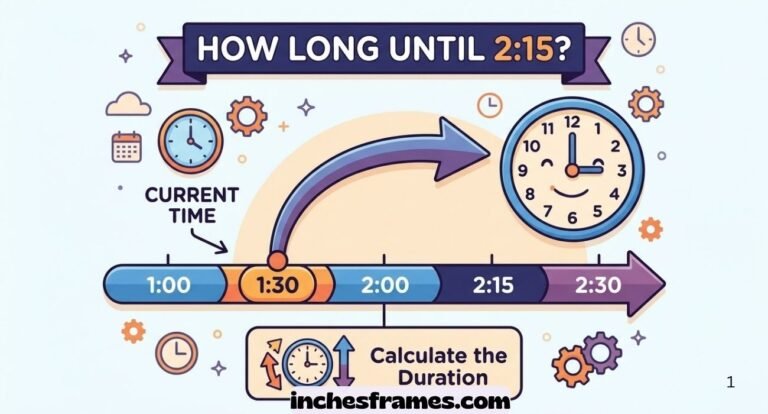
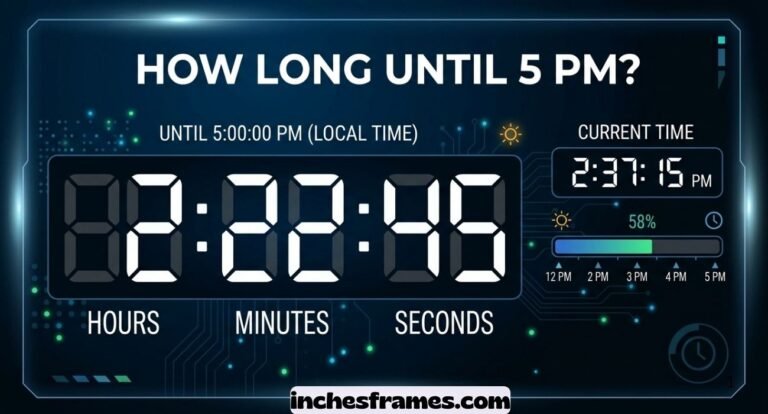
The time remaining until 2:30 PM depends on your current local time. If it is 1:00 PM, you have 1 hour and 30 minutes left. If it is 2:00 PM, you have 30 minutes remaining. At 2:25 PM, only 5 minutes remain before the target time.
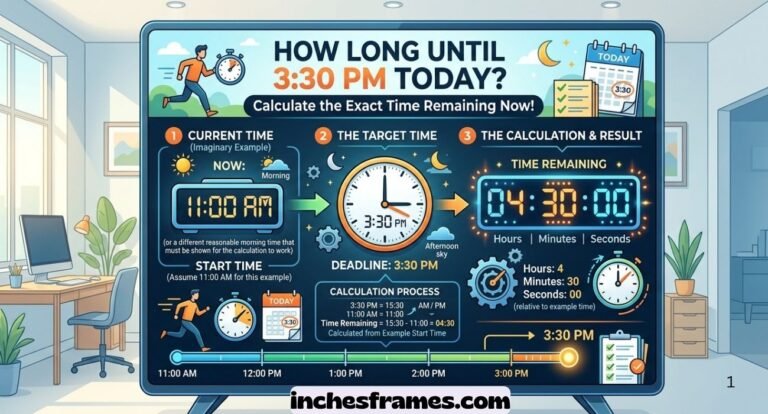
To calculate how long until 2:30 PM, check your current clock and subtract the current time from 2:30 PM. You can also use an online countdown timer or a time calculator to find the remaining hours, minutes, and seconds. If 2:30 PM has already passed, the next occurrence is tomorrow unless you mean another date.
Knowing the time left can help you prepare for afternoon meetings, finish work, plan appointments, manage school activities, and organize your daily schedule. This guide explains how to calculate the time manually, use countdown tools, understand AM and PM, and make better use of the minutes before 2:30 PM.
How Long Until 2:30 PM? Understanding the Basics
The answer to how long until 2:30 PM changes throughout the day. At noon, 2:30 PM is 2 hours and 30 minutes away. At 1:30 PM, exactly one hour remains. As the clock moves closer to the target, the remaining time becomes shorter.
The calculation is simple when the current time falls before 2:30 PM on the same day. You only need to find the difference between the two times. However, if the current time is already past 2:30 PM, you must decide whether you mean the next 2:30 PM or a time on a different date.
What Does 2:30 PM Mean?
2:30 PM means half past two in the afternoon. The number 2 represents the hour, while 30 represents the minutes after that hour. The letters PM refer to the period from noon through the end of the day, before midnight.
In the 12-hour clock format, the day uses AM and PM to distinguish morning and afternoon hours. In the 24-hour clock format, 2:30 PM is written as 14:30. Both formats describe the same time.
For example, an appointment scheduled for 2:30 PM starts in the afternoon, not in the early morning. Understanding this distinction helps prevent scheduling mistakes when using calendars, alarms, and digital clocks.
Why Does the Time Until 2:30 PM Change?
The remaining time changes because every passing minute brings the clock closer to the target. If it is 12:30 PM, you have two hours left. Thirty minutes later, at 1:00 PM, you have 90 minutes left.
A countdown timer shows this changing duration in hours, minutes, and sometimes seconds. A manual calculation gives you the difference at a specific moment, while a live countdown can continue updating as time passes.
Your answer also depends on the date and time zone. Someone in New York and someone in Los Angeles may see different local clock times at the same moment. Therefore, use the local time that applies to your appointment or scheduled activity.
How to Find the Exact Time Remaining Until 2:30 PM
Start by checking the current time on your phone, computer, watch, or another reliable clock. Confirm that the clock displays the correct local time and that you are comparing times from the same day.
Next, calculate the difference between the current time and 2:30 PM. The following table shows common examples.
| Current time | Time remaining until 2:30 PM |
|---|---|
| 11:00 AM | 3 hours 30 minutes |
| 12:00 PM | 2 hours 30 minutes |
| 12:30 PM | 2 hours |
| 1:00 PM | 1 hour 30 minutes |
| 1:30 PM | 1 hour |
| 2:00 PM | 30 minutes |
| 2:10 PM | 20 minutes |
| 2:15 PM | 15 minutes |
| 2:25 PM | 5 minutes |
| 2:29 PM | 1 minute |
These examples assume that the current time and the target time occur on the same day. The exact answer for your situation depends on the current time when you check.
How Long Until 2:30 PM Using Manual Time Calculation
You do not need an app or website to work out the time remaining until 2:30 PM. A basic subtraction method works well when you know the current time.
The main idea is to calculate the difference between the current time and the target time. You can express the result in hours and minutes or convert it into total minutes.
Step 1: Check the Current Time
Read the hour and minutes from your clock. Make sure you identify AM or PM correctly because 2:30 AM and 2:30 PM occur 12 hours apart.
For example, suppose the current time is 12:45 PM. Your target is 2:30 PM, so both times occur in the afternoon on the same day. This makes the calculation straightforward.
Step 2: Subtract the Current Time From 2:30 PM
When the current time falls before the target, subtract it from 2:30 PM.
Consider this example:
Current time: 1:00 PM
Target time: 2:30 PM
From 1:00 PM to 2:00 PM is one hour. From 2:00 PM to 2:30 PM is another 30 minutes.
Therefore, the remaining time is 1 hour and 30 minutes, or 90 minutes.
This approach works well when the minutes on both times are easy to compare. You can also count forward from the current time to the target instead of performing direct subtraction.
Step 3: Convert the Remaining Time Into Minutes
Sometimes, knowing the total number of minutes is more useful than knowing the hours and minutes separately.
One hour contains 60 minutes. To convert a duration into total minutes, multiply the number of hours by 60 and add the remaining minutes.
For example:
1 hour and 30 minutes = (1 × 60) + 30 = 90 minutes.
Similarly, 2 hours and 30 minutes equal 150 minutes. If it is noon, you have 150 minutes until 2:30 PM.
This conversion is useful when setting a productivity timer, planning a study session, or deciding how much time you have for a task.
Step 4: Calculate Time When the Minutes Do Not Match
Time subtraction can seem difficult when the current minutes are greater than the target minutes. In this case, borrow one hour, which equals 60 minutes.
Suppose the current time is 1:45 PM and the target is 2:30 PM.
You cannot subtract 45 minutes directly from 30 minutes without borrowing. Treat 2:30 PM as 1 hour and 90 minutes for the purpose of subtraction.
The calculation becomes:
1 hour 90 minutes − 1 hour 45 minutes = 45 minutes.
Therefore, 45 minutes remain until 2:30 PM.
You can also count forward from 1:45 PM to 2:00 PM, which takes 15 minutes, and then from 2:00 PM to 2:30 PM, which takes 30 minutes. Together, these intervals equal 45 minutes.
What If It Is Already Past 2:30 PM?
If the current time is later than 2:30 PM, the target for today has already passed. To find the time until the next 2:30 PM, calculate the duration until midnight and add the time from midnight to 2:30 PM the following day.
For example, if the current time is 3:00 PM, the next 2:30 PM is tomorrow.
From 3:00 PM to midnight is 9 hours. From midnight to 2:30 PM the next day is 14 hours and 30 minutes.
The total is 23 hours and 30 minutes.
This calculation assumes that you are measuring elapsed time between local clock readings on consecutive days without a daylight saving time change affecting the interval. If a clock change occurs, the actual elapsed duration may differ.
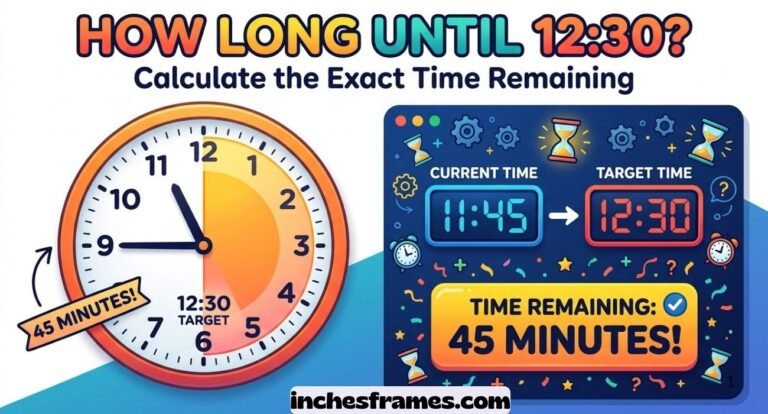
See Also : How Long Until 12:30? Calculate the Exact Time Remaining
Why People Search “How Long Until 2:30 PM”
People often search for a specific time because they have a task, appointment, or personal activity planned for that moment. A direct answer helps them understand how much preparation time remains.
Planning Work Meetings and Appointments
Many people schedule meetings, interviews, customer calls, and project reviews during the afternoon. Knowing the time remaining until 2:30 PM helps them decide whether they have enough time to finish their current task.
For example, someone with a meeting at 2:30 PM may have 40 minutes left at 1:50 PM. They can use that time to review notes, prepare documents, and check meeting details.
A clear time calculation also helps prevent the mistake of confusing the time available with the total time needed to complete a task.
Managing School and Family Schedules
Students and parents may need to track class schedules, school pickups, tutoring sessions, or extracurricular activities. A 2:30 PM deadline can serve as a useful reference point for planning the afternoon.
Suppose a student finishes lunch at 1:15 PM and has a class-related activity at 2:30 PM. The student has 75 minutes available. This makes it easier to plan homework, review lessons, or prepare for the next activity.
Parents can use the same method when arranging transportation or coordinating several appointments.
Tracking Breaks and Personal Tasks
A planned break or personal activity gives the day a clear time target. Someone who plans to take a break at 2:30 PM can use the remaining time to finish a small task or prepare for a pause.
For example, if it is 2:00 PM, the person has 30 minutes to complete a report section, organize a desk, or answer important messages.
The goal is not to fill every available minute. A realistic schedule should also leave room for rest and unexpected tasks.
Checking Deadlines and Scheduled Events
People may also use a countdown to track an online class, delivery window, appointment, or scheduled announcement. In these cases, the exact remaining time matters more than a general estimate such as “later this afternoon.”
A countdown can make the deadline easier to see. However, it is still useful to verify the date and time zone when an event involves people in different locations.
Best Tools to Check the Time Until 2:30 PM
Manual calculations work well for simple situations, but digital tools can make repeated time checks easier. The right option depends on whether you need a quick answer, a live countdown, or a reminder.
Online Countdown Timers
An online countdown timer can display the time remaining until a selected target. Depending on the tool, the display may show days, hours, minutes, and seconds.
To use one for 2:30 PM, select the target time and confirm the correct date and time zone. If the tool allows recurring daily targets, check that it is set to the next occurrence rather than a date that has already passed.
Online timers are helpful when working on a computer because you can keep the countdown visible while completing another task. Some tools may pause or update differently when the browser tab is inactive, so check how the selected timer behaves.
Smartphone Clock and Timer Apps
A smartphone provides several ways to track time. The clock app can show the current local time, while an alarm can alert you when 2:30 PM arrives.
A standard duration timer is different from a target-time countdown. If you set a timer for 30 minutes at 2:00 PM, it should reach zero at 2:30 PM, assuming it starts immediately and runs normally. If you start a 30-minute timer at 2:05 PM, however, it will finish at 2:35 PM.
For a fixed clock-time reminder, setting an alarm for 2:30 PM is often simpler than repeatedly calculating a duration.
Calendar and Reminder Applications
Calendar apps are useful when 2:30 PM marks a scheduled event rather than a general time goal. You can create an event, add a notification, and include details about the appointment.
For example, a meeting scheduled for 2:30 PM might have a reminder at 2:15 PM. This gives you 15 minutes to prepare before the meeting begins.
If the event repeats every weekday, configure the recurrence carefully and confirm that the calendar uses the correct time zone.
Digital Clocks and Desktop Widgets
A digital clock provides a quick way to check the current time. A desktop widget may also display a clock or countdown beside your other applications.
These tools can be helpful if you work at a computer for long periods. You can glance at the time without switching between windows or opening a separate website.
A clock alone does not always calculate the remaining duration, though. For that feature, use a countdown widget or calculate the difference manually.
Choosing a Reliable Time Tool
A useful time tool should display the target clearly, use the correct time zone, and update its countdown accurately. If the tool supports alarms, notifications, or recurring events, make sure those features match your needs.
For a one-time question, a simple calculation is usually enough. For a meeting or recurring appointment, a calendar reminder may be more practical. For continuous tracking, a live countdown can provide a clearer view of the remaining time.
How Long Until 2:30 PM and Better Time Management
Knowing how much time remains can help you organize tasks and make realistic decisions. The value comes from using the available time well, not from trying to stay busy every second.
Break Large Tasks Into Smaller Steps
A large assignment can feel difficult when its completion time is uncertain. Dividing it into smaller steps makes it easier to decide what can reasonably be finished before 2:30 PM.
For example, if you have 60 minutes remaining, you might spend 10 minutes reviewing your work, 35 minutes completing one section, and 15 minutes checking the result. This plan creates a clear structure while allowing you to focus on one task at a time.
Choose a task that fits the available period rather than starting something that requires several hours.
Prioritize Important Responsibilities
Not every task needs immediate attention. When a deadline approaches, identify the work that matters most and complete it before moving to less urgent activities.
Suppose you have 25 minutes before a 2:30 PM meeting. Finishing a short report or reviewing key notes may be more useful than beginning a complex project that cannot be completed in time.
A countdown provides a time limit for making these decisions. It does not determine which task is most important, so you still need to use your judgment.
Create a Realistic Afternoon Schedule
A useful afternoon schedule includes work time, preparation, breaks, and travel where necessary. It should also allow some extra time for delays.
For example, if an appointment starts at 2:30 PM and you need 15 minutes to travel, leaving at 2:15 PM may be too late if traffic or parking creates a delay. Planning to leave earlier gives you a better chance of arriving on time.
Use the target time as a planning point, then work backward to decide when each step should begin.
Use Reminders to Stay on Track
Reminders reduce the need to remember every appointment or repeatedly check the clock. An alert at 2:15 PM, for instance, can tell you to wrap up your current task and prepare for a 2:30 PM commitment.
For important events, consider using two reminders: one for preparation and another for the actual start time. Choose intervals that suit the task rather than adding unnecessary notifications.
How Long Until 2:30 PM in Your Daily Routine
A target time can help organize many ordinary activities. The most useful approach is to connect the remaining minutes with a clear purpose.
During a Typical Workday
Employees may use 2:30 PM as a meeting time, a report deadline, or a point to review their progress. Knowing the remaining duration helps them decide what they can complete before switching tasks.
If it is 1:45 PM, there are 45 minutes left. That period may be enough to finish a short assignment, prepare a meeting summary, or organize documents for an afternoon discussion.
Avoid assuming that every task will fit into the available time. Include a realistic estimate of the work required.
During School or College Hours
Students can use the countdown to prepare for classes, study sessions, tests, or scheduled activities. For example, a student with a review session at 2:30 PM can use the preceding 30 minutes to revise important notes.
A clear target can also help students stop one activity on time and move to the next without rushing. The same approach works for online classes and study groups.
While Running Errands
Errands often involve several steps, including travel, shopping, waiting, and returning home. Knowing that 2:30 PM is approaching helps you decide whether another task will fit into the schedule.
If you have 20 minutes left before an appointment, a nearby quick errand may be possible, but a longer trip may create a risk of arriving late. Consider travel time and possible delays before making that decision.
While Waiting for an Appointment
Waiting for an appointment can feel easier when you know the time remaining. You can use the period to review your notes, check required documents, or finish a short task.
If the appointment begins at 2:30 PM and it is now 2:10 PM, you have 20 minutes. Use part of that time to prepare and leave a little room for unexpected changes.
Remember that a countdown tells you how much time remains before the scheduled start. It does not guarantee that another person or service will be ready at exactly that time.
See Also ; What Time Was It 16 Hours Ago? Calculate the Exact Past Time
The Psychology of Waiting
The way people experience time can depend on what they are doing and what they expect to happen. A short wait may feel long when someone is bored, while the same duration may seem brief during an engaging activity.
Why Time Sometimes Feels Slow
When people repeatedly check the clock, they may focus more on the passing minutes than on anything else. This can make waiting feel more noticeable.
Anticipation can also affect how a person experiences a wait. Someone looking forward to an important meeting or the end of a workday may pay close attention to every minute before 2:30 PM.
A countdown can provide a clear reference, but checking it constantly is not always helpful.
How Staying Busy Changes the Experience
A useful activity can give your attention something else to focus on. Reading a few pages, organizing files, or completing a small assignment can make a waiting period feel more manageable.
Choose an activity that fits the available time. If only five minutes remain, avoid starting something that requires deep concentration or a long setup.
This approach makes the wait more useful without turning every free moment into work.
Reducing Stress Before a Scheduled Event
Uncertainty about timing can make preparation harder. Checking the current time, confirming the event details, and setting a reminder can reduce the need to keep calculating the remaining duration.
For example, if you have an appointment at 2:30 PM, you can set a reminder at 2:15 PM and use the time before that to complete another task. Once the reminder appears, you can shift your attention to the appointment.
A simple plan helps you prepare, although it cannot remove every source of stress or prevent unexpected delays.
Productivity Tips While Waiting Until 2:30 PM
The best way to use the time before 2:30 PM depends on how many minutes remain and what you need to accomplish. A short period is usually best for a small task, while a longer period allows more detailed work.
Complete One Small Task
Choose something with a clear finish point, such as replying to an important email, reviewing a short document, or arranging the files you need for a meeting.
If you have 15 minutes, select a task that can reasonably fit into that period. Finishing one useful item is often more practical than starting several tasks and leaving them unfinished.
Prepare for the Next Appointment
Use the available time to check the appointment details, gather documents, review notes, or confirm the meeting link. Preparation can reduce last-minute confusion.
If the appointment is at 2:30 PM, decide when you need to stop your current work. This is especially helpful when you need time to travel or move to another room.
Take a Short Break
Not every minute before 2:30 PM needs to involve work. A brief break may include standing up, stretching, drinking water, or resting your eyes.
If you have a longer waiting period, you can set a reminder for when you want to return to your next task. This allows you to rest without losing track of the schedule.
Plan the Rest of the Day
A few minutes of planning can help you identify unfinished tasks and set priorities for the afternoon. Check your calendar and estimate how much time each responsibility requires.
For example, if a meeting ends at 3:00 PM, decide what you will work on afterward and whether you need preparation time. A realistic plan should include breaks and space for unexpected work.
Avoid Constantly Checking the Clock
Repeatedly looking at the clock can interrupt concentration. Instead, set a countdown or reminder and focus on the task in front of you.
Check the time when you need to make a decision, such as when to leave for an appointment. Otherwise, allow the reminder to alert you when the target approaches.
Countdown Tools That Make Life Easier
A countdown tool turns a target time into a visible duration. Instead of calculating the difference each time you look at the clock, you can monitor the time remaining until the event.
How a 2:30 PM Countdown Timer Works
A countdown timer compares the current time with the selected target time. It then displays the difference, often in hours, minutes, and seconds.
For example, if the current time is 1:30 PM, the countdown should show one hour remaining until 2:30 PM. At 2:00 PM, it should show 30 minutes remaining.
For a reliable result, the timer must use the correct current time, date, and time zone. A timer set for the wrong date may count toward tomorrow’s target instead of today’s.
Benefits of Real-Time Countdown Displays
A live countdown makes the remaining time easy to understand at a glance. It can be useful when you need to prepare for a meeting, finish a task, or coordinate several activities.
A countdown that displays seconds offers more detail than a simple clock, but that level of precision is not always necessary. For most everyday plans, knowing the remaining minutes is enough.
The displayed seconds also do not guarantee that an appointment will start on time. They simply represent the calculated interval until the selected target.
Countdown Timers for Work and Study
A countdown can provide a useful boundary for a work session. For example, you might set a goal to finish a section of an assignment before 2:30 PM.
This is different from a productivity timer that measures a fixed duration. A 25-minute timer measures 25 minutes from its start, while a target-time countdown tracks how long remains until 2:30 PM.
Choose the method that matches your goal. Use a duration timer for a work session and a target-time countdown for a scheduled event.
Setting a Daily Reminder for 2:30 PM
If you need to remember 2:30 PM every day, a recurring alarm or calendar reminder may be more practical than creating a new countdown each morning.
Set the reminder for 2:30 PM and confirm whether it repeats daily or only on selected days. If you travel between time zones, review the event settings because the reminder may follow the device’s local time or a fixed event time zone.
A recurring reminder helps with routine activities, while a countdown is better for seeing the time remaining before the next occurrence.
Manual vs. Automatic Time Calculators
Both manual calculations and automatic tools can tell you how long remains until 2:30 PM. The better choice depends on how often you need the answer and how much detail you want.
Advantages of Manual Time Calculation
Manual calculation requires no internet connection or special application. Once you understand how hours and minutes work, you can estimate the time remaining from almost any clock.
For example, if it is 1:40 PM, you can count 20 minutes to 2:00 PM and another 30 minutes to 2:30 PM. The result is 50 minutes.
This method is useful for quick decisions and for understanding time arithmetic. However, it can become less convenient when seconds, multiple dates, or complicated time-zone differences are involved.
Advantages of Automatic Time Calculators
An automatic time calculator performs the subtraction for you. A countdown tool can also update the remaining duration continuously, which is useful when you need to monitor a target throughout the day.
These tools reduce the effort of manual arithmetic, but their results still depend on the correct target time and settings. A countdown set to the wrong date or time zone can show a result that does not match your intended event.
For important appointments, confirm the event details instead of relying on the countdown alone.
Which Method Is Better for Everyday Use?
Manual calculation works well when you only need a quick answer. An automatic calculator is more convenient when you want a live display, while an alarm or calendar reminder is useful when you need a notification at a fixed time.
| Feature | Manual calculation | Automatic calculator |
|---|---|---|
| Setup | No special setup | May require target settings |
| Basic time difference | Easy for simple examples | Calculated automatically |
| Live updates | Requires checking again | Usually available in a live countdown |
| Seconds display | Requires extra calculation | Often supported |
| Internet connection | Not required | Depends on the tool |
| Scheduled alerts | Requires a separate alarm or reminder | May be available |
| Common risk | Arithmetic mistakes | Incorrect date or time-zone settings |
For most people, the simplest method is the best one. Use manual subtraction for a quick answer, a countdown for continuous tracking, and a calendar reminder for an important event.
Real-Life Examples
The following examples show how to calculate the time remaining until 2:30 PM at different points during the afternoon. Each calculation assumes that the times occur on the same day unless otherwise stated.
Example 1: 1:30 PM
If the current time is 1:30 PM, exactly one hour remains until 2:30 PM.
The calculation is straightforward because the minutes are the same in both times. The clock moves from 1:30 PM to 2:30 PM after 60 minutes.
This gives you enough time for a short meeting preparation session, a focused task, or a break followed by another activity.
Example 2: 2:10 PM
If it is 2:10 PM, you have 20 minutes remaining until 2:30 PM.
Subtract 10 minutes from 30 minutes, keeping the hour unchanged. The difference is 20 minutes.
This is a useful point to begin wrapping up a task, checking an appointment location, or preparing for a scheduled call.
Example 3: 2:25 PM
At 2:25 PM, only five minutes remain before 2:30 PM.
The difference between 25 minutes past two and 30 minutes past two is five minutes. You can also express this duration as 300 seconds.
Because the available time is short, it is usually better to finish a small task or prepare for the next activity rather than start something complicated.
Example 4: 2:29 PM
If the current time is 2:29 PM, 1 minute remains until 2:30 PM.
One minute contains 60 seconds, so the target is 60 seconds away when the current time is exactly 2:29:00 PM.
If the current time includes seconds, the remaining duration will be shorter. For example, at 2:29:30 PM, only 30 seconds remain.
Example 5: 3:00 PM
If the current time is 3:00 PM, today’s 2:30 PM has already passed. The next occurrence is tomorrow at 2:30 PM.
From 3:00 PM to midnight is 9 hours. From midnight to 2:30 PM the next day is 14 hours and 30 minutes.
Therefore, the next 2:30 PM is 23 hours and 30 minutes away under ordinary conditions without a daylight saving time change affecting the interval.
This example shows why checking the date matters when the target time has already passed.
How Time Zones Affect the Countdown to 2:30 PM
The time remaining until 2:30 PM depends on which location’s clock you are using. The United States spans several time zones, so 2:30 PM in one state may occur at a different moment than 2:30 PM in another.
For example, New York generally observes Eastern Time, while Los Angeles generally observes Pacific Time. When both locations follow their usual standard or daylight time schedules, their local clocks differ by three hours. The exact relationship can depend on daylight saving rules and dates.
If you are counting down to a meeting with someone in another state, confirm whether the invitation uses your local time or the other person’s time zone. Calendar applications often convert scheduled events automatically, but you should still verify the displayed time when coordinating across locations.
Does Daylight Saving Time Change the Answer?
Daylight saving time can affect the relationship between local clock time and elapsed time. In much of the United States, clocks move forward by one hour in spring and backward by one hour in fall, although some locations follow different rules.
For an ordinary afternoon calculation on a day without a clock change, the difference between 1:30 PM and 2:30 PM is one hour. If you are calculating across a date when the local clock changes, the elapsed duration may not match the apparent difference between clock readings.
For most same-day countdowns to 2:30 PM, this complication does not apply. It matters more when a timer crosses the time change or when a scheduled event is set in a different time zone.
Frequently Asked Questions
How many minutes are left until 2:30 PM?
The number of minutes remaining depends on the current time. At 2:00 PM, 30 minutes remain. At 2:15 PM, 15 minutes remain, and at 2:25 PM, only five minutes remain.
How many hours until 2:30 PM today?
Subtract the current local time from 2:30 PM. If it is noon, 2 hours and 30 minutes remain. If it is 1:00 PM, 1 hour and 30 minutes remain. If it is already past 2:30 PM, today’s target has passed.
How do I calculate the time until 2:30 PM without a calculator?
Check the current time and count forward to 2:30 PM. For example, from 1:45 PM to 2:00 PM is 15 minutes, and from 2:00 PM to 2:30 PM is another 30 minutes. The total is 45 minutes.
What is 2:30 PM in 24-hour time?
2:30 PM is written as 14:30 in the 24-hour clock format. The conversion uses 14 for the hour and 30 for the minutes.
Is 2:30 PM morning or afternoon?
2:30 PM is in the afternoon. PM covers the time from noon through 11:59 PM in the 12-hour clock system, while AM covers the time from midnight through 11:59 AM.
What if it is already 2:30 PM?
If it is exactly 2:30 PM, no time remains until the target at that moment. If you mean the next occurrence, tomorrow’s 2:30 PM is the next target.
How long until 2:30 PM if it is 3:00 PM?
The next 2:30 PM is tomorrow, which is 23 hours and 30 minutes after 3:00 PM under ordinary conditions without a daylight saving time change affecting the interval.
Can I use my phone to count down to 2:30 PM?
Yes. You can use a countdown application, a compatible clock widget, or an alarm set for 2:30 PM. A countdown displays the remaining duration, while an alarm notifies you when the target time arrives.
Why does my countdown show a different time remaining?
Check the current clock, target date, selected time zone, and AM/PM setting. The countdown may be set for tomorrow instead of today, or it may use a different time zone from your local clock.
Does the countdown to 2:30 PM update every second?
A live countdown usually updates its display as time passes, often showing seconds. The update frequency depends on the tool, and the display may behave differently if the browser or application is inactive.
Conclusion
Knowing how long until 2:30 PM helps you plan meetings, manage work, prepare for appointments, and organize your afternoon. The exact answer depends on the current local time. For example, 1:30 PM is one hour before 2:30 PM, while 2:25 PM is only five minutes before the target.
You can calculate the difference manually, use an online countdown timer, or set a reminder on your phone. Always check AM and PM, the target date, and the relevant time zone when accuracy matters. If 2:30 PM has already passed, calculate the time until the next day’s occurrence. With a simple calculation and a realistic schedule, you can use the remaining time more effectively and arrive better prepared for your next activity.